What Makes a Good Life?
Aristotle vs Mill
Both philosophers on this path use the same word — happiness — and mean very different things by it. The first job of reading them together is to lose the easy sense of the word. Aristotle's happiness is not a feeling or a mood. It is the activity of a whole life lived well, in accordance with virtue, complete through its last day. A person who is happy in the Aristotelian sense has become a particular kind of person through years of practice; it is an achievement, not a state.
Mill's happiness is closer to the everyday sense — pleasure and the absence of pain — but the closer you look at his version the more the word pleasure is asked to carry. Mill's famous move, in chapter two of Utilitarianism, is to rank pleasures by quality as well as quantity: a poem can outweigh a feast, the life of the mind outweigh the life of the senses. Whether this is a rescue of happiness or a quiet smuggling of Aristotelian virtue back into a hedonist framework is exactly the question the path will leave you holding.
In the passages that follow you will read the first book and the tenth book of the Nicomachean Ethics and the first two chapters of Utilitarianism. Read them against your own life. Which account better describes what you would want to have lived, when you look back from the end of it?
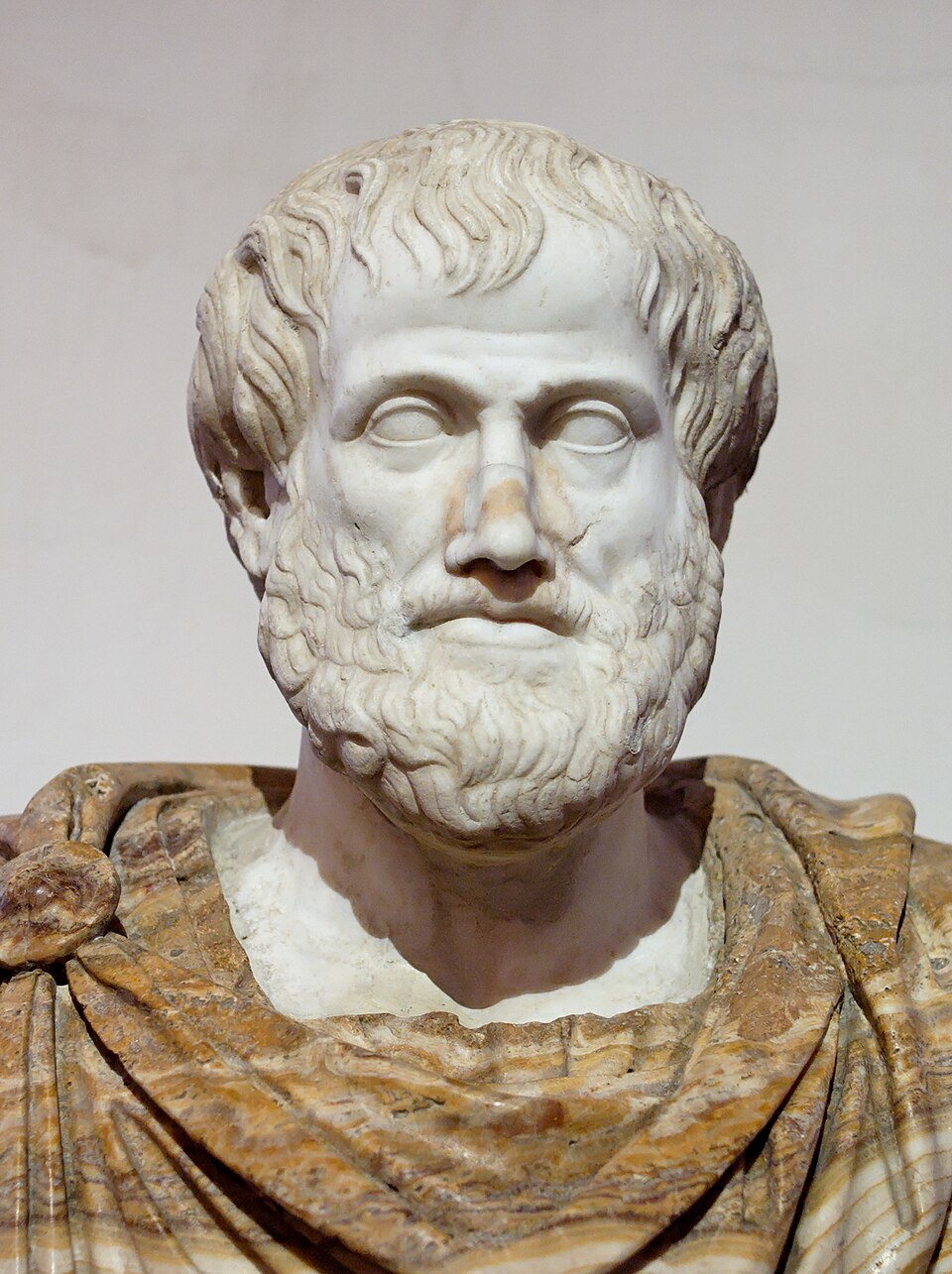 1Aristotle384 – 322 BCEPolitics · Book 1, Chapter 9
There is another variety of the art of acquisition which is commonly and rightly called an art of wealth-getting, and has in fact suggested the notion that riches and property have no limit. Being nearly connected with the preceding, it is often identified with it. But though they are not very different, neither are they the same. The kind already described is given by nature, the other is gained by experience and art.
Let us begin our discussion of the question with the following considerations:
Of everything which we possess there are two uses: both belong to the thing as such, but not in the same manner, for one is the proper, and the other the improper or secondary use of it. For example, a shoe is used for wear, and is used for exchange; both are uses of the shoe. He who gives a shoe in exchange for money or food to him who wants one, does indeed use the shoe as a shoe, but this is not its proper or primary purpose, for a shoe is not made to be an object of barter. The same may be said of all possessions, for the art of exchange extends to all of them, and it arises at first from what is natural, from the circumstance that some have too little, others too much. Hence we may infer that retail trade is not a natural part of the art of getting wealth; had it been so, men would have ceased to exchange when they had enough. In the first community, indeed, which is the family, this art is obviously of no use, but it begins to be useful when the society increases. For the members of the family originally had all things in common; later, when the family divided into parts, the parts shared in many things, and different parts in different things, which they had to give in exchange for what they wanted, a kind of barter which is still practiced among barbarous nations who exchange with one another the necessaries of life and nothing more; giving and receiving wine, for example, in exchange for coin, and the like. This sort of barter is not part of the wealth-getting art and is not contrary to nature, but is needed for the satisfaction of men’s natural wants. The other or more complex form of exchange grew, as might have been inferred, out of the simpler. When the inhabitants of one country became more dependent on those of another, and they imported what they needed, and exported what they had too much of, money necessarily came into use. For the various necessaries of life are not easily carried about, and hence men agreed to employ in their dealings with each other something which was intrinsically useful and easily applicable to the purposes of life, for example, iron, silver, and the like. Of this the value was at first measured simply by size and weight, but in process of time they put a stamp upon it, to save the trouble of weighing and to mark the value.
When the use of coin had once been discovered, out of the barter of necessary articles arose the other art of wealth getting, namely, retail trade; which was at first probably a simple matter, but became more complicated as soon as men learned by experience whence and by what exchanges the greatest profit might be made. Originating in the use of coin, the art of getting wealth is generally thought to be chiefly concerned with it, and to be the art which produces riches and wealth; having to consider how they may be accumulated. Indeed, riches is assumed by many to be only a quantity of coin, because the arts of getting wealth and retail trade are concerned with coin. Others maintain that coined money is a mere sham, a thing not natural, but conventional only, because, if the users substitute another commodity for it, it is worthless, and because it is not useful as a means to any of the necessities of life, and, indeed, he who is rich in coin may often be in want of necessary food. But how can that be wealth of which a man may have a great abundance and yet perish with hunger, like Midas in the fable, whose insatiable prayer turned everything that was set before him into gold?
Hence men seek after a better notion of riches and of the art of getting wealth than the mere acquisition of coin, and they are right. For natural riches and the natural art of wealth-getting are a different thing; in their true form they are part of the management of a household; whereas retail trade is the art of producing wealth, not in every way, but by exchange. And it is thought to be concerned with coin; for coin is the unit of exchange and the measure or limit of it. And there is no bound to the riches which spring from this art of wealth getting. As in the art of medicine there is no limit to the pursuit of health, and as in the other arts there is no limit to the pursuit of their several ends, for they aim at accomplishing their ends to the uttermost (but of the means there is a limit, for the end is always the limit), so, too, in this art of wealth-getting there is no limit of the end, which is riches of the spurious kind, and the acquisition of wealth. But the art of wealth-getting which consists in household management, on the other hand, has a limit; the unlimited acquisition of wealth is not its business. And, therefore, in one point of view, all riches must have a limit; nevertheless, as a matter of fact, we find the opposite to be the case; for all getters of wealth increase their hoard of coin without limit. The source of the confusion is the near connection between the two kinds of wealth-getting; in either, the instrument is the same, although the use is different, and so they pass into one another; for each is a use of the same property, but with a difference: accumulation is the end in the one case, but there is a further end in the other. Hence some persons are led to believe that getting wealth is the object of household management, and the whole idea of their lives is that they ought either to increase their money without limit, or at any rate not to lose it. The origin of this disposition in men is that they are intent upon living only, and not upon living well; and, as their desires are unlimited they also desire that the means of gratifying them should be without limit. Those who do aim at a good life seek the means of obtaining bodily pleasures; and, since the enjoyment of these appears to depend on property, they are absorbed in getting wealth: and so there arises the second species of wealth-getting. For, as their enjoyment is in excess, they seek an art which produces the excess of enjoyment; and, if they are not able to supply their pleasures by the art of getting wealth, they try other arts, using in turn every faculty in a manner contrary to nature. The quality of courage, for example, is not intended to make wealth, but to inspire confidence; neither is this the aim of the general’s or of the physician’s art; but the one aims at victory and the other at health. Nevertheless, some men turn every quality or art into a means of getting wealth; this they conceive to be the end, and to the promotion of the end they think all things must contribute.
Thus, then, we have considered the art of wealth-getting which is unnecessary, and why men want it; and also the necessary art of wealth-getting, which we have seen to be different from the other, and to be a natural part of the art of managing a household, concerned with the provision of food, not, however, like the former kind, unlimited, but having a limit.
X
And we have found the answer to our original question, Whether the art of getting wealth is the business of the manager of a household and of the statesman or not their business? viz., that wealth is presupposed by them. For as political science does not make men, but takes them from nature and uses them, so too nature provides them with earth or sea or the like as a source of food. At this stage begins the duty of the manager of a household, who has to order the things which nature supplies; he may be compared to the weaver who has not to make but to use wool, and to know, too, what sort of wool is good and serviceable or bad and unserviceable. Were this otherwise, it would be difficult to see why the art of getting wealth is a part of the management of a household and the art of medicine not; for surely the members of a household must have health just as they must have life or any other necessary. The answer is that as from one point of view the master of the house and the ruler of the state have to consider about health, from another point of view not they but the physician; so in one way the art of household management, in another way the subordinate art, has to consider about wealth. But, strictly speaking, as I have already said, the means of life must be provided beforehand by nature; for the business of nature is to furnish food to that which is born, and the food of the offspring is always what remains over of that from which it is produced. Wherefore the art of getting wealth out of fruits and animals is always natural.
There are two sorts of wealth-getting, as I have said; one is a part of household management, the other is retail trade: the former necessary and honorable, while that which consists in exchange is justly censured; for it is unnatural, and a mode by which men gain from one another. The most hated sort, and with the greatest reason, is usury, which makes a gain out of money itself, and not from the natural object of it. For money was intended to be used in exchange, but not to increase at interest. And this term interest, which means the birth of money from money, is applied to the breeding of money because the offspring resembles the parent. Wherefore of an modes of getting wealth this is the most unnatural.
XI
Enough has been said about the theory of wealth-getting; we will now proceed to the practical part. The discussion of such matters is not unworthy of philosophy, but to be engaged in them practically is illiberal and irksome. The useful parts of wealth-getting are, first, the knowledge of livestock — which are most profitable, and where, and how — as, for example, what sort of horses or sheep or oxen or any other animals are most likely to give a return. A man ought to know which of these pay better than others, and which pay best in particular places, for some do better in one place and some in another. Secondly, husbandry, which may be either tillage or planting, and the keeping of bees and of fish, or fowl, or of any animals which may be useful to man. These are the divisions of the true or proper art of wealth-getting and come first. Of the other, which consists in exchange, the first and most important division is commerce (of which there are three kinds — the provision of a ship, the conveyance of goods, exposure for sale — these again differing as they are safer or more profitable), the second is usury, the third, service for hire — of this, one kind is employed in the mechanical arts, the other in unskilled and bodily labor. There is still a third sort of wealth getting intermediate between this and the first or natural mode which is partly natural, but is also concerned with exchange, viz., the industries that make their profit from the earth, and from things growing from the earth which, although they bear no fruit, are nevertheless profitable; for example, the cutting of timber and all mining. The art of mining, by which minerals are obtained, itself has many branches, for there are various kinds of things dug out of the earth. Of the several divisions of wealth-getting I now speak generally; a minute consideration of them might be useful in practice, but it would be tiresome to dwell upon them at greater length now.
— Aristotle, Politics, Book 1, Chapter 9
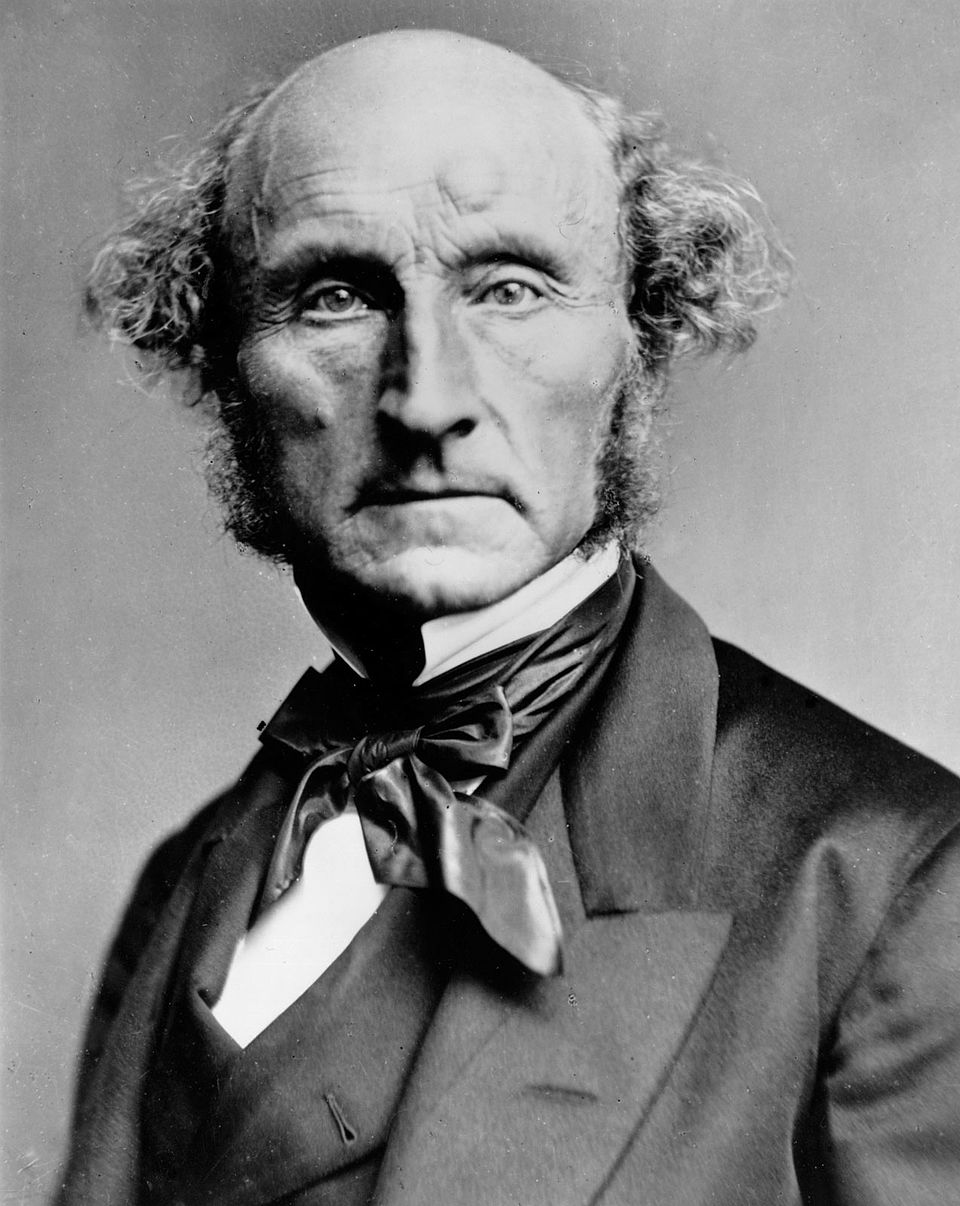 2Mill1806 – 1873On Liberty · Chapter 1
THE subject of this Essay is not the so-called Liberty of the Will, so unfortunately opposed to the misnamed doctrine of Philosophical Necessity; but Civil, or Social Liberty: the nature and limits of the power which can be legitimately exercised by society over the individual. A question seldom stated, and hardly ever discussed, in general terms, but which profoundly influences the practical controversies of the age by its latent presence, and is likely soon to make itself recognized as the vital question of the future. It is so far from being new, that, in a certain sense, it has divided mankind, almost from the remotest ages, but in the stage of progress into which the more civilized portions of the species have now entered, it presents itself under new conditions, and requires a different and more fundamental treatment.
The struggle between Liberty and Authority is the most conspicuous feature in the portions of history with which we are earliest familiar, particularly in that of Greece, Rome, and England. But in old times this contest was between subjects, or some classes of subjects, and the government. By liberty, was meant protection against the tyranny of the political rulers. The rulers were conceived (except in some of the popular governments of Greece) as in a necessarily antagonistic position to the people whom they ruled. They consisted of a governing One, or a governing tribe or caste, who derived their authority from inheritance or conquest; who, at all events, did not hold it at the pleasure of the governed, and whose supremacy men did not venture, perhaps did not desire, to contest, whatever precautions might be taken against its oppressive exercise. Their power was regarded as necessary, but also as highly dangerous; as a weapon which they would attempt to use against their subjects, no less than against external enemies. To prevent the weaker members of the community from being preyed upon by innumerable vultures, it was needful that there should be an animal of prey stronger than the rest, commissioned to keep them down. But as the king of the vultures would be no less bent upon preying upon the flock than any of the minor harpies, it was indispensable to be in a perpetual attitude of defence against his beak and claws. The aim, therefore, of patriots, was to set limits to the power which the ruler should be suffered to exercise over the community; and this limitation was what they meant by liberty. It was attempted in two ways. First, by obtaining a recognition of certain immunities, called political liberties or rights, which it was to be regarded as a breach of duty in the ruler to infringe, and which, if he did infringe, specific resistance, or general rebellion, was held to be justifiable. A second, and generally a later expedient, was the establishment of constitutional checks; by which the consent of the community, or of a body of some sort supposed to represent its interests, was made a necessary condition to some of the more important acts of the governing power. To the first of these modes of limitation, the ruling power, in most European countries, was compelled, more or less, to submit. It was not so with the second; and to attain this, or when already in some degree possessed, to attain it more completely, became everywhere the principal object of the lovers of liberty. And so long as mankind were content to combat one enemy by another, and to be ruled by a master, on condition of being guaranteed more or less efficaciously against his tyranny, they did not carry their aspirations beyond this point.
A time, however, came in the progress of human affairs, when men ceased to think it a necessity of nature that their governors should be an independent power, opposed in interest to themselves. It appeared to them much better that the various magistrates of the State should be their tenants or delegates, revocable at their pleasure. In that way alone, it seemed, could they have complete security that the powers of government would never be abused to their disadvantage. By degrees, this new demand for elective and temporary rulers became the prominent object of the exertions of the popular party, wherever any such party existed; and superseded, to a considerable extent, the previous efforts to limit the power of rulers. As the struggle proceeded for making the ruling power emanate from the periodical choice of the ruled, some persons began to think that too much importance had been attached to the limitation of the power itself. That (it might seem) was a resource against rulers whose interests were habitually opposed to those of the people. What was now wanted was, that the rulers should be identified with the people; that their interest and will should be the interest and will of the nation. The nation did not need to be protected against its own will. There was no fear of its tyrannizing over itself. Let the rulers be effectually responsible to it, promptly removable by it, and it could afford to trust them with power of which it could itself dictate the use to be made. Their power was but the nation’s own power, concentrated, and in a form convenient for exercise. This mode of thought, or rather perhaps of feeling, was common among the last generation of European liberalism, in the Continental section of which, it still apparently predominates. Those who admit any limit to what a government may do, except in the case of such governments as they think ought not to exist, stand out as brilliant exceptions among the political thinkers of the Continent. A similar tone of sentiment might by this time have been prevalent in our own country, if the circumstances which for a time encouraged it had continued unaltered.
But, in political and philosophical theories, as well as in persons, success discloses faults and infirmities which failure might have concealed from observation. The notion, that the people have no need to limit their power over themselves, might seem axiomatic, when popular government was a thing only dreamed about, or read of as having existed at some distant period of the past. Neither was that notion necessarily disturbed by such temporary aberrations as those of the French Revolution, the worst of which were the work of an usurping few, and which, in any case, belonged, not to the permanent working of popular institutions, but to a sudden and convulsive outbreak against monarchical and aristocratic despotism. In time, however, a democratic republic came to occupy a large portion of the earth’s surface, and made itself felt as one of the most powerful members of the community of nations; and elective and responsible government became subject to the observations and criticisms which wait upon a great existing fact. It was now perceived that such phrases as “self-government,” and “the power of the people over themselves,” do not express the true state of the case. The “people” who exercise the power, are not always the same people with those over whom it is exercised, and the “self-government” spoken of, is not the government of each by himself, but of each by all the rest. The will of the people, moreover, practically means, the will of the most numerous or the most active part of the people; the majority, or those who succeed in making themselves accepted as the majority; the people, consequently, may desire to oppress a part of their number; and precautions are as much needed against this, as against any other abuse of power. The limitation, therefore, of the power of government over individuals, loses none of its importance when the holders of power are regularly accountable to the community, that is, to the strongest party therein. This view of things, recommending itself equally to the intelligence of thinkers and to the inclination of those important classes in European society to whose real or supposed interests democracy is adverse, has had no difficulty in establishing itself; and in political speculations “the tyranny of the majority” is now generally included among the evils against which society requires to be on its guard.
Like other tyrannies, the tyranny of the majority was at first, and is still vulgarly, held in dread, chiefly as operating through the acts of the public authorities. But reflecting persons perceived that when society is itself the tyrant — society collectively, over the separate individuals who compose it — its means of tyrannizing are not restricted to the acts which it may do by the hands of its political functionaries. Society can and does execute its own mandates: and if it issues wrong mandates instead of right, or any mandates at all in things with which it ought not to meddle, it practises a social tyranny more formidable than many kinds of political oppression, since, though not usually upheld by such extreme penalties, it leaves fewer means of escape, penetrating much more deeply into the details of life, and enslaving the soul itself. Protection, therefore, against the tyranny of the magistrate is not enough; there needs protection also against the tyranny of the prevailing opinion and feeling; against the tendency of society to impose, by other means than civil penalties, its own ideas and practices as rules of conduct on those who dissent from them; to fetter the development, and, if possible, prevent the formation, of any individuality not in harmony with its ways, and compel all characters to fashion themselves upon the model of its own. There is a limit to the legitimate interference of collective opinion with individual independence; and to find that limit, and maintain it against encroachment, is as indispensable to a good condition of human affairs, as protection against political despotism.
But though this proposition is not likely to be contested in general terms, the practical question, where to place the limit — how to make the fitting adjustment between individual independence and social control — is a subject on which nearly everything remains to be done. All that makes existence valuable to any one, depends on the enforcement of restraints upon the actions of other people. Some rules of conduct, therefore, must be imposed, by law in the first place, and by opinion on many things which are not fit subjects for the operation of law. What these rules should be, is the principal question in human affairs; but if we except a few of the most obvious cases, it is one of those which least progress has been made in resolving. No two ages, and scarcely any two countries, have decided it alike; and the decision of one age or country is a wonder to another. Yet the people of any given age and country no more suspect any difficulty in it, than if it were a subject on which mankind had always been agreed. The rules which obtain among themselves appear to them self-evident and self-justifying. This all but universal illusion is one of the examples of the magical influence of custom, which is not only, as the proverb says a second nature, but is continually mistaken for the first. The effect of custom, in preventing any misgiving respecting the rules of conduct which mankind impose on one another, is all the more complete because the subject is one on which it is not generally considered necessary that reasons should be given, either by one person to others, or by each to himself. People are accustomed to believe and have been encouraged in the belief by some who aspire to the character of philosophers, that their feelings, on subjects of this nature, are better than reasons, and render reasons unnecessary. The practical principle which guides them to their opinions on the regulation of human conduct, is the feeling in each person’s mind that everybody should be required to act as he, and those with whom he sympathizes, would like them to act. No one, indeed, acknowledges to himself that his standard of judgment is his own liking; but an opinion on a point of conduct, not supported by reasons, can only count as one person’s preference; and if the reasons, when given, are a mere appeal to a similar preference felt by other people, it is still only many people’s liking instead of one. To an ordinary man, however, his own preference, thus supported, is not only a perfectly satisfactory reason, but the only one he generally has for any of his notions of morality, taste, or propriety, which are not expressly written in his religious creed; and his chief guide in the interpretation even of that. Men’s opinions, accordingly, on what is laudable or blamable, are affected by all the multifarious causes which influence their wishes in regard to the conduct of others, and which are as numerous as those which determine their wishes on any other subject. Sometimes their reason — at other times their prejudices or superstitions: often their social affections, not seldom their antisocial ones, their envy or jealousy, their arrogance or contemptuousness: but most commonly, their desires or fears for themselves — their legitimate or illegitimate self-interest. Wherever there is an ascendant class, a large portion of the morality of the country emanates from its class interests, and its feelings of class superiority. The morality between Spartans and Helots, between planters and negroes, between princes and subjects, between nobles and roturiers, between men and women, has been for the most part the creation of these class interests and feelings: and the sentiments thus generated, react in turn upon the moral feelings of the members of the ascendant class, in their relations among themselves. Where, on the other hand, a class, formerly ascendant, has lost its ascendency, or where its ascendency is unpopular, the prevailing moral sentiments frequently bear the impress of an impatient dislike of superiority. Another grand determining principle of the rules of conduct, both in act and forbearance which have been enforced by law or opinion, has been the servility of mankind towards the supposed preferences or aversions of their temporal masters, or of their gods. This servility though essentially selfish, is not hypocrisy; it gives rise to perfectly genuine sentiments of abhorrence; it made men burn magicians and heretics. Among so many baser influences, the general and obvious interests of society have of course had a share, and a large one, in the direction of the moral sentiments: less, however, as a matter of reason, and on their own account, than as a consequence of the sympathies and antipathies which grew out of them: and sympathies and antipathies which had little or nothing to do with the interests of society, have made themselves felt in the establishment of moralities with quite as great force.
— Mill, On Liberty, Chapter 1
3Aristotle384 – 322 BCENicomachean Ethics · Book 10, Chapter 7
If happiness is activity in accordance with virtue, it is reasonable that it should be in accordance with the highest virtue; and this will be that of the best thing in us. Whether it be reason or something else that is this element which is thought to be our natural ruler and guide and to take thought of things noble and divine, whether it be itself also divine or only the most divine element in us, the activity of this in accordance with its proper virtue will be perfect happiness. That this activity is contemplative we have already said.
Now this would seem to be in agreement both with what we said before and with the truth. For, firstly, this activity is the best (since not only is reason the best thing in us, but the objects of reason are the best of knowable objects); and secondly, it is the most continuous, since we can contemplate truth more continuously than we can do anything. And we think happiness has pleasure mingled with it, but the activity of philosophic wisdom is admittedly the pleasantest of virtuous activities; at all events the pursuit of it is thought to offer pleasures marvellous for their purity and their enduringness, and it is to be expected that those who know will pass their time more pleasantly than those who inquire. And the self-sufficiency that is spoken of must belong most to the contemplative activity. For while a philosopher, as well as a just man or one possessing any other virtue, needs the necessaries of life, when they are sufficiently equipped with things of that sort the just man needs people towards whom and with whom he shall act justly, and the temperate man, the brave man, and each of the others is in the same case, but the philosopher, even when by himself, can contemplate truth, and the better the wiser he is; he can perhaps do so better if he has fellow-workers, but still he is the most self-sufficient. And this activity alone would seem to be loved for its own sake; for nothing arises from it apart from the contemplating, while from practical activities we gain more or less apart from the action. And happiness is thought to depend on leisure; for we are busy that we may have leisure, and make war that we may live in peace. Now the activity of the practical virtues is exhibited in political or military affairs, but the actions concerned with these seem to be unleisurely. Warlike actions are completely so (for no one chooses to be at war, or provokes war, for the sake of being at war; any one would seem absolutely murderous if he were to make enemies of his friends in order to bring about battle and slaughter); but the action of the statesman is also unleisurely, and-apart from the political action itself-aims at despotic power and honours, or at all events happiness, for him and his fellow citizens-a happiness different from political action, and evidently sought as being different. So if among virtuous actions political and military actions are distinguished by nobility and greatness, and these are unleisurely and aim at an end and are not desirable for their own sake, but the activity of reason, which is contemplative, seems both to be superior in serious worth and to aim at no end beyond itself, and to have its pleasure proper to itself (and this augments the activity), and the self-sufficiency, leisureliness, unweariedness (so far as this is possible for man), and all the other attributes ascribed to the supremely happy man are evidently those connected with this activity, it follows that this will be the complete happiness of man, if it be allowed a complete term of life (for none of the attributes of happiness is incomplete).
But such a life would be too high for man; for it is not in so far as he is man that he will live so, but in so far as something divine is present in him; and by so much as this is superior to our composite nature is its activity superior to that which is the exercise of the other kind of virtue. If reason is divine, then, in comparison with man, the life according to it is divine in comparison with human life. But we must not follow those who advise us, being men, to think of human things, and, being mortal, of mortal things, but must, so far as we can, make ourselves immortal, and strain every nerve to live in accordance with the best thing in us; for even if it be small in bulk, much more does it in power and worth surpass everything. This would seem, too, to be each man himself, since it is the authoritative and better part of him. It would be strange, then, if he were to choose not the life of his self but that of something else. And what we said before’ will apply now; that which is proper to each thing is by nature best and most pleasant for each thing; for man, therefore, the life according to reason is best and pleasantest, since reason more than anything else is man. This life therefore is also the happiest.
8
But in a secondary degree the life in accordance with the other kind of virtue is happy; for the activities in accordance with this befit our human estate. Just and brave acts, and other virtuous acts, we do in relation to each other, observing our respective duties with regard to contracts and services and all manner of actions and with regard to passions; and all of these seem to be typically human. Some of them seem even to arise from the body, and virtue of character to be in many ways bound up with the passions. Practical wisdom, too, is linked to virtue of character, and this to practical wisdom, since the principles of practical wisdom are in accordance with the moral virtues and rightness in morals is in accordance with practical wisdom. Being connected with the passions also, the moral virtues must belong to our composite nature; and the virtues of our composite nature are human; so, therefore, are the life and the happiness which correspond to these. The excellence of the reason is a thing apart; we must be content to say this much about it, for to describe it precisely is a task greater than our purpose requires. It would seem, however, also to need external equipment but little, or less than moral virtue does. Grant that both need the necessaries, and do so equally, even if the statesman’s work is the more concerned with the body and things of that sort; for there will be little difference there; but in what they need for the exercise of their activities there will be much difference. The liberal man will need money for the doing of his liberal deeds, and the just man too will need it for the returning of services (for wishes are hard to discern, and even people who are not just pretend to wish to act justly); and the brave man will need power if he is to accomplish any of the acts that correspond to his virtue, and the temperate man will need opportunity; for how else is either he or any of the others to be recognized? It is debated, too, whether the will or the deed is more essential to virtue, which is assumed to involve both; it is surely clear that its perfection involves both; but for deeds many things are needed, and more, the greater and nobler the deeds are. But the man who is contemplating the truth needs no such thing, at least with a view to the exercise of his activity; indeed they are, one may say, even hindrances, at all events to his contemplation; but in so far as he is a man and lives with a number of people, he chooses to do virtuous acts; he will therefore need such aids to living a human life.
But that perfect happiness is a contemplative activity will appear from the following consideration as well. We assume the gods to be above all other beings blessed and happy; but what sort of actions must we assign to them? Acts of justice? Will not the gods seem absurd if they make contracts and return deposits, and so on? Acts of a brave man, then, confronting dangers and running risks because it is noble to do so? Or liberal acts? To whom will they give? It will be strange if they are really to have money or anything of the kind. And what would their temperate acts be? Is not such praise tasteless, since they have no bad appetites? If we were to run through them all, the circumstances of action would be found trivial and unworthy of gods. Still, every one supposes that they live and therefore that they are active; we cannot suppose them to sleep like Endymion. Now if you take away from a living being action, and still more production, what is left but contemplation? Therefore the activity of God, which surpasses all others in blessedness, must be contemplative; and of human activities, therefore, that which is most akin to this must be most of the nature of happiness.
This is indicated, too, by the fact that the other animals have no share in happiness, being completely deprived of such activity. For while the whole life of the gods is blessed, and that of men too in so far as some likeness of such activity belongs to them, none of the other animals is happy, since they in no way share in contemplation. Happiness extends, then, just so far as contemplation does, and those to whom contemplation more fully belongs are more truly happy, not as a mere concomitant but in virtue of the contemplation; for this is in itself precious. Happiness, therefore, must be some form of contemplation.
But, being a man, one will also need external prosperity; for our nature is not self-sufficient for the purpose of contemplation, but our body also must be healthy and must have food and other attention. Still, we must not think that the man who is to be happy will need many things or great things, merely because he cannot be supremely happy without external goods; for self-sufficiency and action do not involve excess, and we can do noble acts without ruling earth and sea; for even with moderate advantages one can act virtuously (this is manifest enough; for private persons are thought to do worthy acts no less than despots-indeed even more); and it is enough that we should have so much as that; for the life of the man who is active in accordance with virtue will be happy. Solon, too, was perhaps sketching well the happy man when he described him as moderately furnished with externals but as having done (as Solon thought) the noblest acts, and lived temperately; for one can with but moderate possessions do what one ought. Anaxagoras also seems to have supposed the happy man not to be rich nor a despot, when he said that he would not be surprised if the happy man were to seem to most people a strange person; for they judge by externals, since these are all they perceive. The opinions of the wise seem, then, to harmonize with our arguments. But while even such things carry some conviction, the truth in practical matters is discerned from the facts of life; for these are the decisive factor. We must therefore survey what we have already said, bringing it to the test of the facts of life, and if it harmonizes with the facts we must accept it, but if it clashes with them we must suppose it to be mere theory. Now he who exercises his reason and cultivates it seems to be both in the best state of mind and most dear to the gods. For if the gods have any care for human affairs, as they are thought to have, it would be reasonable both that they should delight in that which was best and most akin to them (i.e. reason) and that they should reward those who love and honour this most, as caring for the things that are dear to them and acting both rightly and nobly. And that all these attributes belong most of all to the philosopher is manifest. He, therefore, is the dearest to the gods. And he who is that will presumably be also the happiest; so that in this way too the philosopher will more than any other be happy.
— Aristotle, Nicomachean Ethics, Book 10, Chapter 7
4Mill1806 – 1873Representative Government · Chapter 1
ALL SPECULATIONS concerning forms of government bear the impress, more or less exclusive, of two conflicting theories respecting political institutions; or, to speak more properly, conflicting conceptions of what political institutions are.
By some minds, government is conceived as strictly a practical art, giving rise to no questions but those of means and an end. Forms of government are assimilated to any other expedients for the attainment of human objects. They are regarded as wholly an affair of invention and contrivance. Being made by man, it is assumed that man has the choice either to make them or not, and how or on what pattern they shall be made. Government, according to this conception, is a problem, to be worked like any other question of business. The first step is to define the purposes which governments are required to promote. The next, is to inquire what form of government is best fitted to fulfil those purposes. Having satisfied ourselves on these two points, and ascertained the form of government which combines the greatest amount of good with the least of evil, what further remains is to obtain the concurrence of our countrymen, or those for whom the institutions are intended, in the opinion which we have privately arrived at. To find the best form of government; to persuade others that it is the best; and having done so, to stir them up to insist on having it, is the order of ideas in the minds of those who adopt this view of political philosophy. They look upon a constitution in the same light (difference of scale being allowed for) as they would upon a steam plough, or a threshing machine.
To these stand opposed another kind of political reasoners, who are so far from assimilating a form of government to a machine, that they regard it as a sort of spontaneous product, and the science of government as a branch (so to speak) of natural history. According to them, forms of government are not a matter of choice. We must take them, in the main, as we find them. Governments cannot be constructed by premeditated design. They "are not made, but grow." Our business with them, as with the other facts of the universe, is to acquaint ourselves with their natural properties, and adapt ourselves to them. The fundamental political institutions of a people are considered by this school as a sort of organic growth from the nature and life of that people: a product of their habits, instincts, and unconscious wants and desires, scarcely at all of their deliberate purposes. Their will has had no part in the matter but that of meeting the necessities of the moment by the contrivances of the moment, which contrivances, if in sufficient conformity to the national feelings and character, commonly last, and by successive aggregation constitute a polity, suited to the people who possess it, but which it would be vain to attempt to superduce upon any people whose nature and circumstances had not spontaneously evolved it.
It is difficult to decide which of these doctrines would be the most absurd, if we could suppose either of them held as an exclusive theory. But the principles which men profess, on any controverted subject, are usually a very incomplete exponent of the opinions they really hold. No one believes that every people is capable of working every sort of institutions. Carry the analogy of mechanical contrivances as far as we will, a man does not choose even an instrument of timber and iron on the sole ground that it is in itself the best. He considers whether he possesses the other requisites which must be combined with it to render its employment advantageous, and in particular whether those by whom it will have to be worked possess the knowledge and skill necessary for its management. On the other hand, neither are those who speak of institutions as if they were a kind of living organisms really the political fatalists they give themselves out to be. They do not pretend that mankind have absolutely no range of choice as to the government they will live under, or that a consideration of the consequences which flow from different forms of polity is no element at all in deciding which of them should be preferred. But though each side greatly exaggerates its own theory, out of opposition to the other, and no one holds without modification to either, the two doctrines correspond to a deep-seated difference between two modes of thought; and though it is evident that neither of these is entirely in the right, yet it being equally evident that neither is wholly in the wrong, we must endeavour to get down to what is at the root of each, and avail ourselves of the amount of truth which exists in either.
Let us remember, then, in the first place, that political institutions (however the proposition may be at times ignored) are the work of men; owe their origin and their whole existence to human will. Men did not wake on a summer morning and find them sprung up. Neither do they resemble trees, which, once planted, "are aye growing" while men "are sleeping." In every stage of their existence they are made what they are by human voluntary agency. Like all things, therefore, which are made by men, they may be either well or ill made; judgment and skill may have been exercised in their production, or the reverse of these. And again, if a people have omitted, or from outward pressure have not had it in their power, to give themselves a constitution by the tentative process of applying a corrective to each evil as it arose, or as the sufferers gained strength to resist it, this retardation of political progress is no doubt a great disadvantage to them, but it does not prove that what has been found good for others would not have been good also for them, and will not be so still when they think fit to adopt it.
On the other hand, it is also to be borne in mind that political machinery does not act of itself. As it is first made, so it has to be worked, by men, and even by ordinary men. It needs, not their simple acquiescence, but their active participation; and must be adjusted to the capacities and qualities of such men as are available. This implies three conditions. The people for whom the form of government is intended must be willing to accept it; or at least not so unwilling as to oppose an insurmountable obstacle to its establishment. They must be willing and able to do what is necessary to keep it standing. And they must be willing and able to do what it requires of them to enable it to fulfil its purposes. The word "do" is to be understood as including forbearances as well as acts. They must be capable of fulfilling the conditions of action, and the conditions of self-restraint, which are necessary either for keeping the established polity in existence, or for enabling it to achieve the ends, its conduciveness to which forms its recommendation.
The failure of any of these conditions renders a form of government, whatever favourable promise it may otherwise hold out, unsuitable to the particular case.
The first obstacle, the repugnance of the people to the particular form of government, needs little illustration, because it never can in theory have been overlooked. The case is of perpetual occurrence. Nothing but foreign force would induce a tribe of North American Indians to submit to the restraints of a regular and civilised government. The same might have been said, though somewhat less absolutely, of the barbarians who overran the Roman Empire. It required centuries of time, and an entire change of circumstances, to discipline them into regular obedience even to their own leaders, when not actually serving under their banner. There are nations who will not voluntarily submit to any government but that of certain families, which have from time immemorial had the privilege of supplying them with chiefs. Some nations could not, except by foreign conquest, be made to endure a monarchy; others are equally averse to a republic. The hindrance often amounts, for the time being, to impracticability.
But there are also cases in which, though not averse to a form of government — possibly even desiring it — a people may be unwilling or unable to fulfil its conditions. They may be incapable of fulfilling such of them as are necessary to keep the government even in nominal existence. Thus a people may prefer a free government, but if, from indolence, or carelessness, or cowardice, or want of public spirit, they are unequal to the exertions necessary for preserving it; if they will not fight for it when it is directly attacked; if they can be deluded by the artifices used to cheat them out of it; if by momentary discouragement, or temporary panic, or a fit of enthusiasm for an individual, they can be induced to lay their liberties at the feet even of a great man, or trust him with powers which enable him to subvert their institutions; in all these cases they are more or less unfit for liberty: and though it may be for their good to have had it even for a short time, they are unlikely long to enjoy it. Again, a people may be unwilling or unable to fulfil the duties which a particular form of government requires of them. A rude people, though in some degree alive to the benefits of civilised society, may be unable to practise the forbearance which it demands: their passions may be too violent, or their personal pride too exacting, to forego private conflict, and leave to the laws the avenging of their real or supposed wrongs. In such a case, a civilised government, to be really advantageous to them, will require to be in a considerable degree despotic: to be one over which they do not themselves exercise control, and which imposes a great amount of forcible restraint upon their actions.
Again, a people must be considered unfit for more than a limited and qualified freedom, who will not co-operate actively with the law and the public authorities in the repression of evil-doers. A people who are more disposed to shelter a criminal than to apprehend him; who, like the Hindoos, will perjure themselves to screen the man who has robbed them, rather than take trouble or expose themselves to vindictiveness by giving evidence against him; who, like some nations of Europe down to a recent date, if a man poniards another in the public street, pass by on the other side, because it is the business of the police to look to the matter, and it is safer not to interfere in what does not concern them; a people who are revolted by an execution, but not shocked at an assassination — require that the public authorities should be armed with much sterner powers of repression than elsewhere, since the first indispensable requisites of civilised life have nothing else to rest on. These deplorable states of feeling, in any people who have emerged from savage life, are, no doubt, usually the consequence of previous bad government, which has taught them to regard the law as made for other ends than their good, and its administrators as worse enemies than those who openly violate it. But however little blame may be due to those in whom these mental habits have grown up, and however the habits may be ultimately conquerable by better government, yet while they exist a people so disposed cannot be governed with as little power exercised over them as a people whose sympathies are on the side of the law, and who are willing to give active assistance in its enforcement. Again, representative institutions are of little value, and may be a mere instrument of tyranny or intrigue, when the generality of electors are not sufficiently interested in their own government to give their vote, or, if they vote at all, do not bestow their suffrages on public grounds, but sell them for money, or vote at the beck of some one who has control over them, or whom for private reasons they desire to propitiate. Popular election thus practised, instead of a security against misgovernment, is but an additional wheel in its machinery.
— Mill, Representative Government, Chapter 1
5Aristotle384 – 322 BCERhetoric · Book 1, Chapter 5
It may be said that every individual man and all men in common aim at a certain end which determines what they choose and what they avoid. This end, to sum it up briefly, is happiness and its constituents. Let us, then, by way of illustration only, ascertain what is in general the nature of happiness, and what are the elements of its constituent parts. For all advice to do things or not to do them is concerned with happiness and with the things that make for or against it; whatever creates or increases happiness or some part of happiness, we ought to do; whatever destroys or hampers happiness, or gives rise to its opposite, we ought not to do.
We may define happiness as prosperity combined with virtue; or as independence of life; or as the secure enjoyment of the maximum of pleasure; or as a good condition of property and body, together with the power of guarding one’s property and body and making use of them. That happiness is one or more of these things, pretty well everybody agrees.
From this definition of happiness it follows that its constituent parts are:-good birth, plenty of friends, good friends, wealth, good children, plenty of children, a happy old age, also such bodily excellences as health, beauty, strength, large stature, athletic powers, together with fame, honour, good luck, and virtue. A man cannot fail to be completely independent if he possesses these internal and these external goods; for besides these there are no others to have. (Goods of the soul and of the body are internal. Good birth, friends, money, and honour are external.) Further, we think that he should possess resources and luck, in order to make his life really secure. As we have already ascertained what happiness in general is, so now let us try to ascertain what of these parts of it is.
Now good birth in a race or a state means that its members are indigenous or ancient: that its earliest leaders were distinguished men, and that from them have sprung many who were distinguished for qualities that we admire.
The good birth of an individual, which may come either from the male or the female side, implies that both parents are free citizens, and that, as in the case of the state, the founders of the line have been notable for virtue or wealth or something else which is highly prized, and that many distinguished persons belong to the family, men and women, young and old.
The phrases ‘possession of good children’ and ‘of many children’ bear a quite clear meaning. Applied to a community, they mean that its young men are numerous and of good a quality: good in regard to bodily excellences, such as stature, beauty, strength, athletic powers; and also in regard to the excellences of the soul, which in a young man are temperance and courage. Applied to an individual, they mean that his own children are numerous and have the good qualities we have described. Both male and female are here included; the excellences of the latter are, in body, beauty and stature; in soul, self-command and an industry that is not sordid. Communities as well as individuals should lack none of these perfections, in their women as well as in their men. Where, as among the Lacedaemonians, the state of women is bad, almost half of human life is spoilt.
The constituents of wealth are: plenty of coined money and territory; the ownership of numerous, large, and beautiful estates; also the ownership of numerous and beautiful implements, live stock, and slaves. All these kinds of property are our own, are secure, gentlemanly, and useful. The useful kinds are those that are productive, the gentlemanly kinds are those that provide enjoyment. By ‘productive’ I mean those from which we get our income; by ‘enjoyable’, those from which we get nothing worth mentioning except the use of them. The criterion of ‘security’ is the ownership of property in such places and under such Conditions that the use of it is in our power; and it is ‘our own’ if it is in our own power to dispose of it or keep it. By ‘disposing of it’ I mean giving it away or selling it. Wealth as a whole consists in using things rather than in owning them; it is really the activity-that is, the use-of property that constitutes wealth.
Fame means being respected by everybody, or having some quality that is desired by all men, or by most, or by the good, or by the wise.
Honour is the token of a man’s being famous for doing good. it is chiefly and most properly paid to those who have already done good; but also to the man who can do good in future. Doing good refers either to the preservation of life and the means of life, or to wealth, or to some other of the good things which it is hard to get either always or at that particular place or time-for many gain honour for things which seem small, but the place and the occasion account for it. The constituents of honour are: sacrifices; commemoration, in verse or prose; privileges; grants of land; front seats at civic celebrations; state burial; statues; public maintenance; among foreigners, obeisances and giving place; and such presents as are among various bodies of men regarded as marks of honour. For a present is not only the bestowal of a piece of property, but also a token of honour; which explains why honour-loving as well as money-loving persons desire it. The present brings to both what they want; it is a piece of property, which is what the lovers of money desire; and it brings honour, which is what the lovers of honour desire.
The excellence of the body is health; that is, a condition which allows us, while keeping free from disease, to have the use of our bodies; for many people are ‘healthy’ as we are told Herodicus was; and these no one can congratulate on their ‘health’, for they have to abstain from everything or nearly everything that men do.-Beauty varies with the time of life. In a young man beauty is the possession of a body fit to endure the exertion of running and of contests of strength; which means that he is pleasant to look at; and therefore all-round athletes are the most beautiful, being naturally adapted both for contests of strength and for speed also. For a man in his prime, beauty is fitness for the exertion of warfare, together with a pleasant but at the same time formidable appearance. For an old man, it is to be strong enough for such exertion as is necessary, and to be free from all those deformities of old age which cause pain to others. Strength is the power of moving some one else at will; to do this, you must either pull, push, lift, pin, or grip him; thus you must be strong in all of those ways or at least in some. Excellence in size is to surpass ordinary people in height, thickness, and breadth by just as much as will not make one’s movements slower in consequence. Athletic excellence of the body consists in size, strength, and swiftness; swiftness implying strength. He who can fling forward his legs in a certain way, and move them fast and far, is good at running; he who can grip and hold down is good at wrestling; he who can drive an adversary from his ground with the right blow is a good boxer: he who can do both the last is a good pancratiast, while he who can do all is an ‘all-round’ athlete.
Happiness in old age is the coming of old age slowly and painlessly; for a man has not this happiness if he grows old either quickly, or tardily but painfully. It arises both from the excellences of the body and from good luck. If a man is not free from disease, or if he is strong, he will not be free from suffering; nor can he continue to live a long and painless life unless he has good luck. There is, indeed, a capacity for long life that is quite independent of health or strength; for many people live long who lack the excellences of the body; but for our present purpose there is no use in going into the details of this.
The terms ‘possession of many friends’ and ‘possession of good friends’ need no explanation; for we define a ‘friend’ as one who will always try, for your sake, to do what he takes to be good for you. The man towards whom many feel thus has many friends; if these are worthy men, he has good friends.
‘Good luck’ means the acquisition or possession of all or most, or the most important, of those good things which are due to luck. Some of the things that are due to luck may also be due to artificial contrivance; but many are independent of art, as for example those which are due to nature-though, to be sure, things due to luck may actually be contrary to nature. Thus health may be due to artificial contrivance, but beauty and stature are due to nature. All such good things as excite envy are, as a class, the outcome of good luck. Luck is also the cause of good things that happen contrary to reasonable expectation: as when, for instance, all your brothers are ugly, but you are handsome yourself; or when you find a treasure that everybody else has overlooked; or when a missile hits the next man and misses you; or when you are the only man not to go to a place you have gone to regularly, while the others go there for the first time and are killed. All such things are reckoned pieces of good luck.
As to virtue, it is most closely connected with the subject of Eulogy, and therefore we will wait to define it until we come to discuss that subject.
6
It is now plain what our aims, future or actual, should be in urging, and what in depreciating, a proposal; the latter being the opposite of the former. Now the political or deliberative orator’s aim is utility: deliberation seeks to determine not ends but the means to ends, i.e. what it is most useful to do. Further, utility is a good thing. We ought therefore to assure ourselves of the main facts about Goodness and Utility in general.
We may define a good thing as that which ought to be chosen for its own sake; or as that for the sake of which we choose something else; or as that which is sought after by all things, or by all things that have sensation or reason, or which will be sought after by any things that acquire reason; or as that which must be prescribed for a given individual by reason generally, or is prescribed for him by his individual reason, this being his individual good; or as that whose presence brings anything into a satisfactory and self-sufficing condition; or as self-sufficiency; or as what produces, maintains, or entails characteristics of this kind, while preventing and destroying their opposites. One thing may entail another in either of two ways-(1) simultaneously, (2) subsequently. Thus learning entails knowledge subsequently, health entails life simultaneously. Things are productive of other things in three senses: first as being healthy produces health; secondly, as food produces health; and thirdly, as exercise does-i.e. it does so usually. All this being settled, we now see that both the acquisition of good things and the removal of bad things must be good; the latter entails freedom from the evil things simultaneously, while the former entails possession of the good things subsequently. The acquisition of a greater in place of a lesser good, or of a lesser in place of a greater evil, is also good, for in proportion as the greater exceeds the lesser there is acquisition of good or removal of evil. The virtues, too, must be something good; for it is by possessing these that we are in a good condition, and they tend to produce good works and good actions. They must be severally named and described elsewhere. Pleasure, again, must be a good thing, since it is the nature of all animals to aim at it. Consequently both pleasant and beautiful things must be good things, since the former are productive of pleasure, while of the beautiful things some are pleasant and some desirable in and for themselves.
— Aristotle, Rhetoric, Book 1, Chapter 5
6Mill1806 – 1873Representative Government · Chapter 2
THE FORM of government for any given country being (within certain definite conditions) amenable to choice, it is now to be considered by what test the choice should be directed; what are the distinctive characteristics of the form of government best fitted to promote the interests of any given society.
Before entering into this inquiry, it may seem necessary to decide what are the proper functions of government; for, government altogether being only a means, the eligibility of the means must depend on their adaptation to the end. But this mode of stating the problem gives less aid to its investigation than might be supposed, and does not even bring the whole of the question into view. For, in the first place, the proper functions of a government are not a fixed thing, but different in different states of society; much more extensive in a backward than in an advanced state. And, secondly, the character of a government or set of political institutions cannot be sufficiently estimated while we confine our attention to the legitimate sphere of governmental functions. For though the goodness of a government is necessarily circumscribed within that sphere, its badness unhappily is not. Every kind and degree of evil of which mankind are susceptible may be inflicted on them by their government; and none of the good which social existence is capable of can be any further realised than as the constitution of the government is compatible with, and allows scope for, its attainment. Not to speak of indirect effects, the direct meddling of the public authorities has no necessary limits but those of human existence; and the influence of government on the well-being of society can be considered or estimated in reference to nothing less than the whole of the interests of humanity.
Being thus obliged to place before ourselves, as the test of good and bad government, so complex an object as the aggregate interests of society, we would willingly attempt some kind of classification of those interests, which, bringing them before the mind in definite groups, might give indication of the qualities by which a form of government is fitted to promote those various interests respectively. It would be a great facility if we could say the good of society consists of such and such elements; one of these elements requires such conditions, another such others; the government, then, which unites in the greatest degree all these conditions, must be the best. The theory of government would thus be built up from the separate theorems of the elements which compose a good state of society.
Unfortunately, to enumerate and classify the constituents of social well-being, so as to admit of the formation of such theorems, is no easy task. Most of those who, in the last or present generation, have applied themselves to the philosophy of politics in any comprehensive spirit, have felt the importance of such a classification; but the attempts which have been made towards it are as yet limited, so far as I am aware, to a single step. The classification begins and ends with a partition of the exigencies of society between the two heads of Order and Progress (in the phraseology of French thinkers); Permanence and Progression in the words of Coleridge. This division is plausible and seductive, from the apparently clean-cut opposition between its two members, and the remarkable difference between the sentiments to which they appeal. But I apprehend that (however admissible for purposes of popular discourse) the distinction between Order, or Permanence, and Progress, employed to define the qualities necessary in a government, is unscientific and incorrect.
For, first, what are Order and Progress? Concerning Progress there is no difficulty, or none which is apparent at first sight. When Progress is spoken of as one of the wants of human society, it may be supposed to mean Improvement. That is a tolerably distinct idea. But what is Order? Sometimes it means more, sometimes less, but hardly ever the whole of what human society needs except improvement.
In its narrowest acceptation Order means Obedience. A government is said to preserve order if it succeeds in getting itself obeyed. But there are different degrees of obedience, and it is not every degree that is commendable. Only an unmitigated despotism demands that the individual citizen shall obey unconditionally every mandate of persons in authority. We must at least limit the definition to such mandates as are general and issued in the deliberate form of laws. Order, thus understood, expresses, doubtless, an indispensable attribute of government. Those who are unable to make their ordinances obeyed, cannot be said to govern. But though a necessary condition, this is not the object of government. That it should make itself obeyed is requisite, in order that it may accomplish some other purpose. We are still to seek what is this other purpose, which government ought to fulfil, abstractedly from the idea of improvement, and which has to be fulfilled in every society, whether stationary or progressive.
In a sense somewhat more enlarged, Order means the preservation of peace by the cessation of private violence. Order is said to exist where the people of the country have, as a general rule, ceased to prosecute their quarrels by private force, and acquired the habit of referring the decision of their disputes and the redress of their injuries to the public authorities. But in this larger use of the term, as well as in the former narrow one, Order expresses rather one of the conditions of government, than either its purpose or the criterion of its excellence. For the habit may be well established of submitting to the government, and referring all disputed matters to its authority, and yet the manner in which the government deals with those disputed matters, and with the other things about which it concerns itself, may differ by the whole interval which divides the best from the worst possible.
If we intend to comprise in the idea of Order all that society requires from its government which is not included in the idea of Progress, we must define Order as the preservation of all kinds and amounts of good which already exist, and Progress as consisting in the increase of them. This distinction does comprehend in one or the other section everything which a government can be required to promote. But, thus understood, it affords no basis for a philosophy of government. We cannot say that, in constituting a polity, certain provisions ought to be made for Order and certain others for Progress; since the conditions of Order, in the sense now indicated, and those of Progress, are not opposite, but the same. The agencies which tend to preserve the social good which already exists are the very same which promote the increase of it, and vice versa: the sole difference being, that a greater degree of those agencies is required for the latter purpose than for the former.
What, for example, are the qualities in the citizens individually which conduce most to keep up the amount of good conduct, of good management, of success and prosperity, which already exist in society? Everybody will agree that those qualities are industry, integrity, justice, and prudence. But are not these, of all qualities, the most conducive to improvement? and is not any growth of these virtues in the community in itself the greatest of improvements? If so, whatever qualities in the government are promotive of industry, integrity, justice, and prudence, conduce alike to permanence and to progression; only there is needed more of those qualities to make the society decidedly progressive than merely to keep it permanent.
What, again, are the particular attributes in human beings which seem to have a more especial reference to Progress, and do not so directly suggest the ideas of Order and Preservation? They are chiefly the qualities of mental activity, enterprise, and courage. But are not all these qualities fully as much required for preserving the good we have, as for adding to it? If there is anything certain in human affairs, it is that valuable acquisitions are only to be retained by the continuation of the same energies which gained them. Things left to take care of themselves inevitably decay. Those whom success induces to relax their habits of care and thoughtfulness, and their willingness to encounter disagreeables, seldom long retain their good fortune at its height. The mental attribute which seems exclusively dedicated to Progress, and is the culmination of the tendencies to it, is Originality, or Invention. Yet this is no less necessary for Permanence; since, in the inevitable changes of human affairs, new inconveniences and dangers continually grow up, which must be encountered by new resources and contrivances, in order to keep things going on even only as well as they did before. Whatever qualities, therefore, in a government, tend to encourage activity, energy, courage, originality, are requisites of Permanence as well as of Progress; only a somewhat less degree of them will on the average suffice for the former purpose than for the latter.
To pass now from the mental to the outward and objective requisites of society; it is impossible to point out any contrivance in politics, or arrangement of social affairs, which conduces to Order only, or to Progress only; whatever tends to either promotes both. Take, for instance, the common institution of a police. Order is the object which seems most immediately interested in the efficiency of this part of the social organisation. Yet if it is effectual to promote Order, that is, if it represses crime, and enables every one to feel his person and property secure, can any state of things be more conducive to Progress? The greater security of property is one of the main conditions and causes of greater production, which is Progress in its most familiar and vulgarest aspect. The better repression of crime represses the dispositions which tend to crime, and this is Progress in a somewhat higher sense. The release of the individual from the cares and anxieties of a state of imperfect protection, sets his faculties free to be employed in any new effort for improving his own state and that of others: while the same cause, by attaching him to social existence, and making him no longer see present or prospective enemies in his fellow creatures, fosters all those feelings of kindness and fellowship towards others, and interest in the general well-being of the community, which are such important parts of social improvement.
Take, again, such a familiar case as that of a good system of taxation and finance. This would generally be classed as belonging to the province of Order. Yet what can be more conducive to Progress? A financial system which promotes the one, conduces, by the very same excellences, to the other. Economy, for example, equally preserves the existing stock of national wealth, and favours the creation of more. A just distribution of burthens, by holding up to every citizen an example of morality and good conscience applied to difficult adjustments, and an evidence of the value which the highest authorities attach to them, tends in an eminent degree to educate the moral sentiments of the community, both in respect of strength and of discrimination. Such a mode of levying the taxes as does not impede the industry, or unnecessarily interfere with the liberty, of the citizen, promotes, not the preservation only, but the increase of the national wealth, and encourages a more active use of the individual faculties. And vice versa, all errors in finance and taxation which obstruct the improvement of the people in wealth and morals tend also, if of sufficiently serious amount, positively to impoverish and demoralise them. It holds, in short, universally, that when Order and Permanence are taken in their widest sense, for the stability of existing advantages, the requisites of Progress are but the requisites of Order in a greater degree; those of Permanence merely those of Progress in a somewhat smaller measure.
— Mill, Representative Government, Chapter 2
7Aristotle384 – 322 BCENicomachean Ethics · Book 1, Chapter 2
If, then, there is some end of the things we do, which we desire for its own sake (everything else being desired for the sake of this), and if we do not choose everything for the sake of something else (for at that rate the process would go on to infinity, so that our desire would be empty and vain), clearly this must be the good and the chief good. Will not the knowledge of it, then, have a great influence on life? Shall we not, like archers who have a mark to aim at, be more likely to hit upon what is right? If so, we must try, in outline at least, to determine what it is, and of which of the sciences or capacities it is the object. It would seem to belong to the most authoritative art and that which is most truly the master art. And politics appears to be of this nature; for it is this that ordains which of the sciences should be studied in a state, and which each class of citizens should learn and up to what point they should learn them; and we see even the most highly esteemed of capacities to fall under this, e.g. strategy, economics, rhetoric; now, since politics uses the rest of the sciences, and since, again, it legislates as to what we are to do and what we are to abstain from, the end of this science must include those of the others, so that this end must be the good for man. For even if the end is the same for a single man and for a state, that of the state seems at all events something greater and more complete whether to attain or to preserve; though it is worth while to attain the end merely for one man, it is finer and more godlike to attain it for a nation or for city-states. These, then, are the ends at which our inquiry aims, since it is political science, in one sense of that term.
3
Our discussion will be adequate if it has as much clearness as the subject-matter admits of, for precision is not to be sought for alike in all discussions, any more than in all the products of the crafts. Now fine and just actions, which political science investigates, admit of much variety and fluctuation of opinion, so that they may be thought to exist only by convention, and not by nature. And goods also give rise to a similar fluctuation because they bring harm to many people; for before now men have been undone by reason of their wealth, and others by reason of their courage. We must be content, then, in speaking of such subjects and with such premisses to indicate the truth roughly and in outline, and in speaking about things which are only for the most part true and with premisses of the same kind to reach conclusions that are no better. In the same spirit, therefore, should each type of statement be received; for it is the mark of an educated man to look for precision in each class of things just so far as the nature of the subject admits; it is evidently equally foolish to accept probable reasoning from a mathematician and to demand from a rhetorician scientific proofs.
Now each man judges well the things he knows, and of these he is a good judge. And so the man who has been educated in a subject is a good judge of that subject, and the man who has received an all-round education is a good judge in general. Hence a young man is not a proper hearer of lectures on political science; for he is inexperienced in the actions that occur in life, but its discussions start from these and are about these; and, further, since he tends to follow his passions, his study will be vain and unprofitable, because the end aimed at is not knowledge but action. And it makes no difference whether he is young in years or youthful in character; the defect does not depend on time, but on his living, and pursuing each successive object, as passion directs. For to such persons, as to the incontinent, knowledge brings no profit; but to those who desire and act in accordance with a rational principle knowledge about such matters will be of great benefit.
These remarks about the student, the sort of treatment to be expected, and the purpose of the inquiry, may be taken as our preface.
4
Let us resume our inquiry and state, in view of the fact that all knowledge and every pursuit aims at some good, what it is that we say political science aims at and what is the highest of all goods achievable by action. Verbally there is very general agreement; for both the general run of men and people of superior refinement say that it is happiness, and identify living well and doing well with being happy; but with regard to what happiness is they differ, and the many do not give the same account as the wise. For the former think it is some plain and obvious thing, like pleasure, wealth, or honour; they differ, however, from one another — and often even the same man identifies it with different things, with health when he is ill, with wealth when he is poor; but, conscious of their ignorance, they admire those who proclaim some great ideal that is above their comprehension. Now some thought that apart from these many goods there is another which is self-subsistent and causes the goodness of all these as well. To examine all the opinions that have been held were perhaps somewhat fruitless; enough to examine those that are most prevalent or that seem to be arguable.
Let us not fail to notice, however, that there is a difference between arguments from and those to the first principles. For Plato, too, was right in raising this question and asking, as he used to do, ‘are we on the way from or to the first principles?’ There is a difference, as there is in a race-course between the course from the judges to the turning-point and the way back. For, while we must begin with what is known, things are objects of knowledge in two sensessome to us, some without qualification. Presumably, then, we must begin with things known to us. Hence any one who is to listen intelligently to lectures about what is noble and just, and generally, about the subjects of political science must have been brought up in good habits. For the fact is the starting-point, and if this is sufficiently plain to him, he will not at the start need the reason as well; and the man who has been well brought up has or can easily get startingpoints. And as for him who neither has nor can get them, let him hear the words of Hesiod:
Far best is he who knows all things himself;
Good, he that hearkens when men counsel right;
But he who neither knows, nor lays to heart
Another’s wisdom, is a useless wight.
5
Let us, however, resume our discussion from the point at which we digressed. To judge from the lives that men lead, most men, and men of the most vulgar type, seem (not without some ground) to identify the good, or happiness, with pleasure; which is the reason why they love the life of enjoyment. For there are, we may say, three prominent types of life — that just mentioned, the political, and thirdly the contemplative life. Now the mass of mankind are evidently quite slavish in their tastes, preferring a life suitable to beasts, but they get some ground for their view from the fact that many of those in high places share the tastes of Sardanapallus. A consideration of the prominent types of life shows that people of superior refinement and of active disposition identify happiness with honour; for this is, roughly speaking, the end of the political life. But it seems too superficial to be what we are looking for, since it is thought to depend on those who bestow honour rather than on him who receives it, but the good we divine to be something proper to a man and not easily taken from him. Further, men seem to pursue honour in order that they may be assured of their goodness; at least it is by men of practical wisdom that they seek to be honoured, and among those who know them, and on the ground of their virtue; clearly, then, according to them, at any rate, virtue is better. And perhaps one might even suppose this to be, rather than honour, the end of the political life. But even this appears somewhat incomplete; for possession of virtue seems actually compatible with being asleep, or with lifelong inactivity, and, further, with the greatest sufferings and misfortunes; but a man who was living so no one would call happy, unless he were maintaining a thesis at all costs. But enough of this; for the subject has been sufficiently treated even in the current discussions. Third comes the contemplative life, which we shall consider later.
The life of money-making is one undertaken under compulsion, and wealth is evidently not the good we are seeking; for it is merely useful and for the sake of something else. And so one might rather take the aforenamed objects to be ends; for they are loved for themselves. But it is evident that not even these are ends; yet many arguments have been thrown away in support of them. Let us leave this subject, then.
6
We had perhaps better consider the universal good and discuss thoroughly what is meant by it, although such an inquiry is made an uphill one by the fact that the Forms have been introduced by friends of our own. Yet it would perhaps be thought to be better, indeed to be our duty, for the sake of maintaining the truth even to destroy what touches us closely, especially as we are philosophers or lovers of wisdom; for, while both are dear, piety requires us to honour truth above our friends.
The men who introduced this doctrine did not posit Ideas of classes within which they recognized priority and posteriority (which is the reason why they did not maintain the existence of an Idea embracing all numbers); but the term ‘good’ is used both in the category of substance and in that of quality and in that of relation, and that which is per se, i.e. substance, is prior in nature to the relative (for the latter is like an off shoot and accident of being); so that there could not be a common Idea set over all these goods. Further, since ‘good’ has as many senses as ‘being’ (for it is predicated both in the category of substance, as of God and of reason, and in quality, i.e. of the virtues, and in quantity, i.e. of that which is moderate, and in relation, i.e. of the useful, and in time, i.e. of the right opportunity, and in place, i.e. of the right locality and the like), clearly it cannot be something universally present in all cases and single; for then it could not have been predicated in all the categories but in one only. Further, since of the things answering to one Idea there is one science, there would have been one science of all the goods; but as it is there are many sciences even of the things that fall under one category, e.g. of opportunity, for opportunity in war is studied by strategics and in disease by medicine, and the moderate in food is studied by medicine and in exercise by the science of gymnastics. And one might ask the question, what in the world they mean by ‘a thing itself’, is (as is the case) in ‘man himself’ and in a particular man the account of man is one and the same. For in so far as they are man, they will in no respect differ; and if this is so, neither will ‘good itself’ and particular goods, in so far as they are good. But again it will not be good any the more for being eternal, since that which lasts long is no whiter than that which perishes in a day. The Pythagoreans seem to give a more plausible account of the good, when they place the one in the column of goods; and it is they that Speusippus seems to have followed.
— Aristotle, Nicomachean Ethics, Book 1, Chapter 2
8Mill1806 – 1873Utilitarianism · Chapter 1
THERE ARE few circumstances among those which make up the present condition of human knowledge, more unlike what might have been expected, or more significant of the backward state in which speculation on the most important subjects still lingers, than the little progress which has been made in the decision of the controversy respecting the criterion of right and wrong. From the dawn of philosophy, the question concerning the summum bonum, or, what is the same thing, concerning the foundation of morality, has been accounted the main problem in speculative thought, has occupied the most gifted intellects, and divided them into sects and schools, carrying on a vigorous warfare against one another. And after more than two thousand years the same discussions continue, philosophers are still ranged under the same contending banners, and neither thinkers nor mankind at large seem nearer to being unanimous on the subject, than when the youth Socrates listened to the old Protagoras, and asserted (if Plato's dialogue be grounded on a real conversation) the theory of utilitarianism against the popular morality of the so-called sophist.
It is true that similar confusion and uncertainty, and in some cases similar discordance, exist respecting the first principles of all the sciences, not excepting that which is deemed the most certain of them, mathematics; without much impairing, generally indeed without impairing at all, the trustworthiness of the conclusions of those sciences. An apparent anomaly, the explanation of which is, that the detailed doctrines of a science are not usually deduced from, nor depend for their evidence upon, what are called its first principles. Were it not so, there would be no science more precarious, or whose conclusions were more insufficiently made out, than algebra; which derives none of its certainty from what are commonly taught to learners as its elements, since these, as laid down by some of its most eminent teachers, are as full of fictions as English law, and of mysteries as theology. The truths which are ultimately accepted as the first principles of a science, are really the last results of metaphysical analysis, practised on the elementary notions with which the science is conversant; and their relation to the science is not that of foundations to an edifice, but of roots to a tree, which may perform their office equally well though they be never dug down to and exposed to light. But though in science the particular truths precede the general theory, the contrary might be expected to be the case with a practical art, such as morals or legislation. All action is for the sake of some end, and rules of action, it seems natural to suppose, must take their whole character and colour from the end to which they are subservient. When we engage in a pursuit, a clear and precise conception of what we are pursuing would seem to be the first thing we need, instead of the last we are to look forward to. A test of right and wrong must be the means, one would think, of ascertaining what is right or wrong, and not a consequence of having already ascertained it.
The difficulty is not avoided by having recourse to the popular theory of a natural faculty, a sense or instinct, informing us of right and wrong. For- besides that the existence of such- a moral instinct is itself one of the matters in dispute- those believers in it who have any pretensions to philosophy, have been obliged to abandon the idea that it discerns what is right or wrong in the particular case in hand, as our other senses discern the sight or sound actually present. Our moral faculty, according to all those of its interpreters who are entitled to the name of thinkers, supplies us only with the general principles of moral judgments; it is a branch of our reason, not of our sensitive faculty; and must be looked to for the abstract doctrines of morality, not for perception of it in the concrete. The intuitive, no less than what may be termed the inductive, school of ethics, insists on the necessity of general laws. They both agree that the morality of an individual action is not a question of direct perception, but of the application of a law to an individual case. They recognise also, to a great extent, the same moral laws; but differ as to their evidence, and the source from which they derive their authority. According to the one opinion, the principles of morals are evident a priori, requiring nothing to command assent, except that the meaning of the terms be understood. According to the other doctrine, right and wrong, as well as truth and falsehood, are questions of observation and experience. But both hold equally that morality must be deduced from principles; and the intuitive school affirm as strongly as the inductive, that there is a science of morals. Yet they seldom attempt to make out a list of the a priori principles which are to serve as the premises of the science; still more rarely do they make any effort to reduce those various principles to one first principle, or common ground of obligation. They either assume the ordinary precepts of morals as of a priori authority, or they lay down as the common groundwork of those maxims, some generality much less obviously authoritative than the maxims themselves, and which has never succeeded in gaining popular acceptance. Yet to support their pretensions there ought either to be some one fundamental principle or law, at the root of all morality, or if there be several, there should be a determinate order of precedence among them; and the one principle, or the rule for deciding between the various principles when they conflict, ought to be self-evident.
To inquire how far the bad effects of this deficiency have been mitigated in practice, or to what extent the moral beliefs of mankind have been vitiated or made uncertain by the absence of any distinct recognition of an ultimate standard, would imply a complete survey and criticism, of past and present ethical doctrine. It would, however, be easy to show that whatever steadiness or consistency these moral beliefs have, attained, has been mainly due to the tacit influence of a standard not recognised. Although the non-existence of an acknowledged first principle has made ethics not so much a guide as a consecration of men's actual sentiments, still, as men's sentiments, both of favour and of aversion, are greatly influenced by what they suppose to be the effects of things upon their happiness, the principle of utility, or as Bentham latterly called it, the greatest happiness principle, has had a large share in forming the moral doctrines even of those who most scornfully reject its authority. Nor is there any school of thought which refuses to admit that the influence of actions on happiness is a most material and even predominant consideration in many of the details of morals, however unwilling to acknowledge it as the fundamental principle of morality, and the source of moral obligation. I might go much further, and say that to all those a priori moralists who deem it necessary to argue at all, utilitarian arguments are indispensable. It is not my present purpose to criticise these thinkers; but I cannot help referring, for illustration, to a systematic treatise by one of the most illustrious of them, the Metaphysics of Ethics, by Kant. This remarkable man, whose system of thought will long remain one of the landmarks in the history of philosophical speculation, does, in the treatise in question, lay down a universal first principle as the origin and ground of moral obligation; it is this: "So act, that the rule on which thou actest would admit of being adopted as a law by all rational beings." But when he begins to deduce from this precept any of the actual duties of morality, he fails, almost grotesquely, to show that there would be any contradiction, any logical (not to say physical) impossibility, in the adoption by all rational beings of the most outrageously immoral rules of conduct. All he shows is that the consequences of their universal adoption would be such as no one would choose to incur.
On the present occasion, I shall, without further discussion of the other theories, attempt to contribute something towards the understanding and appreciation of the Utilitarian or Happiness theory, and towards such proof as it is susceptible of. It is evident that this cannot be proof in the ordinary and popular meaning of the term. Questions of ultimate ends are not amenable to direct proof. Whatever can be proved to be good, must be so by being shown to be a means to something admitted to be good without proof. The medical art is proved to be good by its conducing to health; but how is it possible to prove that health is good? The art of music is good, for the reason, among others, that it produces pleasure; but what proof is it possible to give that pleasure is good? If, then, it is asserted that there is a comprehensive formula, including all things which are in themselves good, and that whatever else is good, is not so as an end, but as a mean, the formula may be accepted or rejected, but is not a subject of what is commonly understood by proof. We are not, however, to infer that its acceptance or rejection must depend on blind impulse, or arbitrary choice. There is a larger meaning of the word proof, in which this question is as amenable to it as any other of the disputed questions of philosophy. The subject is within the cognisance of the rational faculty; and neither does that faculty deal with it solely in the way of intuition. Considerations may be presented capable of determining the intellect either to give or withhold its assent to the doctrine; and this is equivalent to proof.
We shall examine presently of what nature are these considerations; in what manner they apply to the case, and what rational grounds, therefore, can be given for accepting or rejecting the utilitarian formula. But it is a preliminary condition of rational acceptance or rejection, that the formula should be correctly understood. I believe that the very imperfect notion ordinarily formed of its meaning, is the chief obstacle which impedes its reception; and that could it be cleared, even from only the grosser misconceptions, the question would be greatly simplified, and a large proportion of its difficulties removed. Before, therefore, I attempt to enter into the philosophical grounds which can be given for assenting to the utilitarian standard, I shall offer some illustrations of the doctrine itself; with the view of showing more clearly what it is, distinguishing it from what it is not, and disposing of such of the practical objections to it as either originate in, or are closely connected with, mistaken interpretations of its meaning. Having thus prepared the ground, I shall afterwards endeavour to throw such light as I can upon the question, considered as one of philosophical theory.
— Mill, Utilitarianism, Chapter 1
Join the Great Conversation
Add your reading notes, a question, or a response. Others in this lesson will see your contribution — and the editor will read every submission before it goes live.