What Is Justice?
Plato vs Aristotle
Near the opening of the Republic, Thrasymachus loses his patience and says what a lot of people in every century have quietly believed: justice is just a name the strong give to whatever suits them. Plato spends the next nine books answering him — and never quite shakes the suspicion that the answer has to run deeper than law, deeper than the city, all the way down into what kind of person you become.
A generation later, Aristotle works the question from the other end. Justice, for him, is not mainly an interior achievement of the well-ordered soul; it is a public practice — the steady habit of giving each person what is due to them in the actual transactions and distributions that make a political community work. The two philosophers agree that justice is a virtue. They disagree, profoundly, about where it lives.
In the passages that follow you will read the texts themselves — not paraphrases, not distillations. The Republic asks you to look inward, the Nicomachean Ethics to look at the person across the table from you. Notice which definition lands first, and why. Hold the disagreement; it is older than any of us, and it has not been settled.
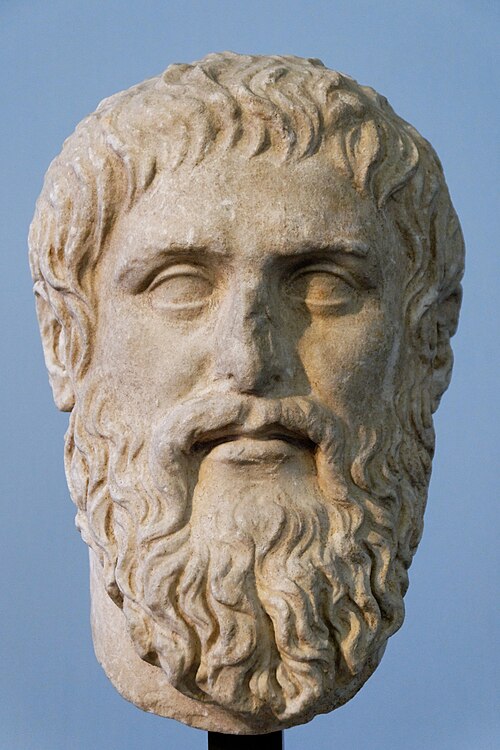 1Platoc. 427 – 347 BCERepublic · Book 6 · Jowett (GBWW) translation
AND thus, Glaucon, after the argument has gone a weary way, the true and the false philosophers have at length appeared in view.
I do not think, he said, that the way could have been shortened.
I suppose not, I said; and yet I believe that we might have had a better view of both of them if the discussion could have been confined to this one subject and if there were not many other questions awaiting us, which he who desires to see in what respect the life of the just differs from that of the unjust must consider.
And what is the next question? he asked.
Surely, I said, the one which follows next in order. Inasmuch as philosophers only are able to grasp the eternal and unchangeable, and those who wander in the region of the many and variable are not philosophers, I must ask you which of the two classes should be the rulers of our State?
And how can we rightly answer that question?
Whichever of the two are best able to guard the laws and institutions of our State — let them be our guardians.
Very good.
Neither, I said, can there be any question that the guardian who is to keep anything should have eyes rather than no eyes?
There can be no question of that.
And are not those who are verily and indeed wanting in the knowledge of the true being of each thing, and who have in their souls no clear pattern, and are unable as with a painter's eye to look at the absolute truth and to that original to repair, and having perfect vision of the other world to order the laws about beauty, goodness, justice in this, if not already ordered, and to guard and preserve the order of them — are not such persons, I ask, simply blind?
Truly, he replied, they are much in that condition.
And shall they be our guardians when there are others who, besides being their equals in experience and falling short of them in no particular of virtue, also know the very truth of each thing?
There can be no reason, he said, for rejecting those who have this greatest of all great qualities; they must always have the first place unless they fail in some other respect. Suppose, then, I said, that we determine how far they can unite this and the other excellences.
By all means.
In the first place, as we began by observing, the nature of the philosopher has to be ascertained. We must come to an understanding about him, and, when we have done so, then, if I am not mistaken, we shall also acknowledge that such a union of qualities is possible, and that those in whom they are united, and those only, should be rulers in the State.
What do you mean?
Let us suppose that philosophical minds always love knowledge of a sort which shows them the eternal nature not varying from generation and corruption.
Agreed.
And further, I said, let us agree that they are lovers of all true being; there is no part whether greater or less, or more or less honorable, which they are willing to renounce; as we said before of the lover and the man of ambition.
True.
And if they are to be what we were describing, is there not another quality which they should also possess?
What quality?
Truthfulness: they will never intentionally receive into their minds falsehood, which is their detestation, and they will love the truth.
Yes, that may be safely affirmed of them.
"May be." my friend, I replied, is not the word; say rather, "must be affirmed:" for he whose nature is amorous of anything cannot help loving all that belongs or is akin to the object of his affections.
Right, he said.
And is there anything more akin to wisdom than truth?
How can there be?
Can the same nature be a lover of wisdom and a lover of falsehood?
Never.
The true lover of learning then must from his earliest youth, as far as in him lies, desire all truth?
Assuredly.
But then again, as we know by experience, he whose desires are strong in one direction will have them weaker in others; they will be like a stream which has been drawn off into another channel.
True.
He whose desires are drawn toward knowledge in every form will be absorbed in the pleasures of the soul, and will hardly feel bodily pleasure — I mean, if he be a true philosopher and not a sham one.
That is most certain.
Such a one is sure to be temperate and the reverse of covetous; for the motives which make another man desirous of having and spending, have no place in his character.
Very true.
Another criterion of the philosophical nature has also to be considered.
What is that?
There should be no secret corner of illiberality; nothing can be more antagonistic than meanness to a soul which is ever longing after the whole of things both divine and human.
Most true, he replied.
Then how can he who has magnificence of mind and is the spectator of all time and all existence, think much of human life?
He cannot.
Or can such a one account death fearful? No, indeed.
Then the cowardly and mean nature has no part in true philosophy?
Certainly not.
Or again: can he who is harmoniously constituted, who is not covetous or mean, or a boaster, or a coward — can he, I say, ever be unjust or hard in his dealings?
Impossible.
Then you will soon observe whether a man is just and gentle, or rude and unsociable; these are the signs which distinguish even in youth the philosophical nature from the unphilosophical.
True.
There is another point which should be remarked.
What point?
Whether he has or has not a pleasure in learning; for no one will love that which gives him pain, and in which after much toil he makes little progress.
Certainly not.
And again, if he is forgetful and retains nothing of what he learns, will he not be an empty vessel?
That is certain. Laboring in vain, he must end in hating himself and his fruitless occupation? Yes.
Then a soul which forgets cannot be ranked among genuine philosophic natures; we must insist that the philosopher should have a good memory?
Certainly.
And once more, the inharmonious and unseemly nature can only tend to disproportion?
Undoubtedly.
And do you consider truth to be akin to proportion or to disproportion?
To proportion.
Then, besides other qualities, we must try to find a naturally well-proportioned and gracious mind, which will move spontaneously toward the true being of everything.
Certainly.
Well, and do not all these qualities, which we have been enumerating, go together, and are they not, in a manner, necessary to a soul, which is to have a full and perfect participation of being?
They are absolutely necessary, he replied.
And must not that be a blameless study which he only can pursue who has the gift of a good memory, and is quick to learn — noble, gracious, the friend of truth, justice, courage, temperance, who are his kindred?
The god of jealousy himself, he said, could find no fault with such a study.
And to men like him, I said, when perfected by years and education, and to these only you will intrust the State.
Here Adeimantus interposed and said: To these statements, Socrates, no one can offer a reply; but when you talk in this way, a strange feeling passes over the minds of your hearers: They fancy that they are led astray a little at each step in the argument, owing to their own want of skill in asking and answering questions; these littles accumulate, and at the end of the discussion they are found to have sustained a mighty overthrow and all their former notions appear to be turned upside down. And as unskilful players of draughts are at last shut up by their more skilful adversaries and have no piece to move, so they too find themselves shut up at last; for they have nothing to say in this new game of which words are the counters; and yet all the time they are in the right. The observation is suggested to me by what is now occurring. For any one of us might say, that although in words he is not able to meet you at each step of the argument, he sees as a fact that the votaries of philosophy, when they carry on the study, not only in youth as a part of education, but as the pursuit of their maturer years, most of them become strange monsters, not to say utter rogues, and that those who may be considered the best of them are made useless to the world by the very study which you extol.
Well, and do you think that those who say so are wrong?
I cannot tell, he replied; but I should like to know what is your opinion.
Hear my answer; I am of opinion that they are quite right.
Then how can you be justified in saying that cities will not cease from evil until philosophers rule in them, when philosophers are acknowledged by us to be of no use to them?
You ask a question, I said, to which a reply can only be given in a parable.
Yes, Socrates; and that is a way of speaking to which you are not at all accustomed, I suppose.
I perceive, I said, that you are vastly amused at having plunged me into such a hopeless discussion; but now hear the parable, and then you will be still more amused at the meagreness of my imagination: for the manner in which the best men are treated in their own States is so grievous that no single thing on earth is comparable to it; and therefore, if I am to plead their cause, I must have recourse to fiction, and put together a figure made up of many things, like the fabulous unions of goats and stags which are found in pictures. Imagine then a fleet or a ship in which there is a captain who is taller and stronger than any of the crew, but he is a little deaf and has a similar infirmity in sight, and his knowledge of navigation is not much better. The sailors are quarrelling with one another about the steering — everyone is of opinion that he has a right to steer, though he has never learned the art of navigation and cannot tell who taught him or when he learned, and will further assert that it cannot be taught, and they are ready to cut in pieces anyone who says the contrary. They throng about the captain, begging and praying him to commit the helm to them; and if at any time they do not prevail, but others are preferred to them, they kill the others or throw them overboard, and having first chained up the noble captain's senses with drink or some narcotic drug, they mutiny and take possession of the ship and make free with the stores; thus, eating and drinking, they proceed on their voyage in such manner as might be expected of them. Him who is their partisan and cleverly aids them in their plot for getting the ship out of the captain's hands into their own whether by force or persuasion, they compliment with the name of sailor, pilot, able seaman, and abuse the other sort of man, whom they call a good-for-nothing; but that the true pilot must pay attention to the year and seasons and sky and stars and winds, and whatever else belongs to his art, if he intends to be really qualified for the command of a ship, and that he must and will be the steerer, whether other people like or not — the possibility of this union of authority with the steerer's art has never seriously entered into their thoughts or been made part of their calling. Now in vessels which are in a state of mutiny and by sailors who are mutineers, how will the true pilot be regarded? Will he not be called by them a prater, a star-gazer, a good-for-nothing?
— Plato, Republic, Book 6
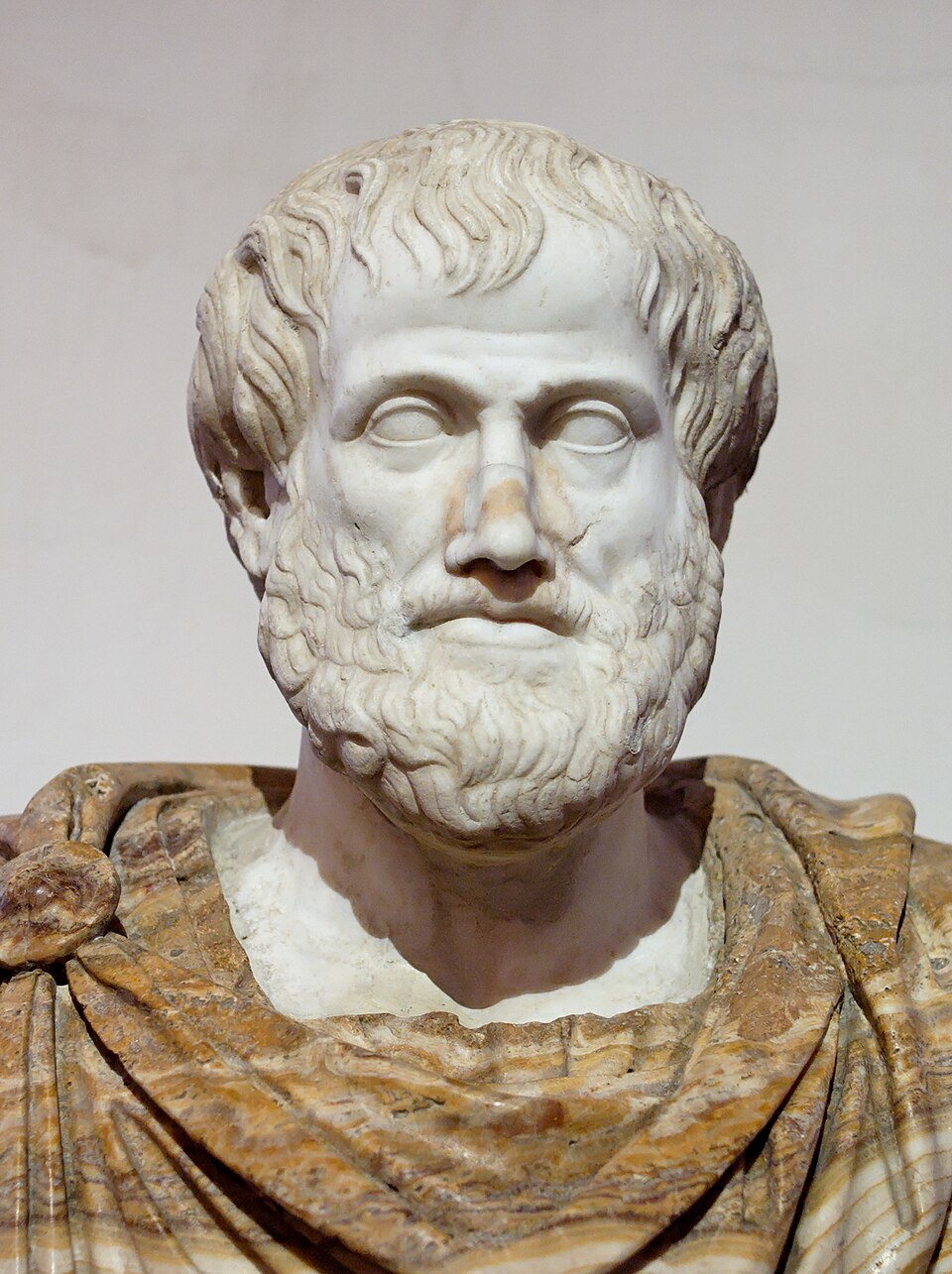 2Aristotle384 – 322 BCENicomachean Ethics · Book 5, Chapter 2
But at all events what we are investigating is the justice which is a part of virtue; for there is a justice of this kind, as we maintain. Similarly it is with injustice in the particular sense that we are concerned.
That there is such a thing is indicated by the fact that while the man who exhibits in action the other forms of wickedness acts wrongly indeed, but not graspingly (e.g. the man who throws away his shield through cowardice or speaks harshly through bad temper or fails to help a friend with money through meanness), when a man acts graspingly he often exhibits none of these vices,-no, nor all together, but certainly wickedness of some kind (for we blame him) and injustice. There is, then, another kind of injustice which is a part of injustice in the wide sense, and a use of the word ‘unjust’ which answers to a part of what is unjust in the wide sense of ‘contrary to the law’. Again if one man commits adultery for the sake of gain and makes money by it, while another does so at the bidding of appetite though he loses money and is penalized for it, the latter would be held to be self-indulgent rather than grasping, but the former is unjust, but not self-indulgent; evidently, therefore, he is unjust by reason of his making gain by his act. Again, all other unjust acts are ascribed invariably to some particular kind of wickedness, e.g. adultery to self-indulgence, the desertion of a comrade in battle to cowardice, physical violence to anger; but if a man makes gain, his action is ascribed to no form of wickedness but injustice. Evidently, therefore, there is apart from injustice in the wide sense another, ‘particular’, injustice which shares the name and nature of the first, because its definition falls within the same genus; for the significance of both consists in a relation to one’s neighbour, but the one is concerned with honour or money or safety-or that which includes all these, if we had a single name for it-and its motive is the pleasure that arises from gain; while the other is concerned with all the objects with which the good man is concerned.
It is clear, then, that there is more than one kind of justice, and that there is one which is distinct from virtue entire; we must try to grasp its genus and differentia.
The unjust has been divided into the unlawful and the unfair, and the just into the lawful and the fair. To the unlawful answers the afore-mentioned sense of injustice. But since unfair and the unlawful are not the same, but are different as a part is from its whole (for all that is unfair is unlawful, but not all that is unlawful is unfair), the unjust and injustice in the sense of the unfair are not the same as but different from the former kind, as part from whole; for injustice in this sense is a part of injustice in the wide sense, and similarly justice in the one sense of justice in the other. Therefore we must speak also about particular justice and particular and similarly about the just and the unjust. The justice, then, which answers to the whole of virtue, and the corresponding injustice, one being the exercise of virtue as a whole, and the other that of vice as a whole, towards one’s neighbour, we may leave on one side. And how the meanings of ‘just’ and ‘unjust’ which answer to these are to be distinguished is evident; for practically the majority of the acts commanded by the law are those which are prescribed from the point of view of virtue taken as a whole; for the law bids us practise every virtue and forbids us to practise any vice. And the things that tend to produce virtue taken as a whole are those of the acts prescribed by the law which have been prescribed with a view to education for the common good. But with regard to the education of the individual as such, which makes him without qualification a good man, we must determine later whether this is the function of the political art or of another; for perhaps it is not the same to be a good man and a good citizen of any state taken at random.
Of particular justice and that which is just in the corresponding sense, (A) one kind is that which is manifested in distributions of honour or money or the other things that fall to be divided among those who have a share in the constitution (for in these it is possible for one man to have a share either unequal or equal to that of another), and (B) one is that which plays a rectifying part in transactions between man and man. Of this there are two divisions; of transactions (1) some are voluntary and (2) others involuntary — voluntary such transactions as sale, purchase, loan for consumption, pledging, loan for use, depositing, letting (they are called voluntary because the origin of these transactions is voluntary), while of the involuntary (a) some are clandestine, such as theft, adultery, poisoning, procuring, enticement of slaves, assassination, false witness, and (b) others are violent, such as assault, imprisonment, murder, robbery with violence, mutilation, abuse, insult.
3
(A) We have shown that both the unjust man and the unjust act are unfair or unequal; now it is clear that there is also an intermediate between the two unequals involved in either case. And this is the equal; for in any kind of action in which there’s a more and a less there is also what is equal. If, then, the unjust is unequal, just is equal, as all men suppose it to be, even apart from argument. And since the equal is intermediate, the just will be an intermediate. Now equality implies at least two things. The just, then, must be both intermediate and equal and relative (i.e. for certain persons). And since the equall intermediate it must be between certain things (which are respectively greater and less); equal, it involves two things; qua just, it is for certain people. The just, therefore, involves at least four terms; for the persons for whom it is in fact just are two, and the things in which it is manifested, the objects distributed, are two. And the same equality will exist between the persons and between the things concerned; for as the latter the things concerned-are related, so are the former; if they are not equal, they will not have what is equal, but this is the origin of quarrels and complaints-when either equals have and are awarded unequal shares, or unequals equal shares. Further, this is plain from the fact that awards should be ‘according to merit’; for all men agree that what is just in distribution must be according to merit in some sense, though they do not all specify the same sort of merit, but democrats identify it with the status of freeman, supporters of oligarchy with wealth (or with noble birth), and supporters of aristocracy with excellence.
The just, then, is a species of the proportionate (proportion being not a property only of the kind of number which consists of abstract units, but of number in general). For proportion is equality of ratios, and involves four terms at least (that discrete proportion involves four terms is plain, but so does continuous proportion, for it uses one term as two and mentions it twice; e.g. ‘as the line A is to the line B, so is the line B to the line C’; the line B, then, has been mentioned twice, so that if the line B be assumed twice, the proportional terms will be four); and the just, too, involves at least four terms, and the ratio between one pair is the same as that between the other pair; for there is a similar distinction between the persons and between the things. As the term A, then, is to B, so will C be to D, and therefore, alternando, as A is to C, B will be to D. Therefore also the whole is in the same ratio to the whole; and this coupling the distribution effects, and, if the terms are so combined, effects justly. The conjunction, then, of the term A with C and of B with D is what is just in distribution, and this species of the just is intermediate, and the unjust is what violates the proportion; for the proportional is intermediate, and the just is proportional. (Mathematicians call this kind of proportion geometrical; for it is in geometrical proportion that it follows that the whole is to the whole as either part is to the corresponding part.) This proportion is not continuous; for we cannot get a single term standing for a person and a thing.
This, then, is what the just is-the proportional; the unjust is what violates the proportion. Hence one term becomes too great, the other too small, as indeed happens in practice; for the man who acts unjustly has too much, and the man who is unjustly treated too little, of what is good. In the case of evil the reverse is true; for the lesser evil is reckoned a good in comparison with the greater evil, since the lesser evil is rather to be chosen than the greater, and what is worthy of choice is good, and what is worthier of choice a greater good.
This, then, is one species of the just.
4
(B) The remaining one is the rectificatory, which arises in connexion with transactions both voluntary and involuntary. This form of the just has a different specific character from the former. For the justice which distributes common possessions is always in accordance with the kind of proportion mentioned above (for in the case also in which the distribution is made from the common funds of a partnership it will be according to the same ratio which the funds put into the business by the partners bear to one another); and the injustice opposed to this kind of justice is that which violates the proportion. But the justice in transactions between man and man is a sort of equality indeed, and the injustice a sort of inequality; not according to that kind of proportion, however, but according to arithmetical proportion. For it makes no difference whether a good man has defrauded a bad man or a bad man a good one, nor whether it is a good or a bad man that has committed adultery; the law looks only to the distinctive character of the injury, and treats the parties as equal, if one is in the wrong and the other is being wronged, and if one inflicted injury and the other has received it. Therefore, this kind of injustice being an inequality, the judge tries to equalize it; for in the case also in which one has received and the other has inflicted a wound, or one has slain and the other been slain, the suffering and the action have been unequally distributed; but the judge tries to equalize by means of the penalty, taking away from the gain of the assailant. For the term ‘gain’ is applied generally to such cases, even if it be not a term appropriate to certain cases, e.g. to the person who inflicts a woundand ‘loss’ to the sufferer; at all events when the suffering has been estimated, the one is called loss and the other gain. Therefore the equal is intermediate between the greater and the less, but the gain and the loss are respectively greater and less in contrary ways; more of the good and less of the evil are gain, and the contrary is loss; intermediate between them is, as we saw, equal, which we say is just; therefore corrective justice will be the intermediate between loss and gain. This is why, when people dispute, they take refuge in the judge; and to go to the judge is to go to justice; for the nature of the judge is to be a sort of animate justice; and they seek the judge as an intermediate, and in some states they call judges mediators, on the assumption that if they get what is intermediate they will get what is just. The just, then, is an intermediate, since the judge is so. Now the judge restores equality; it is as though there were a line divided into unequal parts, and he took away that by which the greater segment exceeds the half, and added it to the smaller segment. And when the whole has been equally divided, then they say they have ‘their own’-i.e. when they have got what is equal. The equal is intermediate between the greater and the lesser line according to arithmetical proportion. It is for this reason also that it is called just (sikaion), because it is a division into two equal parts (sicha), just as if one were to call it sichaion; and the judge (sikastes) is one who bisects (sichastes). For when something is subtracted from one of two equals and added to the other, the other is in excess by these two; since if what was taken from the one had not been added to the other, the latter would have been in excess by one only. It therefore exceeds the intermediate by one, and the intermediate exceeds by one that from which something was taken. By this, then, we shall recognize both what we must subtract from that which has more, and what we must add to that which has less; we must add to the latter that by which the intermediate exceeds it, and subtract from the greatest that by which it exceeds the intermediate. Let the lines AA’, BB’, CC’ be equal to one another; from the line AA’ let the segment AE have been subtracted, and to the line CC’ let the segment CD have been added, so that the whole line DCC’ exceeds the line EA’ by the segment CD and the segment CF; therefore it exceeds the line BB’ by the segment CD. (See diagram.)
— Aristotle, Nicomachean Ethics, Book 5, Chapter 2
3Platoc. 427 – 347 BCERepublic · Book 2 · Jowett (GBWW) translation
WITH these words I was thinking that I had made an end of the discussion; but the end, in truth, proved to be only a beginning. For Glaucon, who is always the most pugnacious of men, was dissatisfied at Thrasymachus's retirement; he wanted to have the battle out. So he said to me: Socrates, do you wish really to persuade us, or only to seem to have persuaded us, that to be just is always better than to be unjust?
I should wish really to persuade you, I replied, if I could.
Then you certainly have not succeeded. Let me ask you now: How would you arrange goods — are there not some which we welcome for their own sakes, and independently of their consequences, as, for example, harmless pleasures and enjoyments, which delight us at the time, although nothing follows from them?
I agree in thinking that there is such a class, I replied.
Is there not also a second class of goods, such as knowledge, sight, health, which are desirable not only in themselves, but also for their results?
Certainly, I said.
And would you not recognize a third class, such as gymnastic, and the care of the sick, and the physician's art; also the various ways of money-making — these do us good but we regard them as disagreeable; and no one would choose them for their own sakes, but only for the sake of some reward or result which flows from them?
There is, I said, this third class also. But why do you ask?
Because I want to know in which of the three classes you would place justice?
In the highest class, I replied — among those goods which he who would be happy desires both for their own sake and for the sake of their results.
Then the many are of another mind; they think that justice is to be reckoned in the troublesome class, among goods which are to be pursued for the sake of rewards and of reputation, but in themselves are disagreeable and rather to be avoided.
I know, I said, that this is their manner of thinking, and that this was the thesis which Thrasymachus was maintaining just now, when he censured justice and praised injustice. But I am too stupid to be convinced by him.
I wish, he said, that you would hear me as well as him, and then I shall see whether you and I agree. For Thrasymachus seems to me, like a snake, to have been charmed by your voice sooner than he ought to have been; but to my mind the nature of justice and injustice has not yet been made clear. Setting aside their rewards and results, I want to know what they are in themselves, and how they inwardly work in the soul. If you please, then, I will revive the argument of Thrasymachus. And first I will speak of the nature and origin of justice according to the common view of them. Secondly, I will show that all men who practise justice do so against their will, of necessity, but not as a good. And thirdly, I will argue that there is reason in this view, for the life of the unjust is after all better far than the life of the just — if what they say is true, Socrates, since I myself am not of their opinion. But still I acknowledge that I am perplexed when I hear the voices of Thrasymachus and myriads of others dinning in my ears; and, on the other hand, I have never yet heard the superiority of justice to injustice maintained by anyone in a satisfactory way. I want to hear justice praised in respect of itself; then I shall be satisfied, and you are the person from whom I think that I am most likely to hear this; and therefore I will praise the unjust life to the utmost of my power, and my manner of speaking will indicate the manner in which I desire to hear you too praising justice and censuring injustice. Will you say whether you approve of my proposal?
Indeed I do; nor can I imagine any theme about which a man of sense would oftener wish to converse.
I am delighted, he replied, to hear you say so, and shall begin by speaking, as I proposed, of the nature and origin of justice.
They say that to do injustice is, by nature, good; to suffer injustice, evil; but that the evil is greater than the good. And so when men have both done and suffered injustice and have had experience of both, not being able to avoid the one and obtain the other, they think that they had better agree among themselves to have neither; hence there arise laws and mutual covenants; and that which is ordained by law is termed by them lawful and just. This they affirm to be the origin and nature of justice; it is a mean or compromise, between the best of all, which is to do injustice and not be punished, and the worst of all, which is to suffer injustice without the power of retaliation; and justice, being at a middle point between the two, is tolerated not as a good, but as the lesser evil, and honored by reason of the inability of men to do injustice. For no man who is worthy to be called a man would ever submit to such an agreement if he were able to resist; he would be mad if he did. Such is the received account, Socrates, of the nature and origin of justice.
Now that those who practise justice do so involuntarily and because they have not the power to be unjust will best appear if we imagine something of this kind: having given both to the just and the unjust power to do what they will, let us watch and see whither desire will lead them; then we shall discover in the very act the just and unjust man to be proceeding along the same road, following their interest, which all natures deem to be their good, and are only diverted into the path of justice by the force of law. The liberty which we are supposing may be most completely given to them in the form of such a power as is said to have been possessed by Gyges, the ancestor of Croesus the Lydian. According to the tradition, Gyges was a shepherd in the service of the King of Lydia; there was a great storm, and an earthquake made an opening in the earth at the place where he was feeding his flock. Amazed at the sight, he descended into the opening, where, among other marvels, he beheld a hollow brazen horse, having doors, at which he, stooping and looking in, saw a dead body of stature, as appeared to him, more than human and having nothing on but a gold ring; this he took from the finger of the dead and reascended. Now the shepherds met together, according to custom, that they might send their monthly report about the flocks to the King; into their assembly he came having the ring on his finger, and as he was sitting among them he chanced to turn the collet of the ring inside his hand, when instantly he became invisible to the rest of the company and they began to speak of him as if he were no longer present. He was astonished at this, and again touching the ring he turned the collet outward and reappeared; he made several trials of the ring, and always with the same result — when he turned the collet inward he became invisible, when outward he reappeared. Whereupon he contrived to be chosen one of the messengers who were sent to the court; where as soon as he arrived he seduced the Queen, and with her help conspired against the King and slew him and took the kingdom. Suppose now that there were two such magic rings, and the just put on one of them and the unjust the other; no man can be imagined to be of such an iron nature that he would stand fast in justice. No man would keep his hands off what was not his own when he could safely take what he liked out of the market, or go into houses and lie with anyone at his pleasure, or kill or release from prison whom he would, and in all respects be like a god among men. Then the actions of the just would be as the actions of the unjust; they would both come at last to the same point. And this we may truly affirm to be a great proof that a man is just, not willingly or because he thinks that justice is any good to him individually, but of necessity, for wherever anyone thinks that he can safely be unjust, there he is unjust. For all men believe in their hearts that injustice is far more profitable to the individual than justice, and he who argues as I have been supposing, will say that they are right. If you could imagine anyone obtaining this power of becoming invisible, and never doing any wrong or touching what was another's, he would be thought by the lookers-on to be a most wretched idiot, although they would praise him to one another's faces, and keep up appearances with one another from a fear that they too might suffer injustice. Enough of this.
Now, if we are to form a real judgment of the life of the just and unjust, we must isolate them; there is no other way; and how is the isolation to be effected? I answer: Let the unjust man be entirely unjust, and the just man entirely just; nothing is to be taken away from either of them, and both are to be perfectly furnished for the work of their respective lives. First, let the unjust be like other distinguished masters of craft; like the skilful pilot or physician, who knows intuitively his own powers and keeps within their limits, and who, if he fails at any point, is able to recover himself. So let the unjust make his unjust attempts in the right way, and lie hidden if he means to be great in his injustice (he who is found out is nobody): for the highest reach of injustice is, to be deemed just when you are not. Therefore I say that in the perfectly unjust man we must assume the most perfect injustice; there is to be no deduction, but we must allow him, while doing the most unjust acts, to have acquired the greatest reputation for justice. If he have taken a false step he must be able to recover himself; he must be one who can speak with effect, if any of his deeds come to light, and who can force his way where force is required by his courage and strength, and command of money and friends. And at his side let us place the just man in his nobleness and simplicity, wishing, as AEschylus says, to be and not to seem good. There must be no seeming, for if he seem to be just he will be honored and rewarded, and then we shall not know whether he is just for the sake of justice or for the sake of honor and rewards; therefore, let him be clothed in justice only, and have no other covering; and he must be imagined in a state of life the opposite of the former. Let him be the best of men, and let him be thought the worst; then he will have been put to the proof; and we shall see whether he will be affected by the fear of infamy and its consequences. And let him continue thus to the hour of death; being just and seeming to be unjust. When both have reached the uttermost extreme, the one of justice and the other of injustice, let judgment be given which of them is the happier of the two.
— Plato, Republic, Book 2
4Aristotle384 – 322 BCEPolitics · Book 1, Chapter 9
There is another variety of the art of acquisition which is commonly and rightly called an art of wealth-getting, and has in fact suggested the notion that riches and property have no limit. Being nearly connected with the preceding, it is often identified with it. But though they are not very different, neither are they the same. The kind already described is given by nature, the other is gained by experience and art.
Let us begin our discussion of the question with the following considerations:
Of everything which we possess there are two uses: both belong to the thing as such, but not in the same manner, for one is the proper, and the other the improper or secondary use of it. For example, a shoe is used for wear, and is used for exchange; both are uses of the shoe. He who gives a shoe in exchange for money or food to him who wants one, does indeed use the shoe as a shoe, but this is not its proper or primary purpose, for a shoe is not made to be an object of barter. The same may be said of all possessions, for the art of exchange extends to all of them, and it arises at first from what is natural, from the circumstance that some have too little, others too much. Hence we may infer that retail trade is not a natural part of the art of getting wealth; had it been so, men would have ceased to exchange when they had enough. In the first community, indeed, which is the family, this art is obviously of no use, but it begins to be useful when the society increases. For the members of the family originally had all things in common; later, when the family divided into parts, the parts shared in many things, and different parts in different things, which they had to give in exchange for what they wanted, a kind of barter which is still practiced among barbarous nations who exchange with one another the necessaries of life and nothing more; giving and receiving wine, for example, in exchange for coin, and the like. This sort of barter is not part of the wealth-getting art and is not contrary to nature, but is needed for the satisfaction of men’s natural wants. The other or more complex form of exchange grew, as might have been inferred, out of the simpler. When the inhabitants of one country became more dependent on those of another, and they imported what they needed, and exported what they had too much of, money necessarily came into use. For the various necessaries of life are not easily carried about, and hence men agreed to employ in their dealings with each other something which was intrinsically useful and easily applicable to the purposes of life, for example, iron, silver, and the like. Of this the value was at first measured simply by size and weight, but in process of time they put a stamp upon it, to save the trouble of weighing and to mark the value.
When the use of coin had once been discovered, out of the barter of necessary articles arose the other art of wealth getting, namely, retail trade; which was at first probably a simple matter, but became more complicated as soon as men learned by experience whence and by what exchanges the greatest profit might be made. Originating in the use of coin, the art of getting wealth is generally thought to be chiefly concerned with it, and to be the art which produces riches and wealth; having to consider how they may be accumulated. Indeed, riches is assumed by many to be only a quantity of coin, because the arts of getting wealth and retail trade are concerned with coin. Others maintain that coined money is a mere sham, a thing not natural, but conventional only, because, if the users substitute another commodity for it, it is worthless, and because it is not useful as a means to any of the necessities of life, and, indeed, he who is rich in coin may often be in want of necessary food. But how can that be wealth of which a man may have a great abundance and yet perish with hunger, like Midas in the fable, whose insatiable prayer turned everything that was set before him into gold?
Hence men seek after a better notion of riches and of the art of getting wealth than the mere acquisition of coin, and they are right. For natural riches and the natural art of wealth-getting are a different thing; in their true form they are part of the management of a household; whereas retail trade is the art of producing wealth, not in every way, but by exchange. And it is thought to be concerned with coin; for coin is the unit of exchange and the measure or limit of it. And there is no bound to the riches which spring from this art of wealth getting. As in the art of medicine there is no limit to the pursuit of health, and as in the other arts there is no limit to the pursuit of their several ends, for they aim at accomplishing their ends to the uttermost (but of the means there is a limit, for the end is always the limit), so, too, in this art of wealth-getting there is no limit of the end, which is riches of the spurious kind, and the acquisition of wealth. But the art of wealth-getting which consists in household management, on the other hand, has a limit; the unlimited acquisition of wealth is not its business. And, therefore, in one point of view, all riches must have a limit; nevertheless, as a matter of fact, we find the opposite to be the case; for all getters of wealth increase their hoard of coin without limit. The source of the confusion is the near connection between the two kinds of wealth-getting; in either, the instrument is the same, although the use is different, and so they pass into one another; for each is a use of the same property, but with a difference: accumulation is the end in the one case, but there is a further end in the other. Hence some persons are led to believe that getting wealth is the object of household management, and the whole idea of their lives is that they ought either to increase their money without limit, or at any rate not to lose it. The origin of this disposition in men is that they are intent upon living only, and not upon living well; and, as their desires are unlimited they also desire that the means of gratifying them should be without limit. Those who do aim at a good life seek the means of obtaining bodily pleasures; and, since the enjoyment of these appears to depend on property, they are absorbed in getting wealth: and so there arises the second species of wealth-getting. For, as their enjoyment is in excess, they seek an art which produces the excess of enjoyment; and, if they are not able to supply their pleasures by the art of getting wealth, they try other arts, using in turn every faculty in a manner contrary to nature. The quality of courage, for example, is not intended to make wealth, but to inspire confidence; neither is this the aim of the general’s or of the physician’s art; but the one aims at victory and the other at health. Nevertheless, some men turn every quality or art into a means of getting wealth; this they conceive to be the end, and to the promotion of the end they think all things must contribute.
Thus, then, we have considered the art of wealth-getting which is unnecessary, and why men want it; and also the necessary art of wealth-getting, which we have seen to be different from the other, and to be a natural part of the art of managing a household, concerned with the provision of food, not, however, like the former kind, unlimited, but having a limit.
X
And we have found the answer to our original question, Whether the art of getting wealth is the business of the manager of a household and of the statesman or not their business? viz., that wealth is presupposed by them. For as political science does not make men, but takes them from nature and uses them, so too nature provides them with earth or sea or the like as a source of food. At this stage begins the duty of the manager of a household, who has to order the things which nature supplies; he may be compared to the weaver who has not to make but to use wool, and to know, too, what sort of wool is good and serviceable or bad and unserviceable. Were this otherwise, it would be difficult to see why the art of getting wealth is a part of the management of a household and the art of medicine not; for surely the members of a household must have health just as they must have life or any other necessary. The answer is that as from one point of view the master of the house and the ruler of the state have to consider about health, from another point of view not they but the physician; so in one way the art of household management, in another way the subordinate art, has to consider about wealth. But, strictly speaking, as I have already said, the means of life must be provided beforehand by nature; for the business of nature is to furnish food to that which is born, and the food of the offspring is always what remains over of that from which it is produced. Wherefore the art of getting wealth out of fruits and animals is always natural.
There are two sorts of wealth-getting, as I have said; one is a part of household management, the other is retail trade: the former necessary and honorable, while that which consists in exchange is justly censured; for it is unnatural, and a mode by which men gain from one another. The most hated sort, and with the greatest reason, is usury, which makes a gain out of money itself, and not from the natural object of it. For money was intended to be used in exchange, but not to increase at interest. And this term interest, which means the birth of money from money, is applied to the breeding of money because the offspring resembles the parent. Wherefore of an modes of getting wealth this is the most unnatural.
XI
Enough has been said about the theory of wealth-getting; we will now proceed to the practical part. The discussion of such matters is not unworthy of philosophy, but to be engaged in them practically is illiberal and irksome. The useful parts of wealth-getting are, first, the knowledge of livestock — which are most profitable, and where, and how — as, for example, what sort of horses or sheep or oxen or any other animals are most likely to give a return. A man ought to know which of these pay better than others, and which pay best in particular places, for some do better in one place and some in another. Secondly, husbandry, which may be either tillage or planting, and the keeping of bees and of fish, or fowl, or of any animals which may be useful to man. These are the divisions of the true or proper art of wealth-getting and come first. Of the other, which consists in exchange, the first and most important division is commerce (of which there are three kinds — the provision of a ship, the conveyance of goods, exposure for sale — these again differing as they are safer or more profitable), the second is usury, the third, service for hire — of this, one kind is employed in the mechanical arts, the other in unskilled and bodily labor. There is still a third sort of wealth getting intermediate between this and the first or natural mode which is partly natural, but is also concerned with exchange, viz., the industries that make their profit from the earth, and from things growing from the earth which, although they bear no fruit, are nevertheless profitable; for example, the cutting of timber and all mining. The art of mining, by which minerals are obtained, itself has many branches, for there are various kinds of things dug out of the earth. Of the several divisions of wealth-getting I now speak generally; a minute consideration of them might be useful in practice, but it would be tiresome to dwell upon them at greater length now.
— Aristotle, Politics, Book 1, Chapter 9
5Platoc. 427 – 347 BCERepublic · Book 10 · Jowett (GBWW) translation
OF the many excellences which I perceive in the order of our State, there is none which upon reflection pleases me better than the rule about poetry.
To what do you refer?
To the rejection of imitative poetry, which certainly ought not to be received; as I see far more clearly now that the parts of the soul have been distinguished.
What do you mean?
Speaking in confidence, for I should not like to have my words repeated to the tragedians and the rest of the imitative tribe — but I do not mind saying to you, that all poetical imitations are ruinous to the understanding of the hearers, and that the knowledge of their true nature is the only antidote to them.
Explain the purport of your remark.
Well, I will tell you, although I have always from my earliest youth had an awe and love of Homer, which even now makes the words falter on my lips, for he is the great captain and teacher of the whole of that charming tragic company; but a man is not to be reverenced more than the truth, and therefore I will speak out.
Very good, he said.
Listen to me, then, or, rather, answer me.
Put your question.
Can you tell me what imitation is? for I really do not know.
A likely thing, then, that I should know.
Why not? for the duller eye may often see a thing sooner than the keener.
Very true, he said; but in your presence, even if I had any faint notion, I could not muster courage to utter it. Will you inquire yourself? Well, then, shall we begin the inquiry in our usual manner: Whenever a number of individuals have a common name, we assume them to have also a corresponding idea or form; do you understand me?
I do.
Let us take any common instance; there are beds and tables in the world — plenty of them, are there not?
Yes.
But there are only two ideas or forms of them — one the idea of a bed, the other of a table.
True.
And the maker of either of them makes a bed or he makes a table for our use, in accordance with the idea — that is our way of speaking in this and similar instances — but no artificer makes the ideas themselves: how could he?
Impossible.
And there is another artist — I should like to know what you would say of him.
Who is he?
One who is the maker of all the works of all other workmen.
What an extraordinary man!
Wait a little, and there will be more reason for your saying so. For this is he who is able to make not only vessels of every kind, but plants and animals, himself and all other things — the earth and heaven, and the things which are in heaven or under the earth; he makes the gods also.
He must be a wizard and no mistake.
Oh! you are incredulous, are you? Do you mean that there is no such maker or creator, or that in one sense there might be a maker of all these things, but in another not? Do you see that there is a way in which you could make them all yourself?
What way?
An easy way enough; or rather, there are many ways in which the feat might be quickly and easily accomplished, none quicker than that of turning a mirror round and round — you would soon enough make the sun and the heavens, and the earth and yourself, and other animals and plants, and all the other things of which we were just now speaking, in the mirror.
Yes, he said; but they would be appearances only.
Very good, I said, you are coming to the point now. And the painter, too, is, as I conceive, just such another — a creator of appearances, is he not?
Of course.
But then I suppose you will say that what he creates is untrue. And yet there is a sense in which the painter also creates a bed?
Yes, he said, but not a real bed.
And what of the maker of the bed? were you not saying that he too makes, not the idea which, according to our view, is the essence of the bed, but only a particular bed?
Yes, I did.
Then if he does not make that which exists he cannot make true existence, but only some semblance of existence; and if anyone were to say that the work of the maker of the bed, or of any other workman, has real existence, he could hardly be supposed to be speaking the truth.
At any rate, he replied, philosophers would say that he was not speaking the truth.
No wonder, then, that his work, too, is an indistinct expression of truth.
No wonder.
Suppose now that by the light of the examples just offered we inquire who this imitator is?
If you please. Well, then, here are three beds: one existing in nature, which is made by God, as I think that we may say — for no one else can be the maker?
No.
There is another which is the work of the carpenter?
Yes.
And the work of the painter is a third?
Yes.
Beds, then, are of three kinds, and there are three artists who superintend them: God, the maker of the bed, and the painter?
Yes, there are three of them.
God, whether from choice or from necessity, made one bed in nature and one only; two or more such ideal beds neither ever have been nor ever will be made by God.
Why is that?
Because even if He had made but two, a third would still appear behind them which both of them would have for their idea, and that would be the ideal bed and not the two others.
Very true, he said.
God knew this, and he desired to be the real maker of a real bed, not a particular maker of a particular bed, and therefore he created a bed which is essentially and by nature one only.
So we believe.
Shall we, then, speak of him as the natural author or maker of the bed?
Yes, he replied; inasmuch as by the natural process of creation he is the author of this and of all other things.
And what shall we say of the carpenter — is not he also the maker of the bed?
Yes.
But would you call the painter a creator and maker?
Certainly not.
Yet if he is not the maker, what is he in relation to the bed?
I think, he said, that we may fairly designate him as the imitator of that which the others make.
Good, I said; then you call him who is third in the descent from nature an imitator?
Certainly, he said.
And the tragic poet is an imitator, and, therefore, like all other imitators, he is thrice removed from the king and from the truth?
That appears to be so.
Then about the imitator we are agreed. And what about the painter? I would like to know whether he may be thought to imitate that which originally exists in nature, or only the creations of artists?
The latter.
As they are or as they appear? you have still to determine this.
What do you mean?
I mean, that you may look at a bed from different points of view, obliquely or directly or from any other point of view, and the bed will appear different, but there is no difference in reality. And the same of all things.
Yes, he said, the difference is only apparent.
Now let me ask you another question: Which is the art of painting designed to be — an imitation of things as they are, or as they appear — of appearance or of reality?
Of appearance.
Then the imitator, I said, is a long way off the truth, and can do all things because he lightly touches on a small part of them, and that part an image. For example: A painter will paint a cobbler, carpenter, or any other artist, though he knows nothing of their arts; and, if he is a good artist, he may deceive children or simple persons, when he shows them his picture of a carpenter from a distance, and they will fancy that they are looking at a real carpenter.
Certainly.
And whenever anyone informs us that he has found a man who knows all the arts, and all things else that anybody knows, and every single thing with a higher degree of accuracy than any other man — whoever tells us this, I think that we can only imagine him to be a simple creature who is likely to have been deceived by some wizard or actor whom he met, and whom he thought all-knowing, because he himself was unable to analyze the nature of knowledge and ignorance and imitation.
Most true.
And so, when we hear persons saying that the tragedians, and Homer, who is at their head, know all the arts and all things human, virtue as well as vice, and divine things too, for that the good poet cannot compose well unless he knows his subject, and that he who has not this knowledge can never be a poet, we ought to consider whether here also there may not be a similar illusion. Perhaps they may have come across imitators and been deceived by them; they may not have remembered when they saw their works that these were but imitations thrice removed from the truth, and could easily be made without any knowledge of the truth, because they are appearances only and not realities? Or, after all, they may be in the right, and poets do really know the things about which they seem to the many to speak so well?
The question, he said, should by all means be considered.
Now do you suppose that if a person were able to make the original as well as the image, he would seriously devote himself to the image-making branch? Would he allow imitation to be the ruling principle of his life, as if he had nothing higher in him?
I should say not.
The real artist, who knew what he was imitating, would be interested in realities and not in imitations; and would desire to leave as memorials of himself works many and fair; and, instead of being the author of encomiums, he would prefer to be the theme of them.
Yes, he said, that would be to him a source of much greater honor and profit.
Then, I said, we must put a question to Homer; not about medicine, or any of the arts to which his poems only incidentally refer: we are not going to ask him, or any other poet, whether he has cured patients like Asclepius, or left behind him a school of medicine such as the Asclepiads were, or whether he only talks about medicine and other arts at second-hand; but we have a right to know respecting military tactics, politics, education, which are the chiefest and noblest subjects of his poems, and we may fairly ask him about them. "Friend Homer," then we say to him, "if you are only in the second remove from truth in what you say of virtue, and not in the third — not an image maker or imitator — and if you are able to discern what pursuits make men better or worse in private or public life, tell us what State was ever better governed by your help? The good order of Lacedaemon is due to Lycurgus, and many other cities, great and small, have been similarly benefited by others; but who says that you have been a good legislator to them and have done them any good? Italy and Sicily boast of Charondas, and there is Solon who is renowned among us; but what city has anything to say about you?" Is there any city which he might name?
— Plato, Republic, Book 10
6Aristotle384 – 322 BCENicomachean Ethics · Book 5, Chapter 7
Of political justice part is natural, part legal, natural, that which everywhere has the same force and does not exist by people’s thinking this or that; legal, that which is originally indifferent, but when it has been laid down is not indifferent, e.g. that a prisoner’s ransom shall be a mina, or that a goat and not two sheep shall be sacrificed, and again all the laws that are passed for particular cases, e.g. that sacrifice shall be made in honour of Brasidas, and the provisions of decrees. Now some think that all justice is of this sort, because that which is by nature is unchangeable and has everywhere the same force (as fire burns both here and in Persia), while they see change in the things recognized as just. This, however, is not true in this unqualified way, but is true in a sense; or rather, with the gods it is perhaps not true at all, while with us there is something that is just even by nature, yet all of it is changeable; but still some is by nature, some not by nature. It is evident which sort of thing, among things capable of being otherwise, is by nature, and which is not but is legal and conventional, assuming that both are equally changeable. And in all other things the same distinction will apply; by nature the right hand is stronger, yet it is possible that all men should come to be ambidextrous. The things which are just by virtue of convention and expediency are like measures; for wine and corn measures are not everywhere equal, but larger in wholesale and smaller in retail markets. Similarly, the things which are just not by nature but by human enactment are not everywhere the same, since constitutions also are not the same, though there is but one which is everywhere by nature the best. Of things just and lawful each is related as the universal to its particulars; for the things that are done are many, but of them each is one, since it is universal.
There is a difference between the act of injustice and what is unjust, and between the act of justice and what is just; for a thing is unjust by nature or by enactment; and this very thing, when it has been done, is an act of injustice, but before it is done is not yet that but is unjust. So, too, with an act of justice (though the general term is rather ‘just action’, and ‘act of justice’ is applied to the correction of the act of injustice).
Each of these must later be examined separately with regard to the nature and number of its species and the nature of the things with which it is concerned.
8
Acts just and unjust being as we have described them, a man acts unjustly or justly whenever he does such acts voluntarily; when involuntarily, he acts neither unjustly nor justly except in an incidental way; for he does things which happen to be just or unjust. Whether an act is or is not one of injustice (or of justice) is determined by its voluntariness or involuntariness; for when it is voluntary it is blamed, and at the same time is then an act of injustice; so that there will be things that are unjust but not yet acts of injustice, if voluntariness be not present as well. By the voluntary I mean, as has been said before, any of the things in a man’s own power which he does with knowledge, i.e. not in ignorance either of the person acted on or of the instrument used or of the end that will be attained (e.g. whom he is striking, with what, and to what end), each such act being done not incidentally nor under compulsion (e.g. if A takes B’s hand and therewith strikes C, B does not act voluntarily; for the act was not in his own power). The person struck may be the striker’s father, and the striker may know that it is a man or one of the persons present, but not know that it is his father; a similar distinction may be made in the case of the end, and with regard to the whole action. Therefore that which is done in ignorance, or though not done in ignorance is not in the agent’s power, or is done under compulsion, is involuntary (for many natural processes, even, we knowingly both perform and experience, none of which is either voluntary or involuntary; e.g. growing old or dying). But in the case of unjust and just acts alike the injustice or justice may be only incidental; for a man might return a deposit unwillingly and from fear, and then he must not be said either to do what is just or to act justly, except in an incidental way. Similarly the man who under compulsion and unwillingly fails to return the deposit must be said to act unjustly, and to do what is unjust, only incidentally. Of voluntary acts we do some by choice, others not by choice; by choice those which we do after deliberation, not by choice those which we do without previous deliberation. Thus there are three kinds of injury in transactions between man and man; those done in ignorance are mistakes when the person acted on, the act, the instrument, or the end that will be attained is other than the agent supposed; the agent thought either that he was not hiting any one or that he was not hitting with this missile or not hitting this person or to this end, but a result followed other than that which he thought likely (e.g. he threw not with intent to wound but only to prick), or the person hit or the missile was other than he supposed. Now when (1) the injury takes place contrary to reasonable expectation, it is a misadventure. When (2) it is not contrary to reasonable expectation, but does not imply vice, it is a mistake (for a man makes a mistake when the fault originates in him, but is the victim of accident when the origin lies outside him). When (3) he acts with knowledge but not after deliberation, it is an act of injustice-e.g. the acts due to anger or to other passions necessary or natural to man; for when men do such harmful and mistaken acts they act unjustly, and the acts are acts of injustice, but this does not imply that the doers are unjust or wicked; for the injury is not due to vice. But when (4) a man acts from choice, he is an unjust man and a vicious man.
Hence acts proceeding from anger are rightly judged not to be done of malice aforethought; for it is not the man who acts in anger but he who enraged him that starts the mischief. Again, the matter in dispute is not whether the thing happened or not, but its justice; for it is apparent injustice that occasions rage. For they do not dispute about the occurrence of the act-as in commercial transactions where one of the two parties must be vicious-unless they do so owing to forgetfulness; but, agreeing about the fact, they dispute on which side justice lies (whereas a man who has deliberately injured another cannot help knowing that he has done so), so that the one thinks he is being treated unjustly and the other disagrees.
But if a man harms another by choice, he acts unjustly; and these are the acts of injustice which imply that the doer is an unjust man, provided that the act violates proportion or equality. Similarly, a man is just when he acts justly by choice; but he acts justly if he merely acts voluntarily.
Of involuntary acts some are excusable, others not. For the mistakes which men make not only in ignorance but also from ignorance are excusable, while those which men do not from ignorance but (though they do them in ignorance) owing to a passion which is neither natural nor such as man is liable to, are not excusable.
9
Assuming that we have sufficiently defined the suffering and doing of injustice, it may be asked (1) whether the truth in expressed in Euripides’ paradoxical words:
I slew my mother, that’s my tale in brief.
Were you both willing, or unwilling both?
Is it truly possible to be willingly treated unjustly, or is all suffering of injustice the contrary involuntary, as all unjust action is voluntary? And is all suffering of injustice of the latter kind or else all of the former, or is it sometimes voluntary, sometimes involuntary? So, too, with the case of being justly treated; all just action is voluntary, so that it is reasonable that there should be a similar opposition in either case-that both being unjustly and being justly treated should be either alike voluntary or alike involuntary. But it would be thought paradoxical even in the case of being justly treated, if it were always voluntary; for some are unwillingly treated justly. (2) One might raise this question also, whether every one who has suffered what is unjust is being unjustly treated, or on the other hand it is with suffering as with acting. In action and in passivity alike it is possible to partake of justice incidentally, and similarly (it is plain) of injustice; for to do what is unjust is not the same as to act unjustly, nor to suffer what is unjust as to be treated unjustly, and similarly in the case of acting justly and being justly treated; for it is impossible to be unjustly treated if the other does not act unjustly, or justly treated unless he acts justly. Now if to act unjustly is simply to harm some one voluntarily, and ‘voluntarily’ means ‘knowing the person acted on, the instrument, and the manner of one’s acting’, and the incontinent man voluntarily harms himself, not only will he voluntarily be unjustly treated but it will be possible to treat oneself unjustly. (This also is one of the questions in doubt, whether a man can treat himself unjustly.) Again, a man may voluntarily, owing to incontinence, be harmed by another who acts voluntarily, so that it would be possible to be voluntarily treated unjustly. Or is our definition incorrect; must we to ‘harming another, with knowledge both of the person acted on, of the instrument, and of the manner’ add ‘contrary to the wish of the person acted on’? Then a man may be voluntarily harmed and voluntarily suffer what is unjust, but no one is voluntarily treated unjustly; for no one wishes to be unjustly treated, not even the incontinent man. He acts contrary to his wish; for no one wishes for what he does not think to be good, but the incontinent man does do things that he does not think he ought to do. Again, one who gives what is his own, as Homer says Glaucus gave Diomede
Armour of gold for brazen, the price of a hundred beeves for nine, is not unjustly treated; for though to give is in his power, to be unjustly treated is not, but there must be some one to treat him unjustly. It is plain, then, that being unjustly treated is not voluntary.
Of the questions we intended to discuss two still remain for discussion; (3) whether it is the man who has assigned to another more than his share that acts unjustly, or he who has the excessive share, and (4) whether it is possible to treat oneself unjustly. The questions are connected; for if the former alternative is possible and the distributor acts unjustly and not the man who has the excessive share, then if a man assigns more to another than to himself, knowingly and voluntarily, he treats himself unjustly; which is what modest people seem to do, since the virtuous man tends to take less than his share. Or does this statement too need qualification? For (a) he perhaps gets more than his share of some other good, e.g. of honour or of intrinsic nobility. (b) The question is solved by applying the distinction we applied to unjust action; for he suffers nothing contrary to his own wish, so that he is not unjustly treated as far as this goes, but at most only suffers harm.
— Aristotle, Nicomachean Ethics, Book 5, Chapter 7
7Platoc. 427 – 347 BCEStatesman · Jowett (GBWW) translation
I owe you many thanks, indeed, Theodorus, for the acquaintance both of Theaetetus and of the Stranger.
THEODORUS: And in a little while, Socrates, you will owe me three times as many, when they have completed for you the delineation of the Statesman and of the Philosopher, as well as of the Sophist.
SOCRATES: Sophist, statesman, philosopher! O my dear Theodorus, do my ears truly witness that this is the estimate formed of them by the great calculator and geometrician?
THEODORUS: What do you mean, Socrates?
SOCRATES: I mean that you rate them all at the same value, whereas they are really separated by an interval, which no geometrical ratio can express.
THEODORUS: By Ammon, the god of Cyrene, Socrates, that is a very fair hit; and shows that you have not forgotten your geometry. I will retaliate on you at some other time, but I must now ask the Stranger, who will not, I hope, tire of his goodness to us, to proceed either with the Statesman or with the Philosopher, whichever he prefers.
STRANGER: That is my duty, Theodorus; having begun I must go on, and not leave the work unfinished. But what shall be done with Theaetetus?
THEODORUS: In what respect?
STRANGER: Shall we relieve him, and take his companion, the Young Socrates, instead of him? What do you advise?
THEODORUS: Yes, give the other a turn, as you propose. The young always do better when they have intervals of rest.
SOCRATES: I think, Stranger, that both of them may be said to be in some way related to me; for the one, as you affirm, has the cut of my ugly face (compare Theaet.), the other is called by my name. And we should always be on the look-out to recognize a kinsman by the style of his conversation. I myself was discoursing with Theaetetus yesterday, and I have just been listening to his answers; my namesake I have not yet examined, but I must. Another time will do for me; to-day let him answer you.
STRANGER: Very good. Young Socrates, do you hear what the elder Socrates is proposing?
YOUNG SOCRATES: I do.
STRANGER: And do you agree to his proposal?
YOUNG SOCRATES: Certainly.
STRANGER: As you do not object, still less can I. After the Sophist, then, I think that the Statesman naturally follows next in the order of enquiry. And please to say, whether he, too, should be ranked among those who have science.
YOUNG SOCRATES: Yes.
STRANGER: Then the sciences must be divided as before?
YOUNG SOCRATES: I dare say.
STRANGER: But yet the division will not be the same?
YOUNG SOCRATES: How then?
STRANGER: They will be divided at some other point.
YOUNG SOCRATES: Yes.
STRANGER: Where shall we discover the path of the Statesman? We must find and separate off, and set our seal upon this, and we will set the mark of another class upon all diverging paths. Thus the soul will conceive of all kinds of knowledge under two classes.
YOUNG SOCRATES: To find the path is your business, Stranger, and not mine.
STRANGER: Yes, Socrates, but the discovery, when once made, must be yours as well as mine.
YOUNG SOCRATES: Very good.
STRANGER: Well, and are not arithmetic and certain other kindred arts, merely abstract knowledge, wholly separated from action?
YOUNG SOCRATES: True.
STRANGER: But in the art of carpentering and all other handicrafts, the knowledge of the workman is merged in his work; he not only knows, but he also makes things which previously did not exist.
YOUNG SOCRATES: Certainly.
STRANGER: Then let us divide sciences in general into those which are practical and those which are purely intellectual.
YOUNG SOCRATES: Let us assume these two divisions of science, which is one whole.
STRANGER: And are ‘statesman,’ ‘king,’ ‘master,’ or ‘householder,’ one and the same; or is there a science or art answering to each of these names? Or rather, allow me to put the matter in another way.
YOUNG SOCRATES: Let me hear.
STRANGER: If any one who is in a private station has the skill to advise one of the public physicians, must not he also be called a physician?
YOUNG SOCRATES: Yes.
STRANGER: And if any one who is in a private station is able to advise the ruler of a country, may not he be said to have the knowledge which the ruler himself ought to have?
YOUNG SOCRATES: True.
STRANGER: But surely the science of a true king is royal science?
YOUNG SOCRATES: Yes.
STRANGER: And will not he who possesses this knowledge, whether he happens to be a ruler or a private man, when regarded only in reference to his art, be truly called ‘royal’?
YOUNG SOCRATES: He certainly ought to be.
STRANGER: And the householder and master are the same?
YOUNG SOCRATES: Of course.
STRANGER: Again, a large household may be compared to a small state:— will they differ at all, as far as government is concerned?
YOUNG SOCRATES: They will not.
STRANGER: Then, returning to the point which we were just now discussing, do we not clearly see that there is one science of all of them; and this science may be called either royal or political or economical; we will not quarrel with any one about the name.
YOUNG SOCRATES: Certainly not.
STRANGER: This too, is evident, that the king cannot do much with his hands, or with his whole body, towards the maintenance of his empire, compared with what he does by the intelligence and strength of his mind.
YOUNG SOCRATES: Clearly not.
STRANGER: Then, shall we say that the king has a greater affinity to knowledge than to manual arts and to practical life in general?
YOUNG SOCRATES: Certainly he has.
STRANGER: Then we may put all together as one and the same — statesmanship and the statesman — the kingly science and the king.
YOUNG SOCRATES: Clearly.
STRANGER: And now we shall only be proceeding in due order if we go on to divide the sphere of knowledge?
YOUNG SOCRATES: Very good.
STRANGER: Think whether you can find any joint or parting in knowledge.
YOUNG SOCRATES: Tell me of what sort.
STRANGER: Such as this: You may remember that we made an art of calculation?
YOUNG SOCRATES: Yes.
STRANGER: Which was, unmistakeably, one of the arts of knowledge?
YOUNG SOCRATES: Certainly.
STRANGER: And to this art of calculation which discerns the differences of numbers shall we assign any other function except to pass judgment on their differences?
YOUNG SOCRATES: How could we?
STRANGER: You know that the master-builder does not work himself, but is the ruler of workmen?
YOUNG SOCRATES: Yes.
STRANGER: He contributes knowledge, not manual labour?
YOUNG SOCRATES: True.
STRANGER: And may therefore be justly said to share in theoretical science?
YOUNG SOCRATES: Quite true.
STRANGER: But he ought not, like the calculator, to regard his functions as at an end when he has formed a judgment; — he must assign to the individual workmen their appropriate task until they have completed the work.
YOUNG SOCRATES: True.
STRANGER: Are not all such sciences, no less than arithmetic and the like, subjects of pure knowledge; and is not the difference between the two classes, that the one sort has the power of judging only, and the other of ruling as well?
YOUNG SOCRATES: That is evident.
STRANGER: May we not very properly say, that of all knowledge, there are two divisions — one which rules, and the other which judges?
YOUNG SOCRATES: I should think so.
STRANGER: And when men have anything to do in common, that they should be of one mind is surely a desirable thing?
YOUNG SOCRATES: Very true.
STRANGER: Then while we are at unity among ourselves, we need not mind about the fancies of others?
YOUNG SOCRATES: Certainly not.
STRANGER: And now, in which of these divisions shall we place the king? — Is he a judge and a kind of spectator? Or shall we assign to him the art of command — for he is a ruler?
YOUNG SOCRATES: The latter, clearly.
STRANGER: Then we must see whether there is any mark of division in the art of command too. I am inclined to think that there is a distinction similar to that of manufacturer and retail dealer, which parts off the king from the herald.
YOUNG SOCRATES: How is this?
STRANGER: Why, does not the retailer receive and sell over again the productions of others, which have been sold before?
YOUNG SOCRATES: Certainly he does.
STRANGER: And is not the herald under command, and does he not receive orders, and in his turn give them to others?
YOUNG SOCRATES: Very true.
STRANGER: Then shall we mingle the kingly art in the same class with the art of the herald, the interpreter, the boatswain, the prophet, and the numerous kindred arts which exercise command; or, as in the preceding comparison we spoke of manufacturers, or sellers for themselves, and of retailers — seeing, too, that the class of supreme rulers, or rulers for themselves, is almost nameless — shall we make a word following the same analogy, and refer kings to a supreme or ruling-for-self science, leaving the rest to receive a name from some one else? For we are seeking the ruler; and our enquiry is not concerned with him who is not a ruler.
YOUNG SOCRATES: Very good.
STRANGER: Thus a very fair distinction has been attained between the man who gives his own commands, and him who gives another’s. And now let us see if the supreme power allows of any further division.
YOUNG SOCRATES: By all means.
STRANGER: I think that it does; and please to assist me in making the division.
YOUNG SOCRATES: At what point?
STRANGER: May not all rulers be supposed to command for the sake of producing something?
YOUNG SOCRATES: Certainly.
STRANGER: Nor is there any difficulty in dividing the things produced into two classes.
YOUNG SOCRATES: How would you divide them?
STRANGER: Of the whole class, some have life and some are without life.
YOUNG SOCRATES: True.
STRANGER: And by the help of this distinction we may make, if we please, a subdivision of the section of knowledge which commands.
YOUNG SOCRATES: At what point?
STRANGER: One part may be set over the production of lifeless, the other of living objects; and in this way the whole will be divided.
YOUNG SOCRATES: Certainly.
STRANGER: That division, then, is complete; and now we may leave one half, and take up the other; which may also be divided into two.
YOUNG SOCRATES: Which of the two halves do you mean?
STRANGER: Of course that which exercises command about animals. For, surely, the royal science is not like that of a master-workman, a science presiding over lifeless objects; — the king has a nobler function, which is the management and control of living beings.
YOUNG SOCRATES: True.
STRANGER: And the breeding and tending of living beings may be observed to be sometimes a tending of the individual; in other cases, a common care of creatures in flocks?
YOUNG SOCRATES: True.
STRANGER: But the statesman is not a tender of individuals — not like the driver or groom of a single ox or horse; he is rather to be compared with the keeper of a drove of horses or oxen.
YOUNG SOCRATES: Yes, I see, thanks to you.
STRANGER: Shall we call this art of tending many animals together, the art of managing a herd, or the art of collective management?
YOUNG SOCRATES: No matter; — whichever suggests itself to us in the course of conversation.
STRANGER: Very good, Socrates; and, if you continue to be not too particular about names, you will be all the richer in wisdom when you are an old man. And now, as you say, leaving the discussion of the name — can you see a way in which a person, by showing the art of herding to be of two kinds, may cause that which is now sought amongst twice the number of things, to be then sought amongst half that number?
— Plato, Statesman
8Aristotle384 – 322 BCETopics · Book 6, Chapter 5
Generally speaking, then, one commonplace rule relates to the failure to frame the expression by means of terms that are prior and more intelligible: and of this the subdivisions are those specified above. A second is, see whether, though the object is in a genus, it has not been placed in a genus. This sort of error is always found where the essence of the object does not stand first in the expression, e.g. the definition of ‘body’ as ‘that which has three dimensions’, or the definition of ‘man’, supposing any one to give it, as ‘that which knows how to count’: for it is not stated what it is that has three dimensions, or what it is that knows how to count: whereas the genus is meant to indicate just this, and is submitted first of the terms in the definition.
Moreover, see if, while the term to be defined is used in relation to many things, he has failed to render it in relation to all of them; as (e.g.) if he define ‘grammar’ as the ‘knowledge how to write from dictation’: for he ought also to say that it is a knowledge how to read as well. For in rendering it as ‘knowledge of writing’ has no more defined it than by rendering it as ‘knowledge of reading’: neither in fact has succeeded, but only he who mentions both these things, since it is impossible that there should be more than one definition of the same thing. It is only, however, in some cases that what has been said corresponds to the actual state of things: in some it does not, e.g. all those terms which are not used essentially in relation to both things: as medicine is said to deal with the production of disease and health; for it is said essentially to do the latter, but the former only by accident: for it is absolutely alien to medicine to produce disease. Here, then, the man who renders medicine as relative to both of these things has not defined it any better than he who mentions the one only. In fact he has done it perhaps worse, for any one else besides the doctor is capable of producing disease.
Moreover, in a case where the term to be defined is used in relation to several things, see if he has rendered it as relative to the worse rather than to the better; for every form of knowledge and potentiality is generally thought to be relative to the best.
Again, if the thing in question be not placed in its own proper genus, one must examine it according to the elementary rules in regard to genera, as has been said before.’
Moreover, see if he uses language which transgresses the genera of the things he defines, defining, e.g. justice as a ‘state that produces equality’ or ‘distributes what is equal’: for by defining it so he passes outside the sphere of virtue, and so by leaving out the genus of justice he fails to express its essence: for the essence of a thing must in each case bring in its genus. It is the same thing if the object be not put into its nearest genus; for the man who puts it into the nearest one has stated all the higher genera, seeing that all the higher genera are predicated of the lower. Either, then, it ought to be put into its nearest genus, or else to the higher genus all the differentiae ought to be appended whereby the nearest genus is defined. For then he would not have left out anything: but would merely have mentioned the subordinate genus by an expression instead of by name. On the other hand, he who mentions merely the higher genus by itself, does not state the subordinate genus as well: in saying ‘plant’ a man does not specify ‘a tree’.
6
Again, in regard to the differentiae, we must examine in like manner whether the differentiae, too, that he has stated be those of the genus. For if a man has not defined the object by the differentiae peculiar to it, or has mentioned something such as is utterly incapable of being a differentia of anything, e.g. ‘animal’ or ‘substance’, clearly he has not defined it at all: for the aforesaid terms do not differentiate anything at all. Further, we must see whether the differentia stated possesses anything that is co-ordinate with it in a division; for, if not, clearly the one stated could not be a differentia of the genus. For a genus is always divided by differentiae that are co-ordinate members of a division, as, for instance, by the terms ‘walking’, ‘flying’, ‘aquatic’, and ‘biped’. Or see if, though the contrasted differentia exists, it yet is not true of the genus, for then, clearly, neither of them could be a differentia of the genus; for differentiae that are co-ordinates in a division with the differentia of a thing are all true of the genus to which the thing belongs. Likewise, also, see if, though it be true, yet the addition of it to the genus fails to make a species. For then, clearly, this could not be a specific differentia of the genus: for a specific differentia, if added to the genus, always makes a species. If, however, this be no true differentia, no more is the one adduced, seeing that it is a co-ordinate member of a division with this.
Moreover, see if he divides the genus by a negation, as those do who define line as ‘length without breadth’: for this means simply that it has not any breadth. The genus will then be found to partake of its own species: for, since of everything either an affirmation or its negation is true, length must always either lack breadth or possess it, so that ‘length’ as well, i.e. the genus of ‘line’, will be either with or without breadth. But ‘length without breadth’ is the definition of a species, as also is ‘length with breadth’: for ‘without breadth’ and ‘with breadth’ are differentiae, and the genus and differentia constitute the definition of the species. Hence the genus would admit of the definition of its species. Likewise, also, it will admit of the definition of the differentia, seeing that one or the other of the aforesaid differentiae is of necessity predicated of the genus. The usefulness of this principle is found in meeting those who assert the existence of ‘Ideas’: for if absolute length exist, how will it be predicable of the genus that it has breadth or that it lacks it? For one assertion or the other will have to be true of ‘length’ universally, if it is to be true of the genus at all: and this is contrary to the fact: for there exist both lengths which have, and lengths which have not, breadth. Hence the only people against whom the rule can be employed are those who assert that a genus is always numerically one; and this is what is done by those who assert the real existence of the ‘Ideas’; for they allege that absolute length and absolute animal are the genus.
It may be that in some cases the definer is obliged to employ a negation as well, e.g. in defining privations. For ‘blind’ means a thing which cannot see when its nature is to see. There is no difference between dividing the genus by a negation, and dividing it by such an affirmation as is bound to have a negation as its co-ordinate in a division, e.g. supposing he had defined something as ‘length possessed of breadth’; for co-ordinate in the division with that which is possessed of breadth is that which possesses no breadth and that only, so that again the genus is divided by a negation.
Again, see if he rendered the species as a differentia, as do those who define ‘contumely’ as ‘insolence accompanied by jeering’; for jeering is a kind of insolence, i.e. it is a species and not a differentia.
Moreover, see if he has stated the genus as the differentia, e.g. ‘Virtue is a good or noble state: for ‘good’ is the genus of ‘virtue’. Or possibly ‘good’ here is not the genus but the differentia, on the principle that the same thing cannot be in two genera of which neither contains the other: for ‘good’ does not include ‘state’, nor vice versa: for not every state is good nor every good a ‘state’. Both, then, could not be genera, and consequently, if ‘state’ is the genus of virtue, clearly ‘good’ cannot be its genus: it must rather be the differentia’. Moreover, ‘a state’ indicates the essence of virtue, whereas ‘good’ indicates not the essence but a quality: and to indicate a quality is generally held to be the function of the differentia. See, further, whether the differentia rendered indicates an individual rather than a quality: for the general view is that the differentia always expresses a quality.
Look and see, further, whether the differentia belongs only by accident to the object defined. For the differentia is never an accidental attribute, any more than the genus is: for the differentia of a thing cannot both belong and not belong to it.
Moreover, if either the differentia or the species, or any of the things which are under the species, is predicable of the genus, then he could not have defined the term. For none of the aforesaid can possibly be predicated of the genus, seeing that the genus is the term with the widest range of all. Again, see if the genus be predicated of the differentia; for the general view is that the genus is predicated, not of the differentia, but of the objects of which the differentia is predicated. Animal (e.g.) is predicated of ‘man’ or ‘ox’ or other walking animals, not of the actual differentia itself which we predicate of the species. For if ‘animal’ is to be predicated of each of its differentiae, then ‘animal’ would be predicated of the species several times over; for the differentiae are predicates of the species. Moreover, the differentiae will be all either species or individuals, if they are animals; for every animal is either a species or an individual.
Likewise you must inquire also if the species or any of the objects that come under it is predicated of the differentia: for this is impossible, seeing that the differentia is a term with a wider range than the various species. Moreover, if any of the species be predicated of it, the result will be that the differentia is a species: if, for instance, ‘man’ be predicated, the differentia is clearly the human race. Again, see if the differentia fails to be prior to the species: for the differentia ought to be posterior to the genus, but prior to the species.
Look and see also if the differentia mentioned belongs to a different genus, neither contained in nor containing the genus in question. For the general view is that the same differentia cannot be used of two non-subaltern genera. Else the result will be that the same species as well will be in two non-subaltern genera: for each of the differentiae imports its own genus, e.g. ‘walking’ and ‘biped’ import with them the genus ‘animal’. If, then, each of the genera as well is true of that of which the differentia is true, it clearly follows that the species must be in two non-subaltern genera. Or perhaps it is not impossible for the same differentia to be used of two non-subaltern genera, and we ought to add the words ‘except they both be subordinate members of the same genus’. Thus ‘walking animal’ and ‘flying animal’ are non-subaltern genera, and ‘biped’ is the differentia of both. The words ‘except they both be subordinate members of the same genus’ ought therefore to be added; for both these are subordinate to ‘animal’. From this possibility, that the same differentia may be used of two non-subaltern genera, it is clear also that there is no necessity for the differentia to carry with it the whole of the genus to which it belongs, but only the one or the other of its limbs together with the genera that are higher than this, as ‘biped’ carries with it either ‘flying’ or ‘walking animal’.
— Aristotle, Topics, Book 6, Chapter 5
Join the Great Conversation
Add your reading notes, a question, or a response. Others in this lesson will see your contribution — and the editor will read every submission before it goes live.