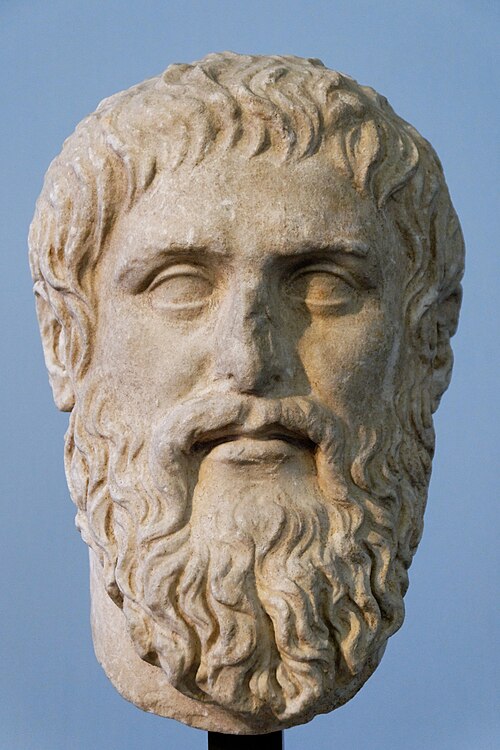
via Wikipedia · CC-BY-SA
100
Ideas
34
Passages
1,456
Citations
Works cited (25)
Ideas this author touches 100 Ideas · click an Idea to read in context
State47Animal30Knowledge30Man30Government28Wealth28Good And Evil27Justice27Law27Change26Truth26Democracy25Pleasure And Pain25Virtue And Vice25Memory And Imagination24God23Love22Medicine22Mind22Poetry22Astronomy21Emotion21Nature20Being19Desire19Punishment19Science19Sense19Family18Reasoning18Rhetoric18Education17Monarchy17One And Many17Philosophy17Tyranny17War And Peace17Art16Opposition16Revolution16Soul16Happiness15Mathematics15Relation15Constitution14Language14Religion14Time14Beauty13Custom And Convention13Definition13Honor13Immortality13Labor13Liberty13Opinion13Principle13Quantity13Cause12Life And Death12Necessity And Contingency12Same And Other12Sign And Symbol12Slavery11Temperance11Aristocracy10Form10Habit10World10Citizen9Experience9Logic9Matter9Chance8Element8Idea8Infinity8Progress8Prudence8Quality8Courage7Dialectic7Duty7Eternity7Oligarchy7Universal And Particular7Wisdom7Hypothesis6Prophecy6Space6Physics5Fate4Mechanics4Will4Evolution3Metaphysics3Angel2History2Judgment2Theology2
This MindMap is generated using weights to determine which ideas this thinker debates with others.
Passages by work
Republic10 passages
Republic, BK n, 319c-320b✓ correct
WITH these words I was thinking that I had made an end of the discussion; but the end, in truth, proved to be only a beginning. For Glaucon, who is always the most pugnacious of men, was dissatisfied at Thrasymachus's retirement; he wanted to have the battle out. So he said to me: Socrates, do you wish really to persuade us, or only to seem to have persuaded us, that to be just is always better… Read the rest of this passage →
Republic, BK in, 340b-341a 9f. The care and feeding of infant offspring: lactation CH 29 [57^26-30] 104c; [573 32-574 9l 99d;✓ correct
SUCH, then, I said, are our principles of theology — some tales are to be told, and others are not to be told to our disciples from their youth upward, if we mean them to honor the gods and their parents, and to value friendship with one another.
Yes; and I think that our principles are right, he said.
But if they are to be courageous, must they not learn other lessons beside these, and lessons… Read the rest of this passage →
Republic, BK v, 362b-c✓ correct
SUCH is the good and true City or State, and the good and true man is of the same pattern; and if this is right every other is wrong; and the evil is one which affects not only the ordering of the State, but also the regulation of the individual soul, and is exhibited in four forms.
What are they? he said.
I was proceeding to tell the order in which the four evil forms appeared to me to succeed… Read the rest of this passage →
Republic, BK iv, 355d-356a / States- man, 598b-604b✓ correct
Socrates, said he, if a person were to say that you are making these people miserable, and that they are the cause of their own unhappiness; the city in fact belongs to them, but they are none the better for it; whereas other men acquire lands, and build large and handsome houses, and have everything handsome about them, offering sacrifices to the gods on their own account, and practising… Read the rest of this passage →
Republic, BK vi, 380b-c / Statesman, 598b-604b / Seventh Letter, 806d-807b✓ correct
AND thus, Glaucon, after the argument has gone a weary way, the true and the false philosophers have at length appeared in view.
I do not think, he said, that the way could have been shortened.
I suppose not, I said; and yet I believe that we might have had a better view of both of them if the discussion could have been confined to this one subject and if there were not many other questions… Read the rest of this passage →
Republic, BK x, 427c-428d / Timaeus, 447a-449c / Sophist, 577d-578d / Laws, BK x, 760a-76Xd✓ correct
OF the many excellences which I perceive in the order of our State, there is none which upon reflection pleases me better than the rule about poetry.
To what do you refer?
To the rejection of imitative poetry, which certainly ought not to be received; as I see far more clearly now that the parts of the soul have been distinguished.
What do you mean?
Speaking in confidence, for I should not… Read the rest of this passage →
Republic, BK vn, 394d-396b / Tmaeus, 451b-c;455b✓ correct
AND now, I said, let me show in a figure how far our nature is enlightened or unenlightened: Behold! human beings living in an underground den, which has a mouth open toward the light and reaching all along the den; here they have been from their childhood, and have their legs and necks chained so that they cannot move, and can only see before them, being prevented by the chains from turning… Read the rest of this passage →
Republic, BK vm-ix, 401d-420d / ties of citizenship Laws, BK viii, 733d-734a✓ correct
AND so, Glaucon, we have arrived at the conclusion that in the perfect State wives and children are to be in common; and that all education and the pursuits of war and peace are also to be common, and the best philosophers and the bravest warriors are to be their kings?
That, replied Glaucon, has been acknowledged.
Yes, I said; and we have further acknowledged that the governors, when appointed… Read the rest of this passage →
Republic, BK i, 301c-d; BK vm, 408b- 413d / Statesman, 598b-604b✓ correct
SOCRATES, who is the narrator. CEPHALUS. GLACON. THRASYMACHUS. ADEIMANTUS. CLEITOPHON. POLEMARCHUS.
And others who are mute auditors.
The scene is laid in the house of Cephalus at the Piraeus; and the whole dialogue is narrated by Socrates the day after it actually took place to Timaeus Hermocrates, Critias, and a nameless person, who are introduced in the Timaeus.
I WENT down yesterday to the… Read the rest of this passage →
Republic, BK ix, 425c-427b✓ correct
LAST of all comes the tyrannical man; about whom we have once more to ask, how is he formed out of the democratical? and how does he live, in happiness or in misery?
Yes, he said, he is the only one remaining.
There is, however, I said, a previous question which remains unanswered.
What question?
I do not think that we have adequately determined the nature and number of the appetites, and… Read the rest of this passage →
Cited under: Animal · Aristocracy · Art · Astronomy · Beauty · Being · Cause · Chance · Change · Citizen · Constitution · Custom And Convention · Definition · Democracy · Desire · Dialectic · Education · Emotion · Evolution · Experience · Family · Fate · God · Good And Evil · Government · Habit · Honor · Infinity · Justice · Labor · Law · Liberty · Life And Death · Logic · Love · Man · Mathematics · Matter · Medicine · Memory And Imagination · Metaphysics · Mind · Monarchy · Nature · Necessity And Contingency · Oligarchy · One And Many · Opinion · Opposition · Philosophy · Physics · Pleasure And Pain · Poetry · Principle · Progress · Reasoning · Relation · Religion · Revolution · Same And Other · Science · Sense · Slavery · Soul · Space · State · Temperance · Theology · Truth · Tyranny · Universal And Particular · Virtue And Vice · War And Peace · Wealth · Will
Timaeus1 passage
Timaeus, 452c-d / Laws, BK x, 765b✓ correct
He has been taken ill, Socrates; for he would not willingly have been absent from this gathering.
SOCRATES: Then, if he is not coming, you and the two others must supply his place.
TIMAEUS: Certainly, and we will do all that we can; having been handsomely entertained by you yesterday, those of us who remain should be only too glad to return your hospitality.
SOCRATES: Do you remember what were… Read the rest of this passage →
Cited under: Angel · Animal · Astronomy · Beauty · Being · Chance · Change · Element · Eternity · God · History · Infinity · Knowledge · Life And Death · Love · Man · Matter · Mechanics · Medicine · Memory And Imagination · Mind · Nature · Necessity And Contingency · One And Many · Physics · Pleasure And Pain · Principle · Progress · Prophecy · Quality · Quantity · Reasoning · Sense · Soul · Space · Time · World
Ion1 passage
Phaedru's, 124a / Ion 142a-148a,c / Symposium, 160c-d / Apology, 202 b-d / Gorgias, 253a; 260a-262a / Sophist, 561b-d; 577d-579d / Laws, BK iv, 684b-c✓ correct
Are you from your native city of Ephesus?
ION: No, Socrates; but from Epidaurus, where I attended the festival of Asclepius.
SOCRATES: And do the Epidaurians have contests of rhapsodes at the festival?
ION: O yes; and of all sorts of musical performers.
SOCRATES: And were you one of the competitors — and did you succeed?
ION: I obtained the first prize of all, Socrates.
SOCRATES: Well done;… Read the rest of this passage →
Cited under: Art · Beauty · Emotion · Knowledge · Labor · Memory And Imagination · Poetry · Sign And Symbol
Phaedo1 passage
Phaedo, 241d-242a✓ correct
I should so like to hear about his death. What did he say in his last hours? We were informed that he died by taking poison, but no one knew anything more; for no Phliasian ever goes to Athens now, and it is a long time since any stranger from Athens has found his way hither; so that we had no clear account.
PHAEDO: Did you not hear of the proceedings at the trial?
ECHECRATES: Yes; some one… Read the rest of this passage →
Cited under: Animal · Astronomy · Being · Cause · Emotion · Experience · Idea · Immortality · Knowledge · Life And Death · Man · Mathematics · Matter · Mind · Nature · Opposition · Philosophy · Physics · Pleasure And Pain · Poetry · Principle · Progress · Punishment · Quality · Quantity · Reasoning · Relation · Same And Other · Science · Sense · Soul · Truth · Virtue And Vice · War And Peace · World
Symposium1 passage
Symposium, 165c-166b / Republic, BK n, 319c-320b / Laws, BK vi, 712b✓ correct
Apollodorus, who repeats to his companion the dialogue which he had heard from Aristodemus, and had already once narrated to Glaucon. Phaedrus, Pausanias, Eryximachus, Aristophanes, Agathon, Socrates, Alcibiades, A Troop of Revellers.
SCENE: The House of Agathon.
Concerning the things about which you ask to be informed I believe that I am not ill-prepared with an answer. For the day before… Read the rest of this passage →
Cited under: Animal · Astronomy · Beauty · Change · Courage · Custom And Convention · Desire · Emotion · Family · Habit · Honor · Immortality · Knowledge · Law · Life And Death · Love · Medicine · Memory And Imagination · Nature · One And Many · Opinion · Opposition · Pleasure And Pain · Poetry · Principle · Relation · Sense · Time · Truth · Virtue And Vice
Phaedrus1 passage
Phaedrus, 128a-d / Republic, BK n, 319c-320c / Statesman, 583c-d; 588b-c✓ correct
I am going to take a walk outside the wall, for I have been sitting with him the whole morning; and our common friend Acumenus tells me that it is much more refreshing to walk in the open air than to be shut up in a cloister.
SOCRATES: There he is right. Lysias then, I suppose, was in the town?
PHAEDRUS: Yes, he was staying with Epicrates, here at the house of Morychus; that house which is near… Read the rest of this passage →
Cited under: Animal · Art · Astronomy · Beauty · Being · Change · Custom And Convention · Definition · Desire · Dialectic · Education · Emotion · Eternity · Form · God · Good And Evil · Happiness · Idea · Immortality · Infinity · Knowledge · Language · Liberty · Life And Death · Logic · Love · Man · Memory And Imagination · Mind · Nature · One And Many · Opposition · Philosophy · Pleasure And Pain · Poetry · Principle · Prophecy · Punishment · Religion · Rhetoric · Same And Other · Sense · Soul · State · Temperance · Time · Truth · Tyranny · World
Gorgias1 passage
Gorgias, 260a-262a / Republic, BK x, 433a-434c / Timaeus, 455 b-c / Statesman, 596c-d / Philebus, 628d-630c / Laws, BK ii, 654b-d; 658d-660d✓ correct
The wise man, as the proverb says, is late for a fray, but not for a feast.
SOCRATES: And are we late for a feast?
CALLICLES: Yes, and a delightful feast; for Gorgias has just been exhibiting to us many fine things.
SOCRATES: It is not my fault, Callicles; our friend Chaerephon is to blame; for he would keep us loitering in the Agora.
CHAEREPHON: Never mind, Socrates; the misfortune of which… Read the rest of this passage →
Cited under: Art · Astronomy · Beauty · Change · Desire · Duty · Emotion · Experience · Good And Evil · Government · Happiness · Justice · Law · Medicine · Nature · Opinion · Pleasure And Pain · Principle · Punishment · Quantity · Relation · Same And Other · State · Temperance · Tyranny · Virtue And Vice · Will
Statesman1 passage
Republic, BK vni, 401d-402d; BK vm- ix, 411d-421a / Statesman, 598b-604b passim✓ correct
I owe you many thanks, indeed, Theodorus, for the acquaintance both of Theaetetus and of the Stranger.
THEODORUS: And in a little while, Socrates, you will owe me three times as many, when they have completed for you the delineation of the Statesman and of the Philosopher, as well as of the Sophist.
SOCRATES: Sophist, statesman, philosopher! O my dear Theodorus, do my ears truly witness that… Read the rest of this passage →
Cited under: Aristocracy · Cause · Change · Citizen · Constitution · Democracy · Family · Government · Labor · Law · Medicine · Monarchy · Progress · Prudence · Punishment · Relation · Religion · Tyranny
Philebus1 passage
Philebus, 628d-630c a✓ correct
I maintain, and which, if you do not approve of it, is to be controverted by you. Shall you and I sum up the two sides?
PROTARCHUS: By all means.
SOCRATES: Philebus was saying that enjoyment and pleasure and delight, and the class of feelings akin to them, are a good to every living being, whereas I contend, that not these, but wisdom and intelligence and memory, and their kindred, right… Read the rest of this passage →
Theaetetus1 passage
Theaetetus, 548c>549d✓ correct
Terpsion meet in front of Euclid’s house in Megara; they enter the house, and the dialogue is read to them by a servant.
EUCLID: Have you only just arrived from the country, Terpsion?
TERPSION: No, I came some time ago: and I have been in the Agora looking for you, and wondering that I could not find you.
EUCLID: But I was not in the city.
TERPSION: Where then?
EUCLID: As I was going down to… Read the rest of this passage →
Cited under: Definition · Habit · Memory And Imagination · One And Many · Opposition · Principle · Quantity · Relation · Same And Other · Sense · Time · Truth · Universal And Particular
Sophist1 passage
Sophist, 561d-564b; 571d-574c✓ correct
Socrates, who is a silent auditor.
THEODORUS: Here we are, Socrates, true to our agreement of yesterday; and we bring with us a stranger from Elea, who is a disciple of Parmenides and Zeno, and a true philosopher.
SOCRATES: Is he not rather a god, Theodorus, who comes to us in the disguise of a stranger? For Homer says that all the gods, and especially the god of strangers, are companions of… Read the rest of this passage →
Cited under: Being · Infinity · Man · Matter · Memory And Imagination · Reasoning · Sign And Symbol · Truth
Cratylus1 passage
Cratylus, 93c-d / Phaedo, 233b-c / Republic, BK x, 440b-c/ Timaeus, 476d-477a,c✓ correct
I ask him, whether his own name of Cratylus is a true name or not, and he answers ‘Yes.’ And Socrates? ‘Yes.’ Then every man’s name, as I tell him, is that which he is called. To this he replies —‘If all the world were to call you Hermogenes, that would not be your name.’ And when I am anxious to have a further explanation he is ironical and mysterious, and seems to imply that he has a notion of… Read the rest of this passage →
Cited under: Animal · Astronomy · Beauty · Being · Change · Definition · Desire · Dialectic · Element · Emotion · Form · God · History · Honor · Idea · Immortality · Judgment · Justice · Knowledge · Language · Life And Death · Logic · Man · Mind · Nature · Necessity And Contingency · One And Many · Opinion · Opposition · Poetry · Reasoning · Relation · Religion · Sign And Symbol · Soul · State · Truth · Universal And Particular · Virtue And Vice · Wisdom
Laws1 passage
Laws, BK iv, 679a-c✓ correct
And now, assuming children of both sexes to have been born, it will be proper for us to consider, in the next place, their nurture and education; this cannot be left altogether unnoticed, and yet may be thought a subject fitted rather for precept and admonition than for law. In private life there are many little things, not always apparent, arising out of the pleasures and pains and desires of… Read the rest of this passage →
Cited under: Chance · Change · Citizen · Constitution · Custom And Convention · Democracy · Duty · Education · Evolution · Family · God · Government · Habit · Justice · Knowledge · Labor · Law · Liberty · Love · Man · Memory And Imagination · Monarchy · Necessity And Contingency · Oligarchy · Pleasure And Pain · Punishment · Religion · Revolution · Slavery · State · Tyranny · Universal And Particular · War And Peace · Wealth · Will
Euthydemus1 passage
Euthydemus, 74b-76b / Ion, 145d- 148a,c/Gorwy,253c-255c; 260a-262a; 280d- 282b / Republic, BK i, 305b-306a / Sophist, 552c-553a; 560b-561d; 577c-579d / Statesman, 592d-593a; 593d-595a / Philebus, 633a-635b / Laws, BK n, 662c-663b; BK x, 760a b✓ correct
Socrates, with whom you were talking yesterday at the Lyceum? There was such a crowd around you that I could not get within hearing, but I caught a sight of him over their heads, and I made out, as I thought, that he was a stranger with whom you were talking: who was he?
SOCRATES: There were two, Crito; which of them do you mean?
CRITO: The one whom I mean was seated second from you on the… Read the rest of this passage →
Cited under: Art · Beauty · Being · Chance · Desire · Duty · Emotion · Form · Good And Evil · Happiness · Honor · Immortality · Judgment · Knowledge · Language · Logic · Man · Mathematics · Opposition · Philosophy · Principle · Prophecy · Reasoning · Rhetoric · Same And Other · Sign And Symbol · State · Truth · Wealth
Meno1 passage
Meno, 188b-189a / Phaedo, 240a-246c / Gorgias, 260a-262a / Timaeus, 465d-466a 8 ARISTOTLE* Posterior Analytics, BK i, CH 2 [7^19-33] 98a-b; CH 13 107c-108c …✓ correct
Socrates, whether virtue is acquired by teaching or by practice; or if neither by teaching nor by practice, then whether it comes to man by nature, or in what other way?
SOCRATES: O Meno, there was a time when the Thessalians were famous among the other Hellenes only for their riches and their riding; but now, if I am not mistaken, they are equally famous for their wisdom, especially at Larisa,… Read the rest of this passage →
Euthyphro1 passage
Euthyphro, 195c-d / Phaedo, 226d- 228a; 240b-246c / Timaeus, 447b-d / Phtlcbus, 615c-619d / Laws, BK x, 760a-765c✓ correct
Why have you left the Lyceum, Socrates? and what are you doing in the Porch of the King Archon? Surely you cannot be concerned in a suit before the King, like myself?
SOCRATES: Not in a suit, Euthyphro; impeachment is the word which the Athenians use.
EUTHYPHRO: What! I suppose that some one has been prosecuting you, for I cannot believe that you are the prosecutor of another.
SOCRATES:… Read the rest of this passage →
Charmides1 passage
Charmides, lb-2a / Symposium, 164 b- 167b / Republic, BK n-ni, 320c-334b✓ correct
PERSONS OF THE DIALOGUE: Socrates, who is the narrator, Charmides, Chaerephon, Critias.
SCENE: The Palaestra of Taureas, which is near the Porch of the King Archon.
Yesterday evening I returned from the army at Potidaea, and having been a good while away, I thought that I should like to go and look at my old haunts. So I went into the palaestra of Taureas, which is over against the temple… Read the rest of this passage →
Cited under: Beauty · Definition · Education · Emotion · Family · Good And Evil · Happiness · Knowledge · Labor · Man · Mathematics · Medicine · Metaphysics · Mind · One And Many · Philosophy · Prudence · Relation · Science · Soul · Temperance · Virtue And Vice · Wisdom
Protagoras1 passage
Protagoras, 44a-45a / Euthydemus, &ld-82b/Cratylus, 92b-97d/ Phaedrus, 116b-d, 122c-125b passim✓ correct
Where do you come from, Socrates? And yet I need hardly ask the question, for I know that you have been in chase of the fair Alcibiades. I saw him the day before yesterday; and he had got a beard like a man — and he is a man, as I may tell you in your ear. But I thought that he was still very charming.
SOCRATES: What of his beard? Are you not of Homer’s opinion, who says
‘Youth is most charming… Read the rest of this passage →
Cited under: Angel · Aristocracy · Art · Citizen · Custom And Convention · Desire · Dialectic · Education · Emotion · God · Good And Evil · Government · Happiness · Honor · Hypothesis · Idea · Justice · Knowledge · Labor · Language · Law · Liberty · Logic · Man · Medicine · Mind · Nature · Necessity And Contingency · Opinion · Opposition · Philosophy · Pleasure And Pain · Poetry · Progress · Prudence · Punishment · Reasoning · Rhetoric · Sign And Symbol · State · Temperance · Truth · Universal And Particular · Virtue And Vice · War And Peace
Parmenides1 passage
Parmenidcs, 489a-b✓ correct
Cephalus rehearses a dialogue which is supposed to have been narrated in his presence by Antiphon, the half-brother of Adeimantus and Glaucon, to certain Clazomenians.
We had come from our home at Clazomenae to Athens, and met Adeimantus and Glaucon in the Agora. Welcome, Cephalus, said Adeimantus, taking me by the hand; is there anything which we can do for you in Athens?
Yes; that is why I am… Read the rest of this passage →
Laches1 passage
Laches, 35b-d / Protagoras, 44a-45k / Cratylus, 93a-b / Timaeus, 452d-453a / Laws, BK n, 653b-c; BK vn, 723c-d✓ correct
PERSONS OF THE DIALOGUE: Lysimachus, son of Aristides. Melesias, son of Thucydides. Their sons. Nicias, Laches, Socrates.
LYSIMACHUS: You have seen the exhibition of the man fighting in armour, Nicias and Laches, but we did not tell you at the time the reason why my friend Melesias and I asked you to go with us and see him. I think that we may as well confess what this was, for we certainly… Read the rest of this passage →
Cited under: Animal · Courage · Definition · Education · Family · Good And Evil · Honor · Knowledge · Life And Death · Man · Mind · One And Many · Opinion · Philosophy · Pleasure And Pain · Time · Virtue And Vice · War And Peace
Lysis1 passage
Lysis, 16c-18b / Protagoras, 43b-d / Euthydemus, 70a-c / Ion 142a-148a,c / Gor- gias, 261a-262a / Republic, BK vn, 391b-397a✓ correct
PERSONS OF THE DIALOGUE: Socrates, who is the narrator, Menexenus, Hippothales, Lysis, Ctesippus.
SCENE: A newly-erected Palaestra outside the walls of Athens.
I was going from the Academy straight to the Lyceum, intending to take the outer road, which is close under the wall. When I came to the postern gate of the city, which is by the fountain of Panops, I fell in with Hippothales, the son of… Read the rest of this passage →
Apology1 passage
Apology, 204d-205a / Laws, BK vn, 728b-730d; BK xn, 797b-798b✓ correct
How you, O Athenians, have been affected by my accusers, I cannot tell; but I know that they almost made me forget who I was — so persuasively did they speak; and yet they have hardly uttered a word of truth. But of the many falsehoods told by them, there was one which quite amazed me; — I mean when they said that you should be upon your guard and not allow yourselves to be deceived by the force… Read the rest of this passage →
Cited under: Astronomy · Citizen · Courage · Duty · Education · Eternity · Fate · God · Good And Evil · Government · Happiness · Honor · Immortality · Justice · Knowledge · Law · Liberty · Love · Pleasure And Pain · Prophecy · Punishment · Religion · Revolution · Sign And Symbol · State · Truth · Wisdom
Seventh Letter1 passage
C/Ytfy/wj85a-114a,cesp 85a-89a, 104b- b ' 114a,c / Seventh Letter, 809c-810b b✓ correct
Plato to the Relatives and Friends of Dion.
Welfare.
You write to me that I must consider your views the same as those of Dion, and you urge me to aid your cause so far as I can in word and deed. My answer is that, if you have the same opinion and desire as he had, I consent to aid your cause; but if not, I shall think more than once about it. Now what his purpose and desire was, I can inform… Read the rest of this passage →
Crito1 passage
Crtto 213a-219a,c / Gorgias, 287c-292a / Republic, BK vin, 409b-c / Statesman, 601b-c / Laws, BK vi, 697a-705c passim; BK VIH, 732b-735a …✓ correct
I have done him a kindness.
SOCRATES: And are you only just arrived?
CRITO: No, I came some time ago.
SOCRATES: Then why did you sit and say nothing, instead of at once awakening me?
CRITO: I should not have liked myself, Socrates, to be in such great trouble and unrest as you are — indeed I should not: I have been watching with amazement your peaceful slumbers; and for that reason I did not… Read the rest of this passage →
Cited under: Citizen · Democracy · Duty · Education · Family · Good And Evil · Government · Happiness · Justice · Law · Memory And Imagination · Punishment · Revolution · State
Critias1 passage
Crttias, 479d / Theaetetus, 531a-532a✓ correct
I have arrived at last, and, like a weary traveller after a long journey, may be at rest! And I pray the being who always was of old, and has now been by me revealed, to grant that my words may endure in so far as they have been spoken truly and acceptably to him; but if unintentionally I have said anything wrong, I pray that he will impose upon me a just retribution, and the just retribution of… Read the rest of this passage →