What Is Love?
Plato vs Augustine
The Symposium opens at a drinking party. Men take turns praising Eros between glasses of wine; the mood is mock-serious until Socrates's teacher, the priestess Diotima, speaks through him, and the conversation about desire becomes a ladder — from beautiful bodies to beautiful laws to Beauty itself. The Confessions opens in direct address to God. The mood is prayer, the key is longing, and the object of love is no longer a form but a person: my soul was restless until it rested in you. Both books are about love. Neither is about what the word most commonly means today.
Augustine is Plato's student, 700 years later, and the Christian revision of Platonic Eros is not a replacement — it is a modification. Augustine keeps the structure of love as an ascent toward a real, higher object; he reorients it. Love's proper object is God, and love that stops short of God is not merely incomplete but disordered. What Plato calls the upward motion of Eros, Augustine calls the soul's search for its home. The inheritance is close enough that it matters precisely where the shift lands.
In the passages that follow you will read Diotima's speech and then Augustine in two registers: the autobiographical Confessions and the theological City of God. Diotima's speech is not an argument in the ordinary sense; Augustine's prose is an argument and a prayer at once. The reader's work is to feel both rhetorical modes, to watch one rewrite the other, and to hold the strangeness of both against whatever 'love' has come to mean in an hour of contemporary life.
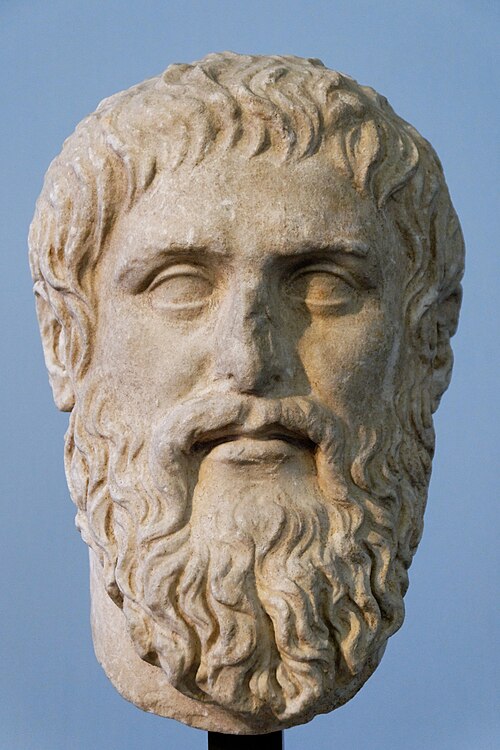 1Platoc. 427 – 347 BCEPhaedrus · Jowett (GBWW) translation
I am going to take a walk outside the wall, for I have been sitting with him the whole morning; and our common friend Acumenus tells me that it is much more refreshing to walk in the open air than to be shut up in a cloister.
SOCRATES: There he is right. Lysias then, I suppose, was in the town?
PHAEDRUS: Yes, he was staying with Epicrates, here at the house of Morychus; that house which is near the temple of Olympian Zeus.
SOCRATES: And how did he entertain you? Can I be wrong in supposing that Lysias gave you a feast of discourse?
PHAEDRUS: You shall hear, if you can spare time to accompany me.
SOCRATES: And should I not deem the conversation of you and Lysias ‘a thing of higher import,’ as I may say in the words of Pindar, ‘than any business’?
PHAEDRUS: Will you go on?
SOCRATES: And will you go on with the narration?
PHAEDRUS: My tale, Socrates, is one of your sort, for love was the theme which occupied us — love after a fashion: Lysias has been writing about a fair youth who was being tempted, but not by a lover; and this was the point: he ingeniously proved that the non-lover should be accepted rather than the lover.
SOCRATES: O that is noble of him! I wish that he would say the poor man rather than the rich, and the old man rather than the young one; — then he would meet the case of me and of many a man; his words would be quite refreshing, and he would be a public benefactor. For my part, I do so long to hear his speech, that if you walk all the way to Megara, and when you have reached the wall come back, as Herodicus recommends, without going in, I will keep you company.
PHAEDRUS: What do you mean, my good Socrates? How can you imagine that my unpractised memory can do justice to an elaborate work, which the greatest rhetorician of the age spent a long time in composing. Indeed, I cannot; I would give a great deal if I could.
SOCRATES: I believe that I know Phaedrus about as well as I know myself, and I am very sure that the speech of Lysias was repeated to him, not once only, but again and again; — he insisted on hearing it many times over and Lysias was very willing to gratify him; at last, when nothing else would do, he got hold of the book, and looked at what he most wanted to see — this occupied him during the whole morning; — and then when he was tired with sitting, he went out to take a walk, not until, by the dog, as I believe, he had simply learned by heart the entire discourse, unless it was unusually long, and he went to a place outside the wall that he might practise his lesson. There he saw a certain lover of discourse who had a similar weakness; — he saw and rejoiced; now thought he, ‘I shall have a partner in my revels.’ And he invited him to come and walk with him. But when the lover of discourse begged that he would repeat the tale, he gave himself airs and said, ‘No I cannot,’ as if he were indisposed; although, if the hearer had refused, he would sooner or later have been compelled by him to listen whether he would or no. Therefore, Phaedrus, bid him do at once what he will soon do whether bidden or not.
PHAEDRUS: I see that you will not let me off until I speak in some fashion or other; verily therefore my best plan is to speak as I best can.
SOCRATES: A very true remark, that of yours.
PHAEDRUS: I will do as I say; but believe me, Socrates, I did not learn the very words — O no; nevertheless I have a general notion of what he said, and will give you a summary of the points in which the lover differed from the non-lover. Let me begin at the beginning.
SOCRATES: Yes, my sweet one; but you must first of all show what you have in your left hand under your cloak, for that roll, as I suspect, is the actual discourse. Now, much as I love you, I would not have you suppose that I am going to have your memory exercised at my expense, if you have Lysias himself here.
PHAEDRUS: Enough; I see that I have no hope of practising my art upon you. But if I am to read, where would you please to sit?
SOCRATES: Let us turn aside and go by the Ilissus; we will sit down at some quiet spot.
PHAEDRUS: I am fortunate in not having my sandals, and as you never have any, I think that we may go along the brook and cool our feet in the water; this will be the easiest way, and at midday and in the summer is far from being unpleasant.
SOCRATES: Lead on, and look out for a place in which we can sit down.
PHAEDRUS: Do you see the tallest plane-tree in the distance?
SOCRATES: Yes.
PHAEDRUS: There are shade and gentle breezes, and grass on which we may either sit or lie down.
SOCRATES: Move forward.
PHAEDRUS: I should like to know, Socrates, whether the place is not somewhere here at which Boreas is said to have carried off Orithyia from the banks of the Ilissus?
SOCRATES: Such is the tradition.
PHAEDRUS: And is this the exact spot? The little stream is delightfully clear and bright; I can fancy that there might be maidens playing near.
SOCRATES: I believe that the spot is not exactly here, but about a quarter of a mile lower down, where you cross to the temple of Artemis, and there is, I think, some sort of an altar of Boreas at the place.
PHAEDRUS: I have never noticed it; but I beseech you to tell me, Socrates, do you believe this tale?
SOCRATES: The wise are doubtful, and I should not be singular if, like them, I too doubted. I might have a rational explanation that Orithyia was playing with Pharmacia, when a northern gust carried her over the neighbouring rocks; and this being the manner of her death, she was said to have been carried away by Boreas. There is a discrepancy, however, about the locality; according to another version of the story she was taken from Areopagus, and not from this place. Now I quite acknowledge that these allegories are very nice, but he is not to be envied who has to invent them; much labour and ingenuity will be required of him; and when he has once begun, he must go on and rehabilitate Hippocentaurs and chimeras dire. Gorgons and winged steeds flow in apace, and numberless other inconceivable and portentous natures. And if he is sceptical about them, and would fain reduce them one after another to the rules of probability, this sort of crude philosophy will take up a great deal of time. Now I have no leisure for such enquiries; shall I tell you why? I must first know myself, as the Delphian inscription says; to be curious about that which is not my concern, while I am still in ignorance of my own self, would be ridiculous. And therefore I bid farewell to all this; the common opinion is enough for me. For, as I was saying, I want to know not about this, but about myself: am I a monster more complicated and swollen with passion than the serpent Typho, or a creature of a gentler and simpler sort, to whom Nature has given a diviner and lowlier destiny? But let me ask you, friend: have we not reached the plane-tree to which you were conducting us?
PHAEDRUS: Yes, this is the tree.
SOCRATES: By Here, a fair resting-place, full of summer sounds and scents. Here is this lofty and spreading plane-tree, and the agnus castus high and clustering, in the fullest blossom and the greatest fragrance; and the stream which flows beneath the plane-tree is deliciously cold to the feet. Judging from the ornaments and images, this must be a spot sacred to Achelous and the Nymphs. How delightful is the breeze:— so very sweet; and there is a sound in the air shrill and summerlike which makes answer to the chorus of the cicadae. But the greatest charm of all is the grass, like a pillow gently sloping to the head. My dear Phaedrus, you have been an admirable guide.
PHAEDRUS: What an incomprehensible being you are, Socrates: when you are in the country, as you say, you really are like some stranger who is led about by a guide. Do you ever cross the border? I rather think that you never venture even outside the gates.
SOCRATES: Very true, my good friend; and I hope that you will excuse me when you hear the reason, which is, that I am a lover of knowledge, and the men who dwell in the city are my teachers, and not the trees or the country. Though I do indeed believe that you have found a spell with which to draw me out of the city into the country, like a hungry cow before whom a bough or a bunch of fruit is waved. For only hold up before me in like manner a book, and you may lead me all round Attica, and over the wide world. And now having arrived, I intend to lie down, and do you choose any posture in which you can read best. Begin.
PHAEDRUS: Listen. You know how matters stand with me; and how, as I conceive, this affair may be arranged for the advantage of both of us. And I maintain that I ought not to fail in my suit, because I am not your lover: for lovers repent of the kindnesses which they have shown when their passion ceases, but to the non-lovers who are free and not under any compulsion, no time of repentance ever comes; for they confer their benefits according to the measure of their ability, in the way which is most conducive to their own interest. Then again, lovers consider how by reason of their love they have neglected their own concerns and rendered service to others: and when to these benefits conferred they add on the troubles which they have endured, they think that they have long ago made to the beloved a very ample return. But the non-lover has no such tormenting recollections; he has never neglected his affairs or quarrelled with his relations; he has no troubles to add up or excuses to invent; and being well rid of all these evils, why should he not freely do what will gratify the beloved? If you say that the lover is more to be esteemed, because his love is thought to be greater; for he is willing to say and do what is hateful to other men, in order to please his beloved; — that, if true, is only a proof that he will prefer any future love to his present, and will injure his old love at the pleasure of the new. And how, in a matter of such infinite importance, can a man be right in trusting himself to one who is afflicted with a malady which no experienced person would attempt to cure, for the patient himself admits that he is not in his right mind, and acknowledges that he is wrong in his mind, but says that he is unable to control himself? And if he came to his right mind, would he ever imagine that the desires were good which he conceived when in his wrong mind? Once more, there are many more non-lovers than lovers; and if you choose the best of the lovers, you will not have many to choose from; but if from the non-lovers, the choice will be larger, and you will be far more likely to find among them a person who is worthy of your friendship. If public opinion be your dread, and you would avoid reproach, in all probability the lover, who is always thinking that other men are as emulous of him as he is of them, will boast to some one of his successes, and make a show of them openly in the pride of his heart; — he wants others to know that his labour has not been lost; but the non-lover is more his own master, and is desirous of solid good, and not of the opinion of mankind. Again, the lover may be generally noted or seen following the beloved (this is his regular occupation), and whenever they are observed to exchange two words they are supposed to meet about some affair of love either past or in contemplation; but when non-lovers meet, no one asks the reason why, because people know that talking to another is natural, whether friendship or mere pleasure be the motive. Once more, if you fear the fickleness of friendship, consider that in any other case a quarrel might be a mutual calamity; but now, when you have given up what is most precious to you, you will be the greater loser, and therefore, you will have more reason in being afraid of the lover, for his vexations are many, and he is always fancying that every one is leagued against him. Wherefore also he debars his beloved from society; he will not have you intimate with the wealthy, lest they should exceed him in wealth, or with men of education, lest they should be his superiors in understanding; and he is equally afraid of anybody’s influence who has any other advantage over himself. If he can persuade you to break with them, you are left without a friend in the world; or if, out of a regard to your own interest, you have more sense than to comply with his desire, you will have to quarrel with him. But those who are non-lovers, and whose success in love is the reward of their merit, will not be jealous of the companions of their beloved, and will rather hate those who refuse to be his associates, thinking that their favourite is slighted by the latter and benefited by the former; for more love than hatred may be expected to come to him out of his friendship with others. Many lovers too have loved the person of a youth before they knew his character or his belongings; so that when their passion has passed away, there is no knowing whether they will continue to be his friends; whereas, in the case of non-lovers who were always friends, the friendship is not lessened by the favours granted; but the recollection of these remains with them, and is an earnest of good things to come.
— Plato, Phaedrus
 2Augustine354 – 430On Christian Doctrine · Book 1 · Shaw (CCEL) translation
1. There are two things on which all interpretation of Scripture depends: the mode of ascertaining the proper meaning, and the mode of making known the meaning when it is ascertained. We shall treat first of the mode of ascertaining, next of the mode of making known, the meaning;--a great and arduous undertaking, and one that, if difficult to carry out, it is, I fear, presumptuous to enter upon. And presumptuous it would undoubtedly be, if I were counting on my own strength; but since my hope of accomplishing the work rests on Him who has already supplied me with many thoughts on this subject, I do not fear but that He will go on to supply what is yet wanting when once I have begun to use what He has already given. For a possession which is not diminished by being shared with others, if it is possessed and not shared, is not yet possessed as it ought to be possessed. The Lord saith, "Whosoever has, to him shall be given." He will give, then, to those who have; that is to say, if they use freely and cheerfully what they have received, He will add to and perfect His gifts. The loaves in the miracle were only five and seven in number before the disciples began to divide them among the hungry people. But when once they began to distribute them, though the wants of so many thousands were satisfied, they filled baskets with the fragments that were left. Now, just as that bread increased in the very act of breaking it, so those thoughts which the Lord has already vouchsafed to me with a view to undertaking this work will, as soon as I begin to impart them to others, be multiplied by His grace, so that, in this very work of distribution in which I have engaged, so far from incurring loss and poverty, I shall be made to rejoice in a marvellous increase of wealth. __________________________________________________________________
Chapter 2
2. All instruction is either about things or about signs; but things are learnt by means of signs. I now use the word "thing" in a strict sense, to signify that which is never employed as a sign of anything else: for example, wood, stone, cattle, and other things of that kind. Not, however, the wood which we read Moses cast into the bitter waters to make them sweet, nor the stone which Jacob used as a pillow, nor the ram which Abraham offered up instead of his son; for these, though they are things, are also signs of other things. There are signs of another kind, those which are never employed except as signs: for example, words. No one uses words except as signs of something else; and hence may be understood what I call signs: those things, to wit, which are used to indicate something else. Accordingly, every sign is also a thing; for what is not a thing is nothing at all. Every thing, however, is not also a sign. And so, in regard to this distinction between things and signs, I shall, when I speak of things, speak in such a way that even if some of them may be used as signs also, that will not interfere with the division of the subject according to which I am to discuss things first and signs afterwards. But we must carefully remember that what we have now to consider about things is what they are in themselves, not what other things they are signs of. __________________________________________________________________
Chapter 3
3. There are some things, then, which are to be enjoyed, others which are to be used, others still which enjoy and use. Those things which are objects of enjoyment make us happy. Those things which are objects of use assist, and (so to speak) support us in our efforts after happiness, so that we can attain the things that make us happy and rest in them. We ourselves, again, who enjoy and use these things, being placed among both kinds of objects, if we set ourselves to enjoy those which we ought to use, are hindered in our course, and sometimes even led away from it; so that, getting entangled in the love of lower gratifications, we lag behind in, or even altogether turn back from, the pursuit of the real and proper objects of enjoyment. __________________________________________________________________
Chapter 4
4. For to enjoy a thing is to rest with satisfaction in it for its own sake. To use, on the other hand, is to employ whatever means are at one's disposal to obtain what one desires, if it is a proper object of desire; for an unlawful use ought rather to be called an abuse. Suppose, then, we were wanderers in a strange country, and could not live happily away from our fatherland, and that we felt wretched in our wandering, and wishing to put an end to our misery, determined to return home. We find, however, that we must make use of some mode of conveyance, either by land or water, in order to reach that fatherland where our enjoyment is to commence. But the beauty of the country through which we pass, and the very pleasure of the motion, charm our hearts, and turning these things which we ought to use into objects of enjoyment, we become unwilling to hasten the end of our journey; and becoming engrossed in a factitious delight, our thoughts are diverted from that home whose delights would make us truly happy. Such is a picture of our condition in this life of mortality. We have wandered far from God; and if we wish to return to our Father's home, this world must be used, not enjoyed, that so the invisible things of God may be clearly seen, being understood by the things that are made,--that is, that by means of what is material and temporary we may lay hold upon that which is spiritual and eternal. __________________________________________________________________
Chapter 5
5. The true objects of enjoyment, then, are the Father and the Son and the Holy Spirit, who are at the same time the Trinity, one Being, supreme above all, and common to all who enjoy Him, if He is an object, and not rather the cause of all objects, or indeed even if He is the cause of all. For it is not easy to find a name that will suitably express so great excellence, unless it is better to speak in this way: The Trinity, one God, of whom are all things, through whom are all things, in whom are all things. Thus the Father and the Son and the Holy Spirit, and each of these by Himself, is God, and at the same time they are all one God; and each of them by Himself is a complete substance, and yet they are all one substance. The Father is not the Son nor the Holy Spirit; the Son is not the Father nor the Holy Spirit; the Holy Spirit is not the Father nor the Son: but the Father is only Father, the Son is only Son, and the Holy Spirit is only Holy Spirit. To all three belong the same eternity, the same unchangeableness, the same majesty, the same power. In the Father is unity, in the Son equality, in the Holy Spirit the harmony of unity and equality; and these three attributes are all one because of the Father, all equal because of the Son, and all harmonious because of the Holy Spirit. __________________________________________________________________
Chapter 6
6. Have I spoken of God, or uttered His praise, in any worthy way? Nay, I feel that I have done nothing more than desire to speak; and if I have said anything, it is not what I desired to say. How do I know this, except from the fact that God is unspeakable? But what I have said, if it had been unspeakable, could not have been spoken. And so God is not even to be called "unspeakable," because to say even this is to speak of Him. Thus there arises a curious contradiction of words, because if the unspeakable is what cannot be spoken of, it is not unspeakable if it can be called unspeakable. And this opposition of words is rather to be avoided by silence than to be explained away by speech. And yet God, although nothing worthy of His greatness can be said of Him, has condescended to accept the worship of men's mouths, and has desired us through the medium of our own words to rejoice in His praise. For on this principle it is that He is called Deus (God). For the sound of those two syllables in itself conveys no true knowledge of His nature; but yet all who know the Latin tongue are led, when that sound reaches their ears, to think of a nature supreme in excellence and eternal in existence. __________________________________________________________________
Chapter 7
7. For when the one supreme God of gods is thought of, even by those who believe that there are other gods, and who call them by that name, and worship them as gods, their thought takes the form of an endeavour to reach the conception of a nature, than which nothing more excellent or more exalted exists. And since men are moved by different kinds of pleasures, partly by those which pertain to the bodily senses, partly by those which pertain to the intellect and soul, those of them who are in bondage to sense think that either the heavens, or what appears to be most brilliant in the heavens, or the universe itself, is God of gods: or if they try to get beyond the universe, they picture to themselves something of dazzling brightness, and think of it vaguely as infinite, or of the most beautiful form conceivable; or they represent it in the form of the human body, if they think that superior to all others. Or if they think that there is no one God supreme above the rest, but that there are many or even innumerable gods of equal rank, still these too they conceive as possessed of shape and form, according to what each man thinks the pattern of excellence. Those, on the other hand, who endeavour by an effort of the intelligence to reach a conception of God, place Him above all visible and bodily natures, and even above all intelligent and spiritual natures that are subject to change. All, however, strive emulously to exalt the excellence of God: nor could any one be found to believe that any being to whom there exists a superior is God. And so all concur in believing that God is that which excels in dignity all other objects. __________________________________________________________________
Chapter 8
8. And since all who think about God think of Him as living, they only can form any conception of Him that is not absurd and unworthy who think of Him as life itself; and, whatever may be the bodily form that has suggested itself to them, recognize that it is by life it lives or does not live, and prefer what is living to what is dead; who understand that the living bodily form itself, however it may outshine all others in splendour, overtop them in size, and excel them in beauty, is quite a distinct thing from the life by which it is quickened; and who look upon the life as incomparably superior in dignity and worth to the mass which is quickened and animated by it. Then, when they go on to look into the nature of the life itself, if they find it mere nutritive life, without sensibility, such as that of plants, they consider it inferior to sentient life, such as that of cattle; and above this, again, they place intelligent life, such as that of men. And, perceiving that even this is subject to change, they are compelled to place above it, again, that unchangeable life, which is not at one time foolish, at another time wise, but on the contrary is wisdom itself. For a wise intelligence, that is, one that has attained to wisdom, was, previous to its attaining wisdom, unwise. But wisdom itself never was unwise, and never can become so. And if men never caught sight of this wisdom, they could never with entire confidence prefer a life which is unchangeably wise to one that is subject to change. This will be evident, if we consider that the very rule of truth by which they affirm the unchangeable life to be the more excellent, is itself unchangeable: and they cannot find such a rule, except by going beyond their own nature; for they find nothing in themselves that is not subject to change.
— Augustine, On Christian Doctrine, Book 1
3Platoc. 427 – 347 BCERepublic · Book 6 · Jowett (GBWW) translation
AND thus, Glaucon, after the argument has gone a weary way, the true and the false philosophers have at length appeared in view.
I do not think, he said, that the way could have been shortened.
I suppose not, I said; and yet I believe that we might have had a better view of both of them if the discussion could have been confined to this one subject and if there were not many other questions awaiting us, which he who desires to see in what respect the life of the just differs from that of the unjust must consider.
And what is the next question? he asked.
Surely, I said, the one which follows next in order. Inasmuch as philosophers only are able to grasp the eternal and unchangeable, and those who wander in the region of the many and variable are not philosophers, I must ask you which of the two classes should be the rulers of our State?
And how can we rightly answer that question?
Whichever of the two are best able to guard the laws and institutions of our State — let them be our guardians.
Very good.
Neither, I said, can there be any question that the guardian who is to keep anything should have eyes rather than no eyes?
There can be no question of that.
And are not those who are verily and indeed wanting in the knowledge of the true being of each thing, and who have in their souls no clear pattern, and are unable as with a painter's eye to look at the absolute truth and to that original to repair, and having perfect vision of the other world to order the laws about beauty, goodness, justice in this, if not already ordered, and to guard and preserve the order of them — are not such persons, I ask, simply blind?
Truly, he replied, they are much in that condition.
And shall they be our guardians when there are others who, besides being their equals in experience and falling short of them in no particular of virtue, also know the very truth of each thing?
There can be no reason, he said, for rejecting those who have this greatest of all great qualities; they must always have the first place unless they fail in some other respect. Suppose, then, I said, that we determine how far they can unite this and the other excellences.
By all means.
In the first place, as we began by observing, the nature of the philosopher has to be ascertained. We must come to an understanding about him, and, when we have done so, then, if I am not mistaken, we shall also acknowledge that such a union of qualities is possible, and that those in whom they are united, and those only, should be rulers in the State.
What do you mean?
Let us suppose that philosophical minds always love knowledge of a sort which shows them the eternal nature not varying from generation and corruption.
Agreed.
And further, I said, let us agree that they are lovers of all true being; there is no part whether greater or less, or more or less honorable, which they are willing to renounce; as we said before of the lover and the man of ambition.
True.
And if they are to be what we were describing, is there not another quality which they should also possess?
What quality?
Truthfulness: they will never intentionally receive into their minds falsehood, which is their detestation, and they will love the truth.
Yes, that may be safely affirmed of them.
"May be." my friend, I replied, is not the word; say rather, "must be affirmed:" for he whose nature is amorous of anything cannot help loving all that belongs or is akin to the object of his affections.
Right, he said.
And is there anything more akin to wisdom than truth?
How can there be?
Can the same nature be a lover of wisdom and a lover of falsehood?
Never.
The true lover of learning then must from his earliest youth, as far as in him lies, desire all truth?
Assuredly.
But then again, as we know by experience, he whose desires are strong in one direction will have them weaker in others; they will be like a stream which has been drawn off into another channel.
True.
He whose desires are drawn toward knowledge in every form will be absorbed in the pleasures of the soul, and will hardly feel bodily pleasure — I mean, if he be a true philosopher and not a sham one.
That is most certain.
Such a one is sure to be temperate and the reverse of covetous; for the motives which make another man desirous of having and spending, have no place in his character.
Very true.
Another criterion of the philosophical nature has also to be considered.
What is that?
There should be no secret corner of illiberality; nothing can be more antagonistic than meanness to a soul which is ever longing after the whole of things both divine and human.
Most true, he replied.
Then how can he who has magnificence of mind and is the spectator of all time and all existence, think much of human life?
He cannot.
Or can such a one account death fearful? No, indeed.
Then the cowardly and mean nature has no part in true philosophy?
Certainly not.
Or again: can he who is harmoniously constituted, who is not covetous or mean, or a boaster, or a coward — can he, I say, ever be unjust or hard in his dealings?
Impossible.
Then you will soon observe whether a man is just and gentle, or rude and unsociable; these are the signs which distinguish even in youth the philosophical nature from the unphilosophical.
True.
There is another point which should be remarked.
What point?
Whether he has or has not a pleasure in learning; for no one will love that which gives him pain, and in which after much toil he makes little progress.
Certainly not.
And again, if he is forgetful and retains nothing of what he learns, will he not be an empty vessel?
That is certain. Laboring in vain, he must end in hating himself and his fruitless occupation? Yes.
Then a soul which forgets cannot be ranked among genuine philosophic natures; we must insist that the philosopher should have a good memory?
Certainly.
And once more, the inharmonious and unseemly nature can only tend to disproportion?
Undoubtedly.
And do you consider truth to be akin to proportion or to disproportion?
To proportion.
Then, besides other qualities, we must try to find a naturally well-proportioned and gracious mind, which will move spontaneously toward the true being of everything.
Certainly.
Well, and do not all these qualities, which we have been enumerating, go together, and are they not, in a manner, necessary to a soul, which is to have a full and perfect participation of being?
They are absolutely necessary, he replied.
And must not that be a blameless study which he only can pursue who has the gift of a good memory, and is quick to learn — noble, gracious, the friend of truth, justice, courage, temperance, who are his kindred?
The god of jealousy himself, he said, could find no fault with such a study.
And to men like him, I said, when perfected by years and education, and to these only you will intrust the State.
Here Adeimantus interposed and said: To these statements, Socrates, no one can offer a reply; but when you talk in this way, a strange feeling passes over the minds of your hearers: They fancy that they are led astray a little at each step in the argument, owing to their own want of skill in asking and answering questions; these littles accumulate, and at the end of the discussion they are found to have sustained a mighty overthrow and all their former notions appear to be turned upside down. And as unskilful players of draughts are at last shut up by their more skilful adversaries and have no piece to move, so they too find themselves shut up at last; for they have nothing to say in this new game of which words are the counters; and yet all the time they are in the right. The observation is suggested to me by what is now occurring. For any one of us might say, that although in words he is not able to meet you at each step of the argument, he sees as a fact that the votaries of philosophy, when they carry on the study, not only in youth as a part of education, but as the pursuit of their maturer years, most of them become strange monsters, not to say utter rogues, and that those who may be considered the best of them are made useless to the world by the very study which you extol.
Well, and do you think that those who say so are wrong?
I cannot tell, he replied; but I should like to know what is your opinion.
Hear my answer; I am of opinion that they are quite right.
Then how can you be justified in saying that cities will not cease from evil until philosophers rule in them, when philosophers are acknowledged by us to be of no use to them?
You ask a question, I said, to which a reply can only be given in a parable.
Yes, Socrates; and that is a way of speaking to which you are not at all accustomed, I suppose.
I perceive, I said, that you are vastly amused at having plunged me into such a hopeless discussion; but now hear the parable, and then you will be still more amused at the meagreness of my imagination: for the manner in which the best men are treated in their own States is so grievous that no single thing on earth is comparable to it; and therefore, if I am to plead their cause, I must have recourse to fiction, and put together a figure made up of many things, like the fabulous unions of goats and stags which are found in pictures. Imagine then a fleet or a ship in which there is a captain who is taller and stronger than any of the crew, but he is a little deaf and has a similar infirmity in sight, and his knowledge of navigation is not much better. The sailors are quarrelling with one another about the steering — everyone is of opinion that he has a right to steer, though he has never learned the art of navigation and cannot tell who taught him or when he learned, and will further assert that it cannot be taught, and they are ready to cut in pieces anyone who says the contrary. They throng about the captain, begging and praying him to commit the helm to them; and if at any time they do not prevail, but others are preferred to them, they kill the others or throw them overboard, and having first chained up the noble captain's senses with drink or some narcotic drug, they mutiny and take possession of the ship and make free with the stores; thus, eating and drinking, they proceed on their voyage in such manner as might be expected of them. Him who is their partisan and cleverly aids them in their plot for getting the ship out of the captain's hands into their own whether by force or persuasion, they compliment with the name of sailor, pilot, able seaman, and abuse the other sort of man, whom they call a good-for-nothing; but that the true pilot must pay attention to the year and seasons and sky and stars and winds, and whatever else belongs to his art, if he intends to be really qualified for the command of a ship, and that he must and will be the steerer, whether other people like or not — the possibility of this union of authority with the steerer's art has never seriously entered into their thoughts or been made part of their calling. Now in vessels which are in a state of mutiny and by sailors who are mutineers, how will the true pilot be regarded? Will he not be called by them a prater, a star-gazer, a good-for-nothing?
— Plato, Republic, Book 6
4Augustine354 – 430Confessions · Book 9
Thy servant, and the son of Thy handmaid: Thou hast broken my bonds in sunder. I will offer to Thee the sacrifice of Let my heart and my tongue praise Thee; yea, let all my bones say, O Lord, who is like unto Thee? Let them say, and answer Thou me, and say unto my soul, I am thy salvation. Who am I, and what am I? What evil have not been either my deeds, or if not my deeds, my words, or if not my words, my will? But Thou, O Lord, are good and merciful, and Thy right hand had respect unto the depth of my death, and from the bottom of my heart emptied that abyss of corruption. And this Thy whole gift was, to nill what I willed, and to will what Thou willedst. But where through all those years, and out of what low and deep recess was my free-will called forth in a moment, whereby to submit my neck to Thy easy yoke, and my shoulders unto Thy light burden, O Christ Jesus, my Helper and my Redeemer? How sweet did it at once become to me, to want the sweetnesses of those toys! and what I feared to be parted from, was now a joy to part with. For Thou didst cast them forth from me, Thou true and highest sweetness. Thou castest them forth, and for them enteredst in Thyself, sweeter than all pleasure, though not to flesh and blood; brighter than all light, but more hidden than all depths, higher than all honour, but not to the high in their own conceits. Now was my soul free from the biting cares of canvassing and getting, and weltering in filth, and scratching off the itch of lust. And my infant tongue spake freely to Thee, my brightness, and my riches, and my health, the Lord my God.
And I resolved in Thy sight, not tumultuously to tear, but gently to withdraw, the service of my tongue from the marts of lip-labour: that the young, no students in Thy law, nor in Thy peace, but in lying dotages and law-skirmishes, should no longer buy at my mouth arms for their madness. And very seasonably, it now wanted but very few days unto the Vacation of the Vintage, and I resolved to endure them, then in a regular way to take my leave, and having been purchased by Thee, no more to return for sale. Our purpose then was known to Thee; but to men, other than our own friends, was it not known. For we had agreed among ourselves not to let it out abroad to any: although to us, now ascending from the valley of tears, and singing that song of degrees, Thou hadst given sharp arrows, and destroying coals against the subtle tongue, which as though advising for us, would thwart, and would out of love devour us, as it doth its meat.
Thou hadst pierced our hearts with Thy charity, and we carried Thy words as it were fixed in our entrails: and the examples of Thy servants, whom for black Thou hadst made bright, and for dead, alive, being piled together in the receptacle of our thoughts, kindled and burned up that our heavy torpor, that we should not sink down to the abyss; and they fired us so vehemently, that all the blasts of subtle tongues from gainsayers might only inflame us the more fiercely, not extinguish us. Nevertheless, because for Thy Name’s sake which Thou hast hallowed throughout the earth, this our vow and purpose might also find some to commend it, it seemed like ostentation not to wait for the vacation now so near, but to quit beforehand a public profession, which was before the eyes of all; so that all looking on this act of mine, and observing how near was the time of vintage which I wished to anticipate, would talk much of me, as if I had desired to appear some great one. And what end had it served me, that people should repute and dispute upon my purpose, and that our good should be evil spoken of.
Moreover, it had at first troubled me that in this very summer my lungs began to give way, amid too great literary labour, and to breathe deeply with difficulty, and by the pain in my chest to show that they were injured, and to refuse any full or lengthened speaking; this had troubled me, for it almost constrained me of necessity to lay down that burden of teaching, or, if I could be cured and recover, at least to intermit it. But when the full wish for leisure, that I might see how that Thou art the Lord, arose, and was fixed, in me; my God, Thou knowest, I began even to rejoice that I had this secondary, and that no feigned, excuse, which might something moderate the offence taken by those who, for their sons’ sake, wished me never to have the freedom of Thy sons. Full then of such joy, I endured till that interval of time were run; it may have been some twenty days, yet they were endured manfully; endured, for the covetousness which aforetime bore a part of this heavy business, had left me, and I remained alone, and had been overwhelmed, had not patience taken its place. Perchance, some of Thy servants, my brethren, may say that I sinned in this, that with a heart fully set on Thy service, I suffered myself to sit even one hour in the chair of lies. Nor would I be contentious. But hast not Thou, O most merciful Lord, pardoned and remitted this sin also, with my other most horrible and deadly sins, in the holy water?
Verecundus was worn down with care about this our blessedness, for that being held back by bonds, whereby he was most straitly bound, he saw that he should be severed from us. For himself was not yet a Christian, his wife one of the faithful; and yet hereby, more rigidly than by any other chain, was he let and hindered from the journey which we had now essayed. For he would not, he said, be a Christian on any other terms than on those he could not. However, he offered us courteously to remain at his country-house so long as we should stay there. Thou, O Lord, shalt reward him in the resurrection of the just, seeing Thou hast already given him the lot of the righteous. For although, in our absence, being now at Rome, he was seized with bodily sickness, and therein being made a Christian, and one of the faithful, he departed this life; yet hadst Thou mercy not on him only, but on us also: lest remembering the exceeding kindness of our friend towards us, yet unable to number him among Thy flock, we should be agonised with intolerable sorrow. Thanks unto Thee, our God, we are Thine: Thy suggestions and consolations tell us, Faithful in promises, Thou now requitest Verecundus for his country-house of Cassiacum, where from the fever of the world we reposed in Thee, with the eternal freshness of Thy Paradise: for that Thou hast forgiven him his sins upon earth, in that rich mountain, that mountain which yieldeth milk, Thine own mountain.
He then had at that time sorrow, but Nebridius joy. For although he also, not being yet a Christian, had fallen into the pit of that most pernicious error, believing the flesh of Thy Son to be a phantom: yet emerging thence, he believed as we did; not as yet endued with any Sacraments of Thy Church, but a most ardent searcher out of truth. Whom, not long after our conversion and regeneration by Thy Baptism, being also a faithful member of the Church Catholic, and serving Thee in perfect chastity and continence amongst his people in Africa, his whole house having through him first been made Christian, didst Thou release from the flesh; and now he lives in Abraham’s bosom. Whatever that be, which is signified by that bosom, there lives my Nebridius, my sweet friend, and Thy child, O Lord, adopted of a freed man: there he liveth. For what other place is there for such a soul? There he liveth, whereof he asked much of me, a poor inexperienced man. Now lays he not his ear to my mouth, but his spiritual mouth unto Thy fountain, and drinketh as much as he can receive, wisdom in proportion to his thirst, endlessly happy. Nor do I think that he is so inebriated therewith, as to forget me; seeing Thou, Lord, Whom he drinketh, art mindful of us. So were we then, comforting Verecundus, who sorrowed, as far as friendship permitted, that our conversion was of such sort; and exhorting him to become faithful, according to his measure, namely, of a married estate; and awaiting Nebridius to follow us, which, being so near, he was all but doing: and so, lo! those days rolled by at length; for long and many they seemed, for the love I bare to the easeful liberty, that I might sing to Thee, from my inmost marrow, My heart hath said unto Thee, I have sought Thy face: Thy face, Lord, will I seek.
Now was the day come wherein I was in deed to be freed of my Rhetoric Professorship, whereof in thought I was already freed. And it was done. Thou didst rescue my tongue, whence Thou hadst before rescued my heart. And I blessed Thee, rejoicing; retiring with all mine to the villa. What I there did in writing, which was now enlisted in Thy service, though still, in this breathing-time as it were, panting from the school of pride, my books may witness, as well what I debated with others, as what with myself alone, before Thee: what with Nebridius, who was absent, my Epistles bear witness. And when shall I have time to rehearse all Thy great benefits towards us at that time, especially when hasting on to yet greater mercies? For my remembrance recalls me, and pleasant is it to me, O Lord, to confess to Thee, by what inward goads Thou tamedst me; and how Thou hast evened me, lowering the mountains and hills of my high imaginations, straightening my crookedness, and smoothing my rough ways; and how Thou also subduedst the brother of my heart, Alypius, unto the name of Thy Only Begotten, our Lord and Saviour Jesus Christ, which he would not at first vouchsafe to have inserted in our writings. For rather would he have them savour of the lofty cedars of the Schools, which the Lord hath now broken down, than of the wholesome herbs of the Church, the antidote against serpents.
Oh, in what accents spake I unto Thee, my God, when I read the Psalms of David, those faithful songs, and sounds of devotion, which allow of no swelling spirit, as yet a Catechumen, and a novice in Thy real love, resting in that villa, with Alypius a Catechumen, my mother cleaving to us, in female garb with masculine faith, with the tranquillity of age, motherly love, Christian piety! Oh, what accents did I utter unto Thee in those Psalms, and how was I by them kindled towards Thee, and on fire to rehearse them, if possible, through the whole world, against the pride of mankind! And yet they are sung through the whole world, nor can any hide himself from Thy heat. With what vehement and bitter sorrow was I angered at the Manichees! and again I pitied them, for they knew not those Sacraments, those medicines, and were mad against the antidote which might have recovered them of their madness. How I would they had then been somewhere near me, and without my knowing that they were there, could have beheld my countenance, and heard my words, when I read the fourth Psalm in that time of my rest, and how that Psalm wrought upon me: When I called, the God of my righteousness heard me; in tribulation Thou enlargedst me. Have mercy upon me, O Lord, and hear my prayer. Would that what I uttered on these words, they could hear, without my knowing whether they heard, lest they should think I spake it for their sakes! Because in truth neither should I speak the same things, nor in the same way, if I perceived that they heard and saw me; nor if I spake them would they so receive them, as when I spake by and for myself before Thee, out of the natural feelings of my soul.
— Augustine, Confessions, Book 9
5Platoc. 427 – 347 BCELysis · Jowett (GBWW) translation
PERSONS OF THE DIALOGUE: Socrates, who is the narrator, Menexenus, Hippothales, Lysis, Ctesippus.
SCENE: A newly-erected Palaestra outside the walls of Athens.
I was going from the Academy straight to the Lyceum, intending to take the outer road, which is close under the wall. When I came to the postern gate of the city, which is by the fountain of Panops, I fell in with Hippothales, the son of Hieronymus, and Ctesippus the Paeanian, and a company of young men who were standing with them. Hippothales, seeing me approach, asked whence I came and whither I was going.
I am going, I replied, from the Academy straight to the Lyceum.
Then come straight to us, he said, and put in here; you may as well.
Who are you, I said; and where am I to come?
He showed me an enclosed space and an open door over against the wall. And there, he said, is the building at which we all meet: and a goodly company we are.
And what is this building, I asked; and what sort of entertainment have you?
The building, he replied, is a newly erected Palaestra; and the entertainment is generally conversation, to which you are welcome.
Thank you, I said; and is there any teacher there?
Yes, he said, your old friend and admirer, Miccus.
Indeed, I replied; he is a very eminent professor.
Are you disposed, he said, to go with me and see them?
Yes, I said; but I should like to know first, what is expected of me, and who is the favourite among you?
Some persons have one favourite, Socrates, and some another, he said.
And who is yours? I asked: tell me that, Hippothales.
At this he blushed; and I said to him, O Hippothales, thou son of Hieronymus! do not say that you are, or that you are not, in love; the confession is too late; for I see that you are not only in love, but are already far gone in your love. Simple and foolish as I am, the Gods have given me the power of understanding affections of this kind.
Whereupon he blushed more and more.
Ctesippus said: I like to see you blushing, Hippothales, and hesitating to tell Socrates the name; when, if he were with you but for a very short time, you would have plagued him to death by talking about nothing else. Indeed, Socrates, he has literally deafened us, and stopped our ears with the praises of Lysis; and if he is a little intoxicated, there is every likelihood that we may have our sleep murdered with a cry of Lysis. His performances in prose are bad enough, but nothing at all in comparison with his verse; and when he drenches us with his poems and other compositions, it is really too bad; and worse still is his manner of singing them to his love; he has a voice which is truly appalling, and we cannot help hearing him: and now having a question put to him by you, behold he is blushing.
Who is Lysis? I said: I suppose that he must be young; for the name does not recall any one to me.
Why, he said, his father being a very well-known man, he retains his patronymic, and is not as yet commonly called by his own name; but, although you do not know his name, I am sure that you must know his face, for that is quite enough to distinguish him.
But tell me whose son he is, I said.
He is the eldest son of Democrates, of the deme of Aexone.
Ah, Hippothales, I said; what a noble and really perfect love you have found! I wish that you would favour me with the exhibition which you have been making to the rest of the company, and then I shall be able to judge whether you know what a lover ought to say about his love, either to the youth himself, or to others.
Nay, Socrates, he said; you surely do not attach any importance to what he is saying.
Do you mean, I said, that you disown the love of the person whom he says that you love?
No; but I deny that I make verses or address compositions to him.
He is not in his right mind, said Ctesippus; he is talking nonsense, and is stark mad.
O Hippothales, I said, if you have ever made any verses or songs in honour of your favourite, I do not want to hear them; but I want to know the purport of them, that I may be able to judge of your mode of approaching your fair one.
Ctesippus will be able to tell you, he said; for if, as he avers, the sound of my words is always dinning in his ears, he must have a very accurate knowledge and recollection of them.
Yes, indeed, said Ctesippus; I know only too well; and very ridiculous the tale is: for although he is a lover, and very devotedly in love, he has nothing particular to talk about to his beloved which a child might not say. Now is not that ridiculous? He can only speak of the wealth of Democrates, which the whole city celebrates, and grandfather Lysis, and the other ancestors of the youth, and their stud of horses, and their victory at the Pythian games, and at the Isthmus, and at Nemea with four horses and single horses — these are the tales which he composes and repeats. And there is greater twaddle still. Only the day before yesterday he made a poem in which he described the entertainment of Heracles, who was a connexion of the family, setting forth how in virtue of this relationship he was hospitably received by an ancestor of Lysis; this ancestor was himself begotten of Zeus by the daughter of the founder of the deme. And these are the sort of old wives’ tales which he sings and recites to us, and we are obliged to listen to him.
When I heard this, I said: O ridiculous Hippothales! how can you be making and singing hymns in honour of yourself before you have won?
But my songs and verses, he said, are not in honour of myself, Socrates.
You think not? I said.
Nay, but what do you think? he replied.
Most assuredly, I said, those songs are all in your own honour; for if you win your beautiful love, your discourses and songs will be a glory to you, and may be truly regarded as hymns of praise composed in honour of you who have conquered and won such a love; but if he slips away from you, the more you have praised him, the more ridiculous you will look at having lost this fairest and best of blessings; and therefore the wise lover does not praise his beloved until he has won him, because he is afraid of accidents. There is also another danger; the fair, when any one praises or magnifies them, are filled with the spirit of pride and vain-glory. Do you not agree with me?
Yes, he said.
And the more vain-glorious they are, the more difficult is the capture of them?
I believe you.
What should you say of a hunter who frightened away his prey, and made the capture of the animals which he is hunting more difficult?
He would be a bad hunter, undoubtedly.
Yes; and if, instead of soothing them, he were to infuriate them with words and songs, that would show a great want of wit: do you not agree.
Yes.
And now reflect, Hippothales, and see whether you are not guilty of all these errors in writing poetry. For I can hardly suppose that you will affirm a man to be a good poet who injures himself by his poetry.
Assuredly not, he said; such a poet would be a fool. And this is the reason why I take you into my counsels, Socrates, and I shall be glad of any further advice which you may have to offer. Will you tell me by what words or actions I may become endeared to my love?
That is not easy to determine, I said; but if you will bring your love to me, and will let me talk with him, I may perhaps be able to show you how to converse with him, instead of singing and reciting in the fashion of which you are accused.
There will be no difficulty in bringing him, he replied; if you will only go with Ctesippus into the Palaestra, and sit down and talk, I believe that he will come of his own accord; for he is fond of listening, Socrates. And as this is the festival of the Hermaea, the young men and boys are all together, and there is no separation between them. He will be sure to come: but if he does not, Ctesippus with whom he is familiar, and whose relation Menexenus is his great friend, shall call him.
That will be the way, I said. Thereupon I led Ctesippus into the Palaestra, and the rest followed.
Upon entering we found that the boys had just been sacrificing; and this part of the festival was nearly at an end. They were all in their white array, and games at dice were going on among them. Most of them were in the outer court amusing themselves; but some were in a corner of the Apodyterium playing at odd and even with a number of dice, which they took out of little wicker baskets. There was also a circle of lookers-on; among them was Lysis. He was standing with the other boys and youths, having a crown upon his head, like a fair vision, and not less worthy of praise for his goodness than for his beauty. We left them, and went over to the opposite side of the room, where, finding a quiet place, we sat down; and then we began to talk. This attracted Lysis, who was constantly turning round to look at us — he was evidently wanting to come to us. For a time he hesitated and had not the courage to come alone; but first of all, his friend Menexenus, leaving his play, entered the Palaestra from the court, and when he saw Ctesippus and myself, was going to take a seat by us; and then Lysis, seeing him, followed, and sat down by his side; and the other boys joined. I should observe that Hippothales, when he saw the crowd, got behind them, where he thought that he would be out of sight of Lysis, lest he should anger him; and there he stood and listened.
I turned to Menexenus, and said: Son of Demophon, which of you two youths is the elder?
That is a matter of dispute between us, he said.
And which is the nobler? Is that also a matter of dispute?
Yes, certainly.
And another disputed point is, which is the fairer?
The two boys laughed.
I shall not ask which is the richer of the two, I said; for you are friends, are you not?
Certainly, they replied.
And friends have all things in common, so that one of you can be no richer than the other, if you say truly that you are friends.
They assented. I was about to ask which was the juster of the two, and which was the wiser of the two; but at this moment Menexenus was called away by some one who came and said that the gymnastic-master wanted him. I supposed that he had to offer sacrifice. So he went away, and I asked Lysis some more questions. I dare say, Lysis, I said, that your father and mother love you very much.
Certainly, he said.
And they would wish you to be perfectly happy.
Yes.
But do you think that any one is happy who is in the condition of a slave, and who cannot do what he likes?
— Plato, Lysis
6Augustine354 – 430Confessions · Book 10
Power of my soul, enter into it, and fit it for Thee, that Thou mayest have and hold it without spot or wrinkle. This is my hope, therefore do I speak; and in this hope do I rejoice, when I rejoice healthfully. Other things of this life are the less to be sorrowed for, the more they are sorrowed for; and the more to be sorrowed for, the less men sorrow for them. For behold, Thou lovest the truth, and he that doth it, cometh to the light. This would I do in my heart before Thee in confession: and in my writing, before many witnesses.
And from Thee, O Lord, unto whose eyes the abyss of man’s conscience is naked, what could be hidden in me though I would not confess it? For I should hide Thee from me, not me from Thee. But now, for that my groaning is witness, that I am displeased with myself, Thou shinest out, and art pleasing, and beloved, and longed for; that I may be ashamed of myself, and renounce myself, and choose Thee, and neither please Thee nor myself, but in Thee. To Thee therefore, O Lord, am I open, whatever I am; and with what fruit I confess unto Thee, I have said. Nor do I it with words and sounds of the flesh, but with the words of my soul, and the cry of the thought which Thy ear knoweth. For when I am evil, then to confess to Thee is nothing else than to be displeased with myself; but when holy, nothing else than not to ascribe it to myself: because Thou, O Lord, blessest the godly, but first Thou justifieth him when ungodly. My confession then, O my God, in Thy sight, is made silently, and not silently. For in sound, it is silent; in affection, it cries aloud. For neither do I utter any thing right unto men, which Thou hast not before heard from me; nor dost Thou hear any such thing from me, which Thou hast not first said unto me.
What then have I to do with men, that they should hear my confessions — as if they could heal all my infirmities — a race, curious to know the lives of others, slothful to amend their own? Why seek they to hear from me what I am; who will not hear from Thee what themselves are? And how know they, when from myself they hear of myself, whether I say true; seeing no man knows what is in man, but the spirit of man which is in him? But if they hear from Thee of themselves, they cannot say, “The Lord lieth.” For what is it to hear from Thee of themselves, but to know themselves? and who knoweth and saith, “It is false,” unless himself lieth? But because charity believeth all things (that is, among those whom knitting unto itself it maketh one), I also, O Lord, will in such wise confess unto Thee, that men may hear, to whom I cannot demonstrate whether I confess truly; yet they believe me, whose ears charity openeth unto me.
But do Thou, my inmost Physician, make plain unto me what fruit I may reap by doing it. For the confessions of my past sins, which Thou hast forgiven and covered, that Thou mightest bless me in Thee, changing my soul by Faith and Thy Sacrament, when read and heard, stir up the heart, that it sleep not in despair and say “I cannot,” but awake in the love of Thy mercy and the sweetness of Thy grace, whereby whoso is weak, is strong, when by it he became conscious of his own weakness. And the good delight to hear of the past evils of such as are now freed from them, not because they are evils, but because they have been and are not. With what fruit then, O Lord my God, to Whom my conscience daily confesseth, trusting more in the hope of Thy mercy than in her own innocency, with what fruit, I pray, do I by this book confess to men also in Thy presence what I now am, not what I have been? For that other fruit I have seen and spoken of. But what I now am, at the very time of making these confessions, divers desire to know, who have or have not known me, who have heard from me or of me; but their ear is not at my heart where I am, whatever I am. They wish then to hear me confess what I am within; whither neither their eye, nor ear, nor understanding can reach; they wish it, as ready to believe — but will they know? For charity, whereby they are good, telleth them that in my confessions I lie not; and she in them, believeth me.
But for what fruit would they hear this? Do they desire to joy with me, when they hear how near, by Thy gift, I approach unto Thee? and to pray for me, when they shall hear how much I am held back by my own weight? To such will I discover myself For it is no mean fruit, O Lord my God, that by many thanks should be given to Thee on our behalf, and Thou be by many entreated for us. Let the brotherly mind love in me what Thou teachest is to be loved, and lament in me what Thou teachest is to be lamented. Let a brotherly, not a stranger, mind, not that of the strange children, whose mouth talketh of vanity, and their right hand is a right hand of iniquity, but that brotherly mind which when it approveth, rejoiceth for me, and when it disapproveth me, is sorry for me; because whether it approveth or disapproveth, it loveth me. To such will I discover myself: they will breathe freely at my good deeds, sigh for my ill. My good deeds are Thine appointments, and Thy gifts; my evil ones are my offences, and Thy judgments. Let them breathe freely at the one, sigh at the other; and let hymns and weeping go up into Thy sight, out of the hearts of my brethren, Thy censers. And do Thou, O Lord, he pleased with the incense of Thy holy temple, have mercy upon me according to Thy great mercy for Thine own name’s sake; and no ways forsaking what Thou hast begun, perfect my imperfections.
This is the fruit of my confessions of what I am, not of what I have been, to confess this, not before Thee only, in a secret exultation with trembling, and a secret sorrow with hope; but in the ears also of the believing sons of men, sharers of my joy, and partners in my mortality, my fellow-citizens, and fellow-pilgrims, who are gone before, or are to follow on, companions of my way. These are Thy servants, my brethren, whom Thou willest to be Thy sons; my masters, whom Thou commandest me to serve, if I would live with Thee, of Thee. But this Thy Word were little did it only command by speaking, and not go before in performing. This then I do in deed and word, this I do under Thy wings; in over great peril, were not my soul subdued unto Thee under Thy wings, and my infirmity known unto Thee. I am a little one, but my Father ever liveth, and my Guardian is sufficient for me. For He is the same who begat me, and defends me: and Thou Thyself art all my good; Thou, Almighty, Who are with me, yea, before I am with Thee. To such then whom Thou commandest me to serve will I discover, not what I have been, but what I now am and what I yet am. But neither do I judge myself. Thus therefore I would be heard.
For Thou, Lord, dost judge me: because, although no man knoweth the things of a man, but the spirit of a man which is in him, yet is there something of man, which neither the spirit of man that is in him, itself knoweth. But Thou, Lord, knowest all of him, Who hast made him. Yet I, though in Thy sight I despise myself, and account myself dust and ashes; yet know I something of Thee, which I know not of myself. And truly, now we see through a glass darkly, not face to face as yet. So long therefore as I be absent from Thee, I am more present with myself than with Thee; and yet know I Thee that Thou art in no ways passible; but I, what temptations I can resist, what I cannot, I know not. And there is hope, because Thou art faithful, Who wilt not suffer us to be tempted above that we are able; but wilt with the temptation also make a way to escape, that we may be able to bear it. I will confess then what I know of myself, I will confess also what I know not of myself. And that because what I do know of myself, I know by Thy shining upon me; and what I know not of myself, so long know I not it, until my darkness be made as the noon-day in Thy countenance.
Not with doubting, but with assured consciousness, do I love Thee, Lord. Thou hast stricken my heart with Thy word, and I loved Thee. Yea also heaven, and earth, and all that therein is, behold, on every side they bid me love Thee; nor cease to say so unto all, that they may be without excuse. But more deeply wilt Thou have mercy on whom Thou wilt have mercy, and wilt have compassion on whom Thou hast had compassion: else in deaf ears do the heaven and the earth speak Thy praises. But what do I love, when I love Thee? not beauty of bodies, nor the fair harmony of time, nor the brightness of the light, so gladsome to our eyes, nor sweet melodies of varied songs, nor the fragrant smell of flowers, and ointments, and spices, not manna and honey, not limbs acceptable to embracements of flesh. None of these I love, when I love my God; and yet I love a kind of light, and melody, and fragrance, and meat, and embracement when I love my God, the light, melody, fragrance, meat, embracement of my inner man: where there shineth unto my soul what space cannot contain, and there soundeth what time beareth not away, and there smelleth what breathing disperseth not, and there tasteth what eating diminisheth not, and there clingeth what satiety divorceth not. This is it which I love when I love my God.
And what is this? I asked the earth, and it answered me, “I am not He”; and whatsoever are in it confessed the same. I asked the sea and the deeps, and the living creeping things, and they answered, “We are not thy God, seek above us.” I asked the moving air; and the whole air with his inhabitants answered, “Anaximenes was deceived, I am not God. “ I asked the heavens, sun, moon, stars, “Nor (say they) are we the God whom thou seekest.” And I replied unto all the things which encompass the door of my flesh: “Ye have told me of my God, that ye are not He; tell me something of Him.” And they cried out with a loud voice, “He made us. “ My questioning them, was my thoughts on them: and their form of beauty gave the answer. And I turned myself unto myself, and said to myself, “Who art thou?” And I answered, “A man.” And behold, in me there present themselves to me soul, and body, one without, the other within. By which of these ought I to seek my God? I had sought Him in the body from earth to heaven, so far as I could send messengers, the beams of mine eyes. But the better is the inner, for to it as presiding and judging, all the bodily messengers reported the answers of heaven and earth, and all things therein, who said, “We are not God, but He made us.” These things did my inner man know by the ministry of the outer: I the inner knew them; I, the mind, through the senses of my body. I asked the whole frame of the world about my God; and it answered me, “I am not He, but He made me.
— Augustine, Confessions, Book 10
7Platoc. 427 – 347 BCESymposium · Jowett (GBWW) translation
Apollodorus, who repeats to his companion the dialogue which he had heard from Aristodemus, and had already once narrated to Glaucon. Phaedrus, Pausanias, Eryximachus, Aristophanes, Agathon, Socrates, Alcibiades, A Troop of Revellers.
SCENE: The House of Agathon.
Concerning the things about which you ask to be informed I believe that I am not ill-prepared with an answer. For the day before yesterday I was coming from my own home at Phalerum to the city, and one of my acquaintance, who had caught a sight of me from behind, calling out playfully in the distance, said: Apollodorus, O thou Phalerian (Probably a play of words on (Greek), ‘bald-headed.’) man, halt! So I did as I was bid; and then he said, I was looking for you, Apollodorus, only just now, that I might ask you about the speeches in praise of love, which were delivered by Socrates, Alcibiades, and others, at Agathon’s supper. Phoenix, the son of Philip, told another person who told me of them; his narrative was very indistinct, but he said that you knew, and I wish that you would give me an account of them. Who, if not you, should be the reporter of the words of your friend? And first tell me, he said, were you present at this meeting?
Your informant, Glaucon, I said, must have been very indistinct indeed, if you imagine that the occasion was recent; or that I could have been of the party.
Why, yes, he replied, I thought so.
Impossible: I said. Are you ignorant that for many years Agathon has not resided at Athens; and not three have elapsed since I became acquainted with Socrates, and have made it my daily business to know all that he says and does. There was a time when I was running about the world, fancying myself to be well employed, but I was really a most wretched being, no better than you are now. I thought that I ought to do anything rather than be a philosopher.
Well, he said, jesting apart, tell me when the meeting occurred.
In our boyhood, I replied, when Agathon won the prize with his first tragedy, on the day after that on which he and his chorus offered the sacrifice of victory.
Then it must have been a long while ago, he said; and who told you — did Socrates?
No indeed, I replied, but the same person who told Phoenix; — he was a little fellow, who never wore any shoes, Aristodemus, of the deme of Cydathenaeum. He had been at Agathon’s feast; and I think that in those days there was no one who was a more devoted admirer of Socrates. Moreover, I have asked Socrates about the truth of some parts of his narrative, and he confirmed them. Then, said Glaucon, let us have the tale over again; is not the road to Athens just made for conversation? And so we walked, and talked of the discourses on love; and therefore, as I said at first, I am not ill-prepared to comply with your request, and will have another rehearsal of them if you like. For to speak or to hear others speak of philosophy always gives me the greatest pleasure, to say nothing of the profit. But when I hear another strain, especially that of you rich men and traders, such conversation displeases me; and I pity you who are my companions, because you think that you are doing something when in reality you are doing nothing. And I dare say that you pity me in return, whom you regard as an unhappy creature, and very probably you are right. But I certainly know of you what you only think of me — there is the difference.
COMPANION: I see, Apollodorus, that you are just the same — always speaking evil of yourself, and of others; and I do believe that you pity all mankind, with the exception of Socrates, yourself first of all, true in this to your old name, which, however deserved, I know not how you acquired, of Apollodorus the madman; for you are always raging against yourself and everybody but Socrates.
APOLLODORUS: Yes, friend, and the reason why I am said to be mad, and out of my wits, is just because I have these notions of myself and you; no other evidence is required.
COMPANION: No more of that, Apollodorus; but let me renew my request that you would repeat the conversation.
APOLLODORUS: Well, the tale of love was on this wise:— But perhaps I had better begin at the beginning, and endeavour to give you the exact words of Aristodemus:
He said that he met Socrates fresh from the bath and sandalled; and as the sight of the sandals was unusual, he asked him whither he was going that he had been converted into such a beau:—
To a banquet at Agathon’s, he replied, whose invitation to his sacrifice of victory I refused yesterday, fearing a crowd, but promising that I would come to-day instead; and so I have put on my finery, because he is such a fine man. What say you to going with me unasked?
I will do as you bid me, I replied.
Follow then, he said, and let us demolish the proverb:—
‘To the feasts of inferior men the good unbidden go;’
instead of which our proverb will run:—
‘To the feasts of the good the good unbidden go;’
and this alteration may be supported by the authority of Homer himself, who not only demolishes but literally outrages the proverb. For, after picturing Agamemnon as the most valiant of men, he makes Menelaus, who is but a fainthearted warrior, come unbidden (Iliad) to the banquet of Agamemnon, who is feasting and offering sacrifices, not the better to the worse, but the worse to the better.
I rather fear, Socrates, said Aristodemus, lest this may still be my case; and that, like Menelaus in Homer, I shall be the inferior person, who
‘To the feasts of the wise unbidden goes.’
But I shall say that I was bidden of you, and then you will have to make an excuse.
‘Two going together,’
he replied, in Homeric fashion, one or other of them may invent an excuse by the way (Iliad).
This was the style of their conversation as they went along. Socrates dropped behind in a fit of abstraction, and desired Aristodemus, who was waiting, to go on before him. When he reached the house of Agathon he found the doors wide open, and a comical thing happened. A servant coming out met him, and led him at once into the banqueting-hall in which the guests were reclining, for the banquet was about to begin. Welcome, Aristodemus, said Agathon, as soon as he appeared — you are just in time to sup with us; if you come on any other matter put it off, and make one of us, as I was looking for you yesterday and meant to have asked you, if I could have found you. But what have you done with Socrates?
I turned round, but Socrates was nowhere to be seen; and I had to explain that he had been with me a moment before, and that I came by his invitation to the supper.
You were quite right in coming, said Agathon; but where is he himself?
He was behind me just now, as I entered, he said, and I cannot think what has become of him.
Go and look for him, boy, said Agathon, and bring him in; and do you, Aristodemus, meanwhile take the place by Eryximachus.
The servant then assisted him to wash, and he lay down, and presently another servant came in and reported that our friend Socrates had retired into the portico of the neighbouring house. ‘There he is fixed,’ said he, ‘and when I call to him he will not stir.’
How strange, said Agathon; then you must call him again, and keep calling him.
Let him alone, said my informant; he has a way of stopping anywhere and losing himself without any reason. I believe that he will soon appear; do not therefore disturb him.
Well, if you think so, I will leave him, said Agathon. And then, turning to the servants, he added, ‘Let us have supper without waiting for him. Serve up whatever you please, for there is no one to give you orders; hitherto I have never left you to yourselves. But on this occasion imagine that you are our hosts, and that I and the company are your guests; treat us well, and then we shall commend you.’ After this, supper was served, but still no Socrates; and during the meal Agathon several times expressed a wish to send for him, but Aristodemus objected; and at last when the feast was about half over — for the fit, as usual, was not of long duration — Socrates entered. Agathon, who was reclining alone at the end of the table, begged that he would take the place next to him; that ‘I may touch you,’ he said, ‘and have the benefit of that wise thought which came into your mind in the portico, and is now in your possession; for I am certain that you would not have come away until you had found what you sought.’
How I wish, said Socrates, taking his place as he was desired, that wisdom could be infused by touch, out of the fuller into the emptier man, as water runs through wool out of a fuller cup into an emptier one; if that were so, how greatly should I value the privilege of reclining at your side! For you would have filled me full with a stream of wisdom plenteous and fair; whereas my own is of a very mean and questionable sort, no better than a dream. But yours is bright and full of promise, and was manifested forth in all the splendour of youth the day before yesterday, in the presence of more than thirty thousand Hellenes.
You are mocking, Socrates, said Agathon, and ere long you and I will have to determine who bears off the palm of wisdom — of this Dionysus shall be the judge; but at present you are better occupied with supper.
Socrates took his place on the couch, and supped with the rest; and then libations were offered, and after a hymn had been sung to the god, and there had been the usual ceremonies, they were about to commence drinking, when Pausanias said, And now, my friends, how can we drink with least injury to ourselves? I can assure you that I feel severely the effect of yesterday’s potations, and must have time to recover; and I suspect that most of you are in the same predicament, for you were of the party yesterday. Consider then: How can the drinking be made easiest?
I entirely agree, said Aristophanes, that we should, by all means, avoid hard drinking, for I was myself one of those who were yesterday drowned in drink.
I think that you are right, said Eryximachus, the son of Acumenus; but I should still like to hear one other person speak: Is Agathon able to drink hard?
I am not equal to it, said Agathon.
Then, said Eryximachus, the weak heads like myself, Aristodemus, Phaedrus, and others who never can drink, are fortunate in finding that the stronger ones are not in a drinking mood. (I do not include Socrates, who is able either to drink or to abstain, and will not mind, whichever we do.) Well, as of none of the company seem disposed to drink much, I may be forgiven for saying, as a physician, that drinking deep is a bad practice, which I never follow, if I can help, and certainly do not recommend to another, least of all to any one who still feels the effects of yesterday’s carouse.
— Plato, Symposium
8Augustine354 – 430Confessions · Book 1
Lord, and greatly to be praised; great is Thy power, and Thy wisdom infinite. And Thee would man praise; man, but a particle of Thy creation; man, that bears about him his mortality, the witness of his sin, the witness that Thou resistest the proud: yet would man praise Thee; he, but a particle of Thy creation. Thou awakest us to delight in Thy praise; for Thou madest us for Thyself, and our heart is restless, until it repose in Thee. Grant me, Lord, to know and understand which is first, to call on Thee or to praise Thee? and, again, to know Thee or to call on Thee? for who can call on Thee, not knowing Thee? for he that knoweth Thee not, may call on Thee as other than Thou art. Or, is it rather, that we call on Thee that we may know Thee? but how shall they call on Him in whom they have not believed? or how shall they believe without a preacher? and they that seek the Lord shall praise Him: for they that seek shall find Him, and they that find shall praise Him. I will seek Thee, Lord, by calling on Thee; and will call on Thee, believing in Thee; for to us hast Thou been preached. My faith, Lord, shall call on Thee, which Thou hast given me, wherewith Thou hast inspired me, through the Incarnation of Thy Son, through the ministry of the Preacher.
And how shall I call upon my God, my God and Lord, since, when I call for Him, I shall be calling Him to myself? and what room is there within me, whither my God can come into me? whither can God come into me, God who made heaven and earth? is there, indeed, O Lord my God, aught in me that can contain Thee? do then heaven and earth, which Thou hast made, and wherein Thou hast made me, contain Thee? or, because nothing which exists could exist without Thee, doth therefore whatever exists contain Thee? Since, then, I too exist, why do I seek that Thou shouldest enter into me, who were not, wert Thou not in me? Why? because I am not gone down in hell, and yet Thou art there also. For if I go down into hell, Thou art there. I could not be then, O my God, could not be at all, wert Thou not in me; or, rather, unless I were in Thee, of whom are all things, by whom are all things, in whom are all things? Even so, Lord, even so. Whither do I call Thee, since I am in Thee? or whence canst Thou enter into me? for whither can I go beyond heaven and earth, that thence my God should come into me, who hath said, I fill the heaven and the earth.
Do the heaven and earth then contain Thee, since Thou fillest them? or dost Thou fill them and yet overflow, since they do not contain Thee? And whither, when the heaven and the earth are filled, pourest Thou forth the remainder of Thyself? or hast Thou no need that aught contain Thee, who containest all things, since what Thou fillest Thou fillest by containing it? for the vessels which Thou fillest uphold Thee not, since, though they were broken, Thou wert not poured out. And when Thou art poured out on us, Thou art not cast down, but Thou upliftest us; Thou art not dissipated, but Thou gatherest us. But Thou who fillest all things, fillest Thou them with Thy whole self? or, since all things cannot contain Thee wholly, do they contain part of Thee? and all at once the same part? or each its own part, the greater more, the smaller less? And is, then one part of Thee greater, another less? or, art Thou wholly every where, while nothing contains Thee wholly?
What art Thou then, my God? what, but the Lord God? For who is Lord but the Lord? or who is God save our God? Most highest, most good, most potent, most omnipotent; most merciful, yet most just; most hidden, yet most present; most beautiful, yet most strong, stable, yet incomprehensible; unchangeable, yet all-changing; never new, never old; all-renewing, and bringing age upon the proud, and they know it not; ever working, ever at rest; still gathering, yet nothing lacking; supporting, filling, and overspreading; creating, nourishing, and maturing; seeking, yet having all things. Thou lovest, without passion; art jealous, without anxiety; repentest, yet grievest not; art angry, yet serene; changest Thy works, Thy purpose unchanged; receivest again what Thou findest, yet didst never lose; never in need, yet rejoicing in gains; never covetous, yet exacting usury. Thou receivest over and above, that Thou mayest owe; and who hath aught that is not Thine? Thou payest debts, owing nothing; remittest debts, losing nothing. And what had I now said, my God, my life, my holy joy? or what saith any man when he speaks of Thee? Yet woe to him that speaketh not, since mute are even the most eloquent.
Oh! that I might repose on Thee! Oh! that Thou wouldest enter into my heart, and inebriate it, that I may forget my ills, and embrace Thee, my sole good! What art Thou to me? In Thy pity, teach me to utter it. Or what am I to Thee that Thou demandest my love, and, if I give it not, art wroth with me, and threatenest me with grievous woes? Is it then a slight woe to love Thee not? Oh! for Thy mercies’ sake, tell me, O Lord my God, what Thou art unto me. Say unto my soul, I am thy salvation. So speak, that I may hear. Behold, Lord, my heart is before Thee; open Thou the ears thereof, and say unto my soul, I am thy salvation. After this voice let me haste, and take hold on Thee. Hide not Thy face from me. Let me die — lest I die — only let me see Thy face.
Narrow is the mansion of my soul; enlarge Thou it, that Thou mayest enter in. It is ruinous; repair Thou it. It has that within which must offend Thine eyes; I confess and know it. But who shall cleanse it? or to whom should I cry, save Thee? Lord, cleanse me from my secret faults, and spare Thy servant from the power of the enemy. I believe, and therefore do I speak. Lord, Thou knowest. Have I not confessed against myself my transgressions unto Thee, and Thou, my God, hast forgiven the iniquity of my heart? I contend not in judgment with Thee, who art the truth; I fear to deceive myself; lest mine iniquity lie unto itself. Therefore I contend not in judgment with Thee; for if Thou, Lord, shouldest mark iniquities, O Lord, who shall abide it?
Yet suffer me to speak unto Thy mercy, me, dust and ashes. Yet suffer me to speak, since I speak to Thy mercy, and not to scornful man. Thou too, perhaps, despisest me, yet wilt Thou return and have compassion upon me. For what would I say, O Lord my God, but that I know not whence I came into this dying life (shall I call it?) or living death. Then immediately did the comforts of Thy compassion take me up, as I heard (for I remember it not) from the parents of my flesh, out of whose substance Thou didst sometime fashion me. Thus there received me the comforts of woman’s milk. For neither my mother nor my nurses stored their own breasts for me; but Thou didst bestow the food of my infancy through them, according to Thine ordinance, whereby Thou distributest Thy riches through the hidden springs of all things. Thou also gavest me to desire no more than Thou gavest; and to my nurses willingly to give me what Thou gavest them. For they, with a heaven-taught affection, willingly gave me what they abounded with from Thee. For this my good from them, was good for them. Nor, indeed, from them was it, but through them; for from Thee, O God, are all good things, and from my God is all my health. This I since learned, Thou, through these Thy gifts, within me and without, proclaiming Thyself unto me. For then I knew but to suck; to repose in what pleased, and cry at what offended my flesh; nothing more.
Afterwards I began to smile; first in sleep, then waking: for so it was told me of myself, and I believed it; for we see the like in other infants, though of myself I remember it not. Thus, little by little, I became conscious where I was; and to have a wish to express my wishes to those who could content them, and I could not; for the wishes were within me, and they without; nor could they by any sense of theirs enter within my spirit. So I flung about at random limbs and voice, making the few signs I could, and such as I could, like, though in truth very little like, what I wished. And when I was not presently obeyed (my wishes being hurtful or unintelligible), then I was indignant with my elders for not submitting to me, with those owing me no service, for not serving me; and avenged myself on them by tears. Such have I learnt infants to be from observing them; and that I was myself such, they, all unconscious, have shown me better than my nurses who knew it.
And, lo! my infancy died long since, and I live. But Thou, Lord, who for ever livest, and in whom nothing dies: for before the foundation of the worlds, and before all that can be called “before,” Thou art, and art God and Lord of all which Thou hast created: in Thee abide, fixed for ever, the first causes of all things unabiding; and of all things changeable, the springs abide in Thee unchangeable: and in Thee live the eternal reasons of all things unreasoning and temporal. Say, Lord, to me, Thy suppliant; say, all-pitying, to me, Thy pitiable one; say, did my infancy succeed another age of mine that died before it? was it that which I spent within my mother’s womb? for of that I have heard somewhat, and have myself seen women with child? and what before that life again, O God my joy, was I any where or any body? For this have I none to tell me, neither father nor mother, nor experience of others, nor mine own memory. Dost Thou mock me for asking this, and bid me praise Thee and acknowledge Thee, for that I do know?
I acknowledge Thee, Lord of heaven and earth, and praise Thee for my first rudiments of being, and my infancy, whereof I remember nothing; for Thou hast appointed that man should from others guess much as to himself; and believe much on the strength of weak females. Even then I had being and life, and (at my infancy’s close) I could seek for signs whereby to make known to others my sensations. Whence could such a being be, save from Thee, Lord? Shall any be his own artificer? or can there elsewhere be derived any vein, which may stream essence and life into us, save from thee, O Lord, in whom essence and life are one? for Thou Thyself art supremely Essence and Life. For Thou art most high, and art not changed, neither in Thee doth to-day come to a close; yet in Thee doth it come to a close; because all such things also are in Thee. For they had no way to pass away, unless Thou upheldest them. And since Thy years fail not, Thy years are one to-day. How many of ours and our fathers’ years have flowed away through Thy “to-day,” and from it received the measure and the mould of such being as they had; and still others shall flow away, and so receive the mould of their degree of being. But Thou art still the same, and all things of tomorrow, and all beyond, and all of yesterday, and all behind it, Thou hast done to-day. What is it to me, though any comprehend not this? Let him also rejoice and say, What thing is this? Let him rejoice even thus! and be content rather by not discovering to discover Thee, than by discovering not to discover Thee.
— Augustine, Confessions, Book 1
Join the Great Conversation
Add your reading notes, a question, or a response. Others in this lesson will see your contribution — and the editor will read every submission before it goes live.