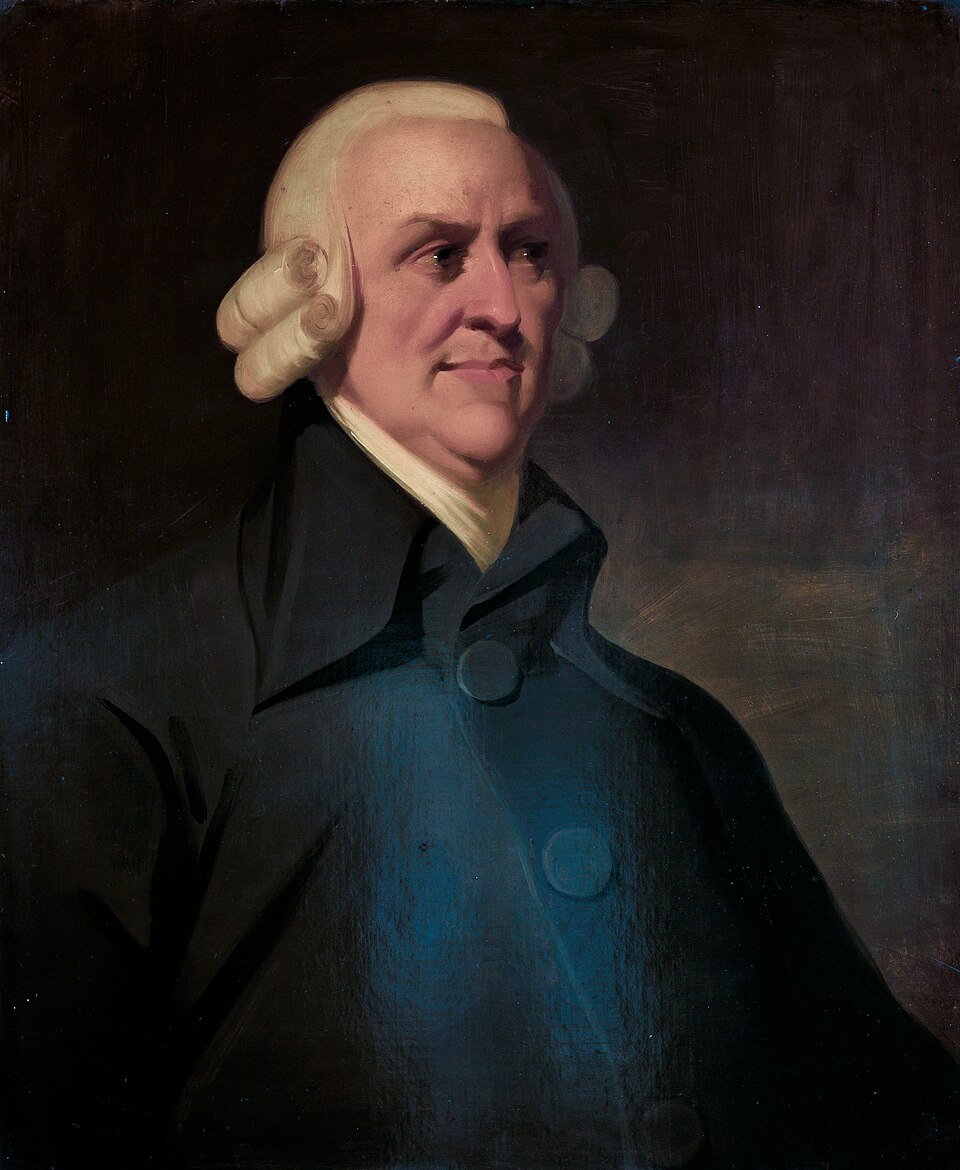
via Wikipedia · CC-BY-SA
62
Ideas
5
Passages
380
Citations
Works cited (1)
Ideas this author touches 62 Ideas · click an Idea to read in context
Wealth51State24Labor23Education18Government18Justice15Law12Religion12War And Peace11Knowledge10Science10Progress9Slavery9Man8Citizen7Family7Medicine7Aristocracy6Art6Democracy6Philosophy6Temperance6Custom And Convention5Happiness5Life And Death5Nature5Oligarchy5Virtue And Vice5Liberty4Monarchy4Revolution4Animal3Cause3Constitution3Honor3Necessity And Contingency3Opinion3Opposition3Poetry3Emotion2Good And Evil2Habit2History2Logic2Metaphysics2Pleasure And Pain2Punishment2Sign And Symbol2Theology2Chance1Courage1Duty1Element1Evolution1Immortality1Language1Mathematics1Mind1Physics1Prudence1Quantity1Rhetoric1
This MindMap is generated using weights to determine which ideas this thinker debates with others.
Passages by work
Wealth of Nations5 passages
Wealth of Nations, BK i, 6d-8b✓ correct
THE greatest improvement in the productive powers of labour, and the greater part of the skill, dexterity, and judgment with which it is anywhere directed, or applied, seem to have been the effects of the division of labour.
The effects of the division of labour, in the general business of society, will be more easily understood by considering in what manner it operates in some particular… Read the rest of this passage →
Wealth of Nations, BK v, 337c-d CHAPTER 20; EDUCATION 389✓ correct
THE increase and riches of commercial and manufacturing towns contributed to the improvement and cultivation of the countries to which they belonged in three different ways.
First, by affording a great and ready market for the rude produce of the country, they gave encouragement to its cultivation and further improvement. This benefit was not even confined to the countries in which they were… Read the rest of this passage →
Wealth of Nations, BK i, 27b-37b✓ correct
THE rise and fall in the profits of stock depend upon the same causes with the rise and fall in the wages of labour, the increasing or declining state of the wealth of the society; but those causes affect the one and the other very differently.
The increase of stock, which raises wages, tends to lower profit. When the stocks of many rich merchants are turned into the same trade, their mutual… Read the rest of this passage →
Wealth of Nations, BK i,'42b-d; 54d- 1291^29] 489d-491a; BK vn, CH 8-9 532c-533d 55a; BK in, 164a; BK v, 340c-343d 18 AUGUSTINE: City of God, BK vn, CH 4, 246d✓ correct
THE produce of labour constitutes the natural recompense or wages of labour.
In that original state of things, which precedes both the appropriation of land and the accumulation of stock, the whole produce of labour belongs to the labourer. He has neither landlord nor master to share with him.
Had this state continued, the wages of labour would have augmented with all those improvements in its… Read the rest of this passage →
Wealth of Nations, BK i, 33c-34b; 71a-d; BK in, 163a-165b; BK iv, 243b,d-244a; BKV,384b-d 162d; BK iv, CH 4 190d; BK xix, CH 21 524a-
WHEN the division of labour has been once thoroughly established, it is but a very small part of a man's wants which the produce of his own labour can supply. He supplies the far greater part of them by exchanging that surplus part of the produce of his own labour, which is over and above his own consumption, for such parts of the produce of other men's labour as he has occasion for. Every man… Read the rest of this passage →
Cited under: Animal · Aristocracy · Art · Cause · Chance · Citizen · Constitution · Courage · Custom And Convention · Democracy · Duty · Education · Element · Emotion · Evolution · Family · Good And Evil · Government · Habit · Happiness · History · Honor · Immortality · Justice · Knowledge · Labor · Language · Law · Liberty · Life And Death · Logic · Man · Mathematics · Medicine · Metaphysics · Mind · Monarchy · Nature · Necessity And Contingency · Oligarchy · Opinion · Opposition · Philosophy · Physics · Pleasure And Pain · Poetry · Progress · Prudence · Punishment · Quantity · Religion · Revolution · Rhetoric · Science · Sign And Symbol · Slavery · State · Temperance · Theology · Virtue And Vice · War And Peace · Wealth